

Competitive Exams: A Crisis in Progress
Lakhs of Indian students compete annually for a handful of positions in NEET, JEE, UPSC, and SSC examinations. These exams should be a fair evaluation of merit. Instead, they've become an unfair gauntlet of delays, system failures, and devastating mental health consequences.

This is not just an educational issue. This is a mental health crisis.
The Systemic Failure
A Broken Process at Every Level
It has become disturbingly normal for examinations to be repeatedly delayed. Results are challenged legally. Students spend several years preparing, sacrificing other career options, only to face constant schedule changes and postponed result declarations. This isn't simply inconvenience it's psychological torture.
The Reality
students prepare annually for competitive exams with only 1-2% making the cut. The average student attempts these exams 3-4 times before finding success, if at all.
Systemic Failures
Beyond Delays: A System in Collapse
Question paper leaks before examinations. Impersonation frauds undermine legitimacy. Cheating through mobile devices is widespread. Re-evaluations create months or years of uncertainty. Delayed admissions cause students to lose an entire year.
The Cruel Irony
When systems designed to identify talent instead become riddled with corruption and incompetence, it sends a devastating message to students: "Your hard work doesn't matter. The system is rigged. You can't succeed through merit alone." This realization is often when students experience their darkest thoughts.
Crisis Factors
The Weight of Expectations and Uncertainty
Family Pressure
For many Indian families, the result of a single exam determines the child's entire future. Families, communities, and extended relatives place crushing expectations on students' rankings.
Social Uprooting
Students from small towns leave families, relocate to big cities, and study 12+ hours daily in isolation. This separation from support systems amplifies stress and loneliness.
Constant Comparison
Mock test rankings create daily comparisons with peers, systematically eroding self-esteem and motivation. Students feel like failures based on numbers, not actual learning.
Economic Desperation
For students from low socioeconomic backgrounds, this exam represents the only hope for a better life. Failure becomes catastrophic not just personally, but for entire families.
Real Stories
When the Pressure Becomes Fatal
Case 1: The Delayed Dream Turned Nightmare (2023)
Aditya, 19, spent three years preparing for JEE. After his third attempt, the exam was postponed twice. When results finally came after months of uncertainty, he scored just below the cutoff. Devastated by the delay and "wasted" years, unable to face his parents' disappointment, Aditya took his own life. He left a note: "I gave everything. The system failed me."
Case 2: The Impersonation That Broke a Dream (2024)
Shreya prepared relentlessly for NEET, scoring well enough for admission. But within weeks, an impersonation scam emerged, and her results were flagged for re-evaluation. She was placed in academic limbo for eight months. She couldn't start her degree, lost contact with her batch mates, and experienced severe anxiety and depression. She reported suicidal ideation during this period.
Case 3: The Online Isolation Crisis (2025)
Vikram studied for UPSC alone through online coaching. His only social connection was mock test rankings comparing him to thousands of invisible competitors. After two failed attempts, with no peer support system, he spiraled into severe depression. He requires ongoing psychiatric treatment and expressed: "If there had been even one person to talk to, things might have been different."
The Uncomfortable Question
Whose Responsibility Is Student Safety?
If systems are designed to maximize competition, how much of the pressure is really personal weakness versus structural failure?
If a student loses faith in the system and in themselves is that a sign they need to try harder, or that the system needs to change?
Comprehensive Solutions
A Path Forward
Fixing this crisis cannot depend on logistical solutions alone. Systemic change is imperative at every level.
- Implement transparent systems: End exam delays and impersonation by investing in secure infrastructure and accountability.
- Redefine student worth: Stop equating a student's competence or value with test results. A single exam does not define a person.
- Integrate mental health: Counseling from the beginning of preparation, not as an afterthought. Assessment tools should identify at-risk students early.
- Educate all stakeholders: Teachers, coaches, and parents need training recognizing mental health warning signs before crisis occurs.
The Core Insight
Breaking the Cycle
Fixing this crisis requires systemic change from exam design to implementation, from family expectations to institutional accountability. Every stakeholder has a role to play in protecting student mental health.
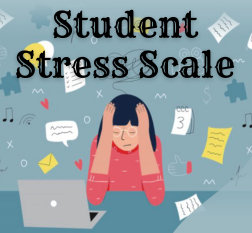
Student Stress Scale
Developed by Dr. Manju Agrawal, this scientifically validated assessment measures stress levels among students, enabling early identification of those experiencing elevated psychological distress and facilitating timely intervention.
"The students are not failing the system. The system is failing the students. It's time for change."