


Upasna Srivastava
PhD Scholar
15 min read
May 22, 2026
OVERVIEW
What Is the WJ V?
The Woodcock-Johnson Tests — 5th Edition (WJ V) is the most comprehensive, co-normed battery available for assessing cognitive abilities, academic achievement, and oral language. It spans the entire human lifespan from age 2 through 90+ and is grounded in the Cattell-Horn-Carroll (CHC) theory of intelligence — the most widely accepted model of cognitive functioning.
Developed and continuously refined over decades, the WJ V represents the gold standard in psychoeducational assessment. Its co-normed design means all three batteries were standardized on the same representative sample, enabling precise and legally defensible cross-battery comparisons between cognitive ability and academic achievement.

TECHNOLOGY
Digital Testing Made Simple
Faster, smarter, and more accurate assessments — built for the modern clinician.
Digital-First Accessibility
Eliminate bulky testing kits. The fully digital WJ V platform gives you instant access to all assessment materials anytime, anywhere.
Simplified Administration
Pre-loaded test batteries, visual progress monitoring, built-in video guidance, and automated scoring features minimize examiner workload.
Improved Efficiency
Complete assessments up to 20% faster with automated start points, scoring calculations, and continuation rules..
Why Choose WJ V
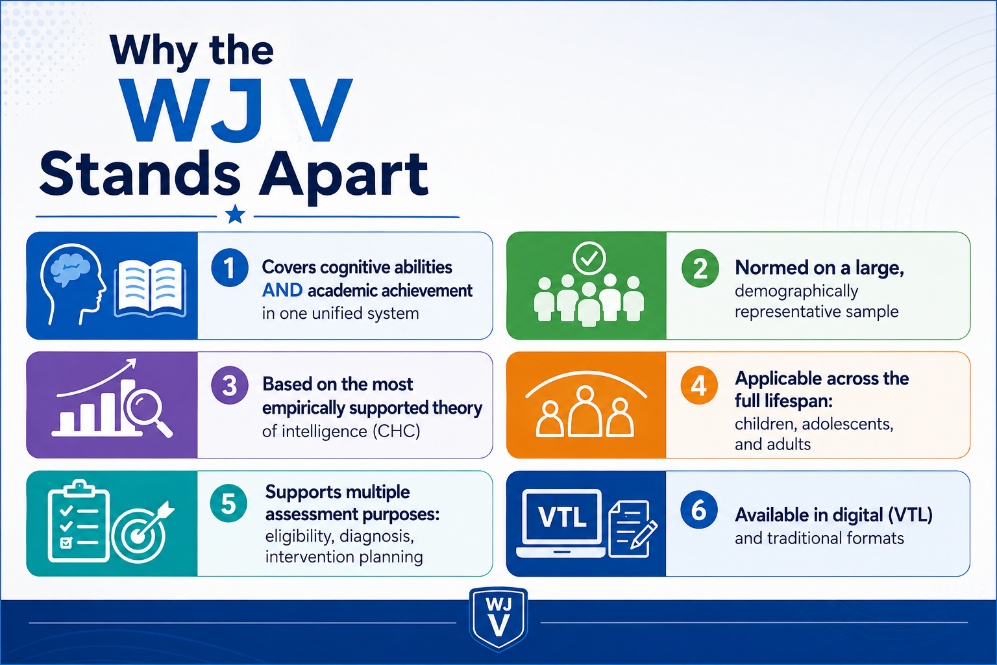
Key Benefits of the WJ V
Clinically and psychometrically superior features that make it the preferred assessment battery for psychologists, special educators, neuropsychologists, and researchers.
Widest Age Range of Any Cognitive Battery
Spans from 2 years 0 months to 90+ years — the entire human lifespan in a single instrument.
Co-normed Cross-Battery Comparisons
All three batteries (COG, ACH, OL) are normed on the same nationally representative sample for statistically valid discrepancy analysis.
Grounded in CHC Theory
The most comprehensive operationalisation of the most extensively researched and internationally accepted model of human cognitive abilities.
Rich Clinical Cluster Scores
GIA, Broad Cognitive Ability, Reading Aptitude, Phonological Processing, Working Memory, and many more essential for differential diagnosis.
Flexible & Selective Administration
Standard, Extended, and Brief batteries let clinicians customise depth while reducing fatigue.
Computerised Scoring Platform
Instant professionally written reports with norm-referenced scores, percentile ranks, confidence intervals, and interpretive guidance.
Diagnostic Precision
Supports accurate diagnosis of dyslexia, dyscalculia, dysgraphia, intellectual disability, giftedness, ADHD, TBI, dementia screening, and ASD.
Parallel Forms for Progress Monitoring
Forms A and B allow reliable re-testing to measure academic growth without practice effects compromising validity.
Ability-Achievement Discrepancy Analysis
Multiple SLD identification methods aligned with IDEA 2004 and RPwD Act 2016.
APPLICATIONS
Where Can You Use the WJ V?
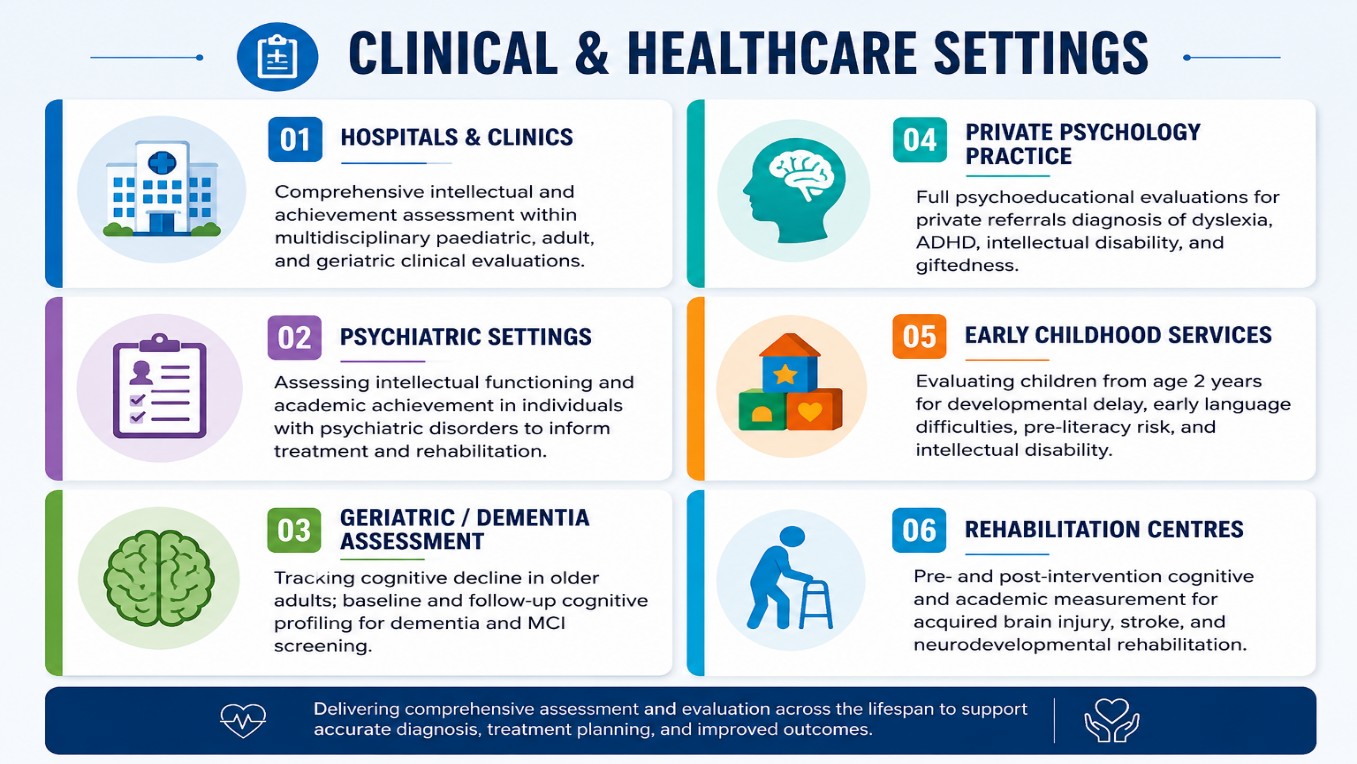
The WJ V's broad age range, flexible battery design, and comprehensive measurement scope make it applicable across an extraordinarily wide range of professional settings and referral questions.
From schools and clinics to research institutions and hospitals, the WJ V serves psychologists, special educators, neuropsychologists, and any professional who needs precise, defensible cognitive and achievement data.
THEORETICAL FOUNDATION
CHC Theory — The Science Behind WJ V
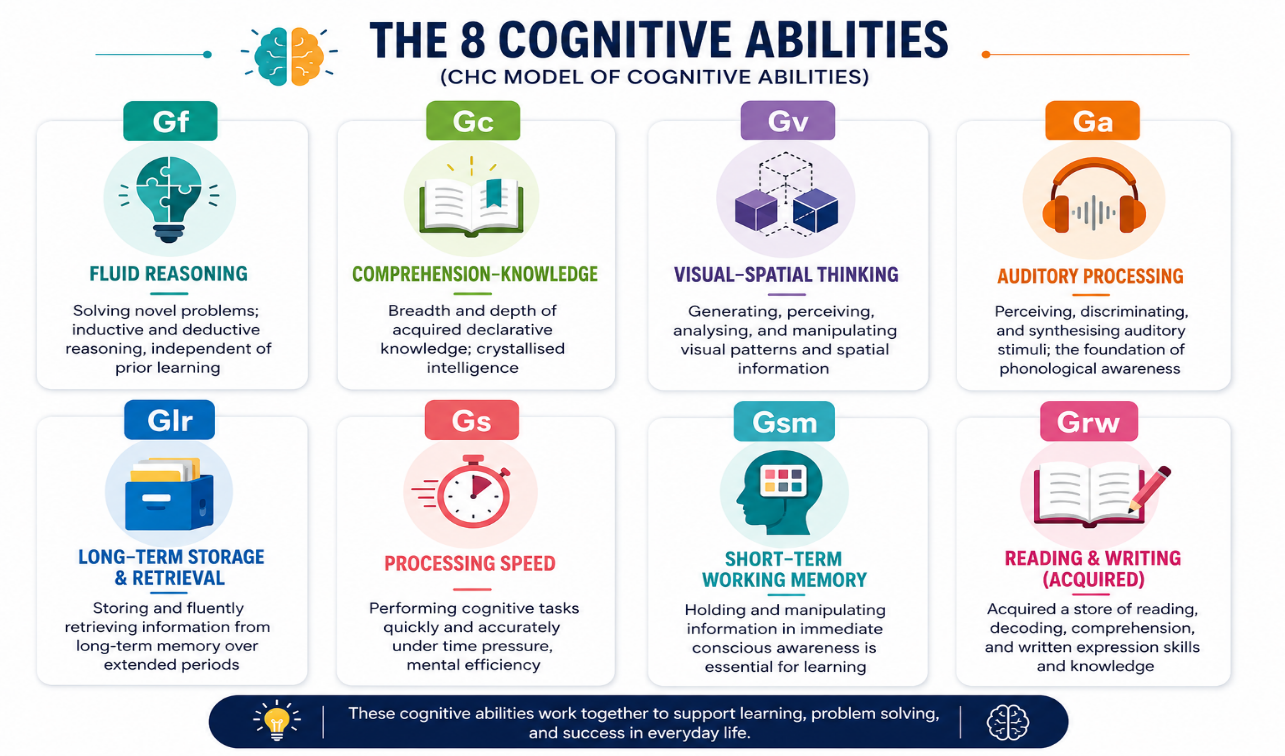
The Cattell-Horn-Carroll (CHC) theory is the most comprehensive and empirically validated psychometric model of human cognitive abilities — the theoretical backbone of the WJ V.
Why CHC?
Validated in hundreds of factor-analytic studies across cultures, age groups, and populations. Provides a defensible, research-grounded taxonomy of human intelligence that directly informs assessment and intervention planning.
ASSESSMENT STRUCTURE
Three Integrated Batteries
All batteries are co-normed on the same representative sample, enabling accurate ability-achievement discrepancy analysis and differential diagnosis.
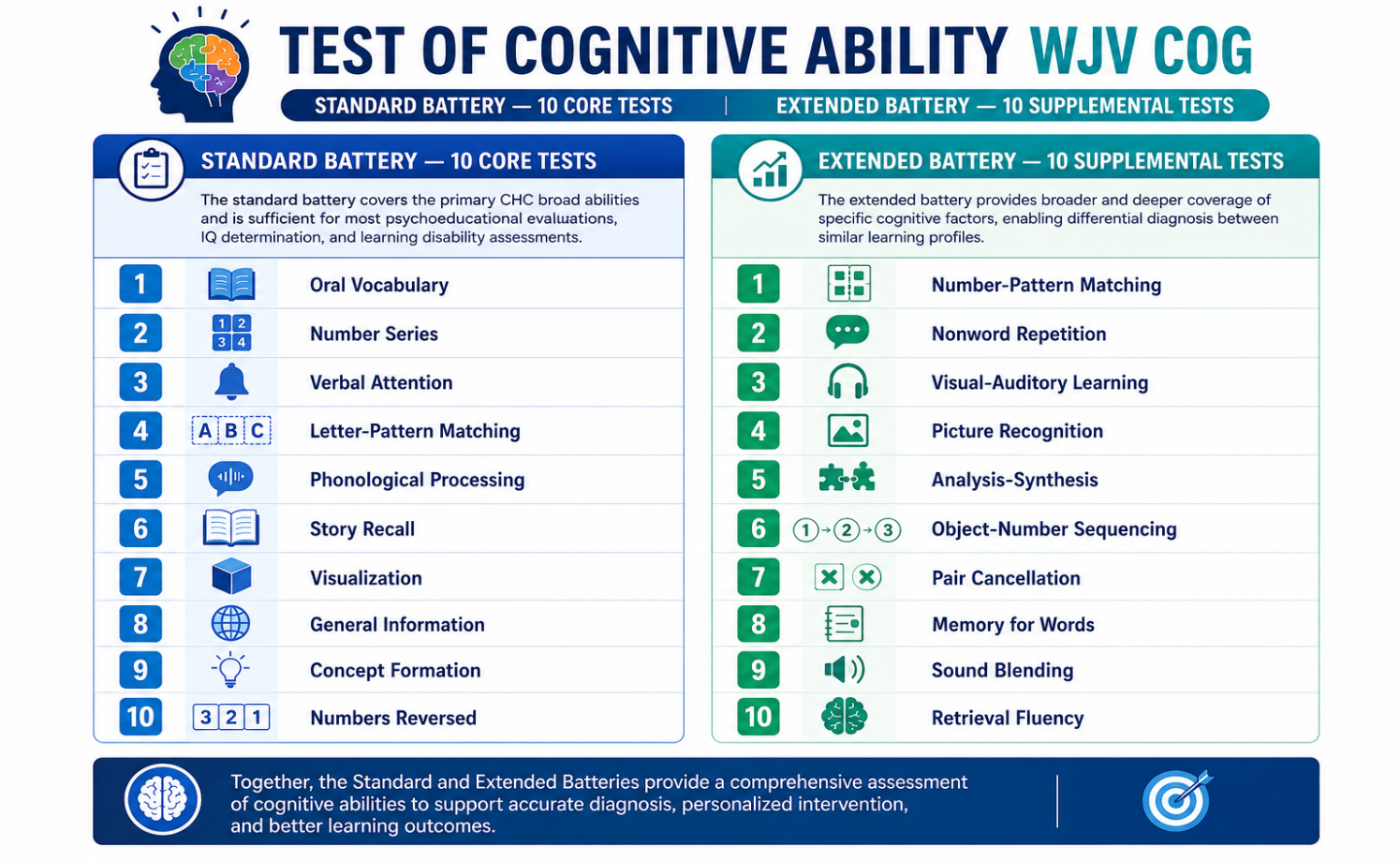
Tests of Cognitive Abilities (WJ V COG)
20 Tests — Standard Battery (10) + Extended Battery (10)
Measures the key cognitive factors that underpin learning, academic performance, and daily functioning — including memory, processing speed, fluid reasoning, crystallized knowledge, and language.
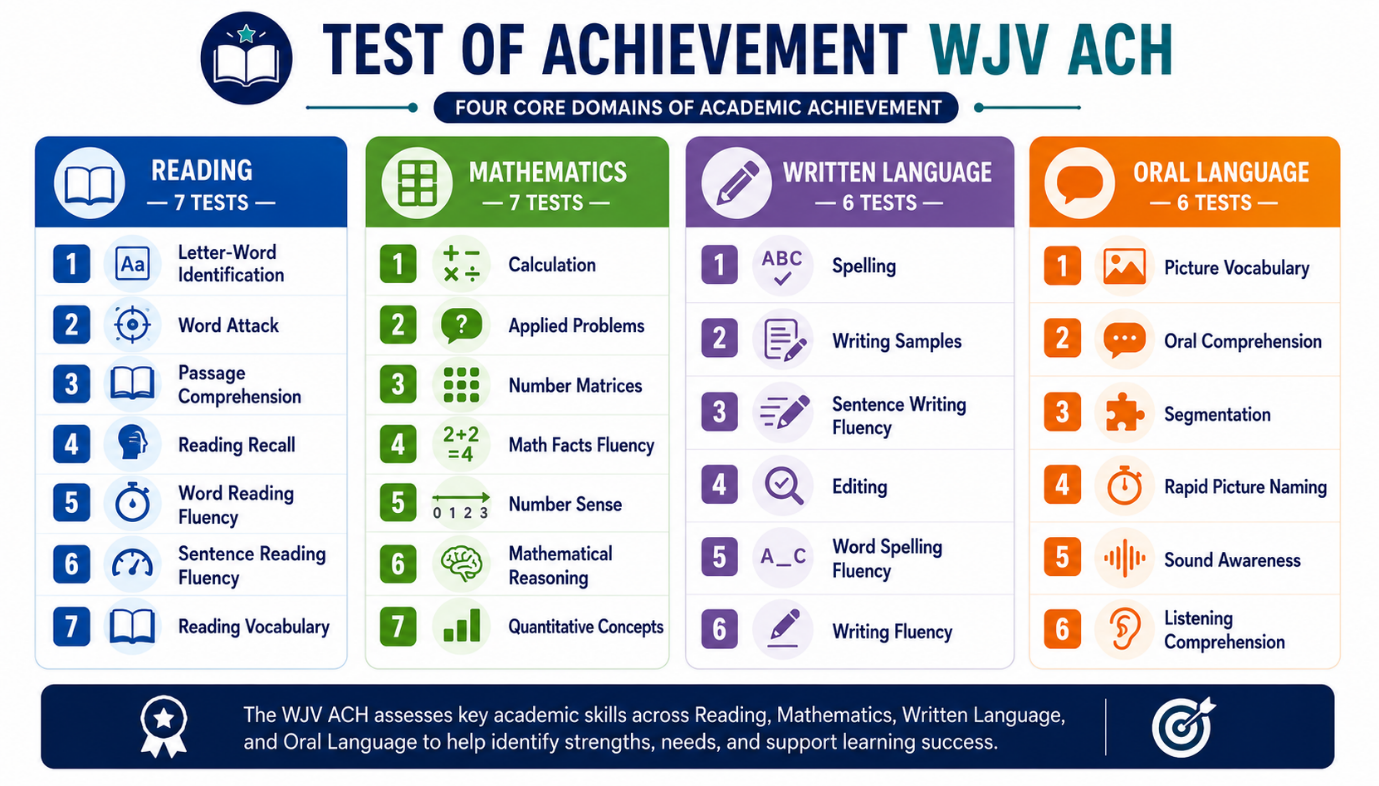
Tests of Achievement (WJ V ACH)
26 Tests — Reading, Mathematics, Written Language & Oral Language
Measures real-world academic skills. Reading, Mathematics, Written Language, and Oral Language tests provide a comprehensive picture of academic functioning.
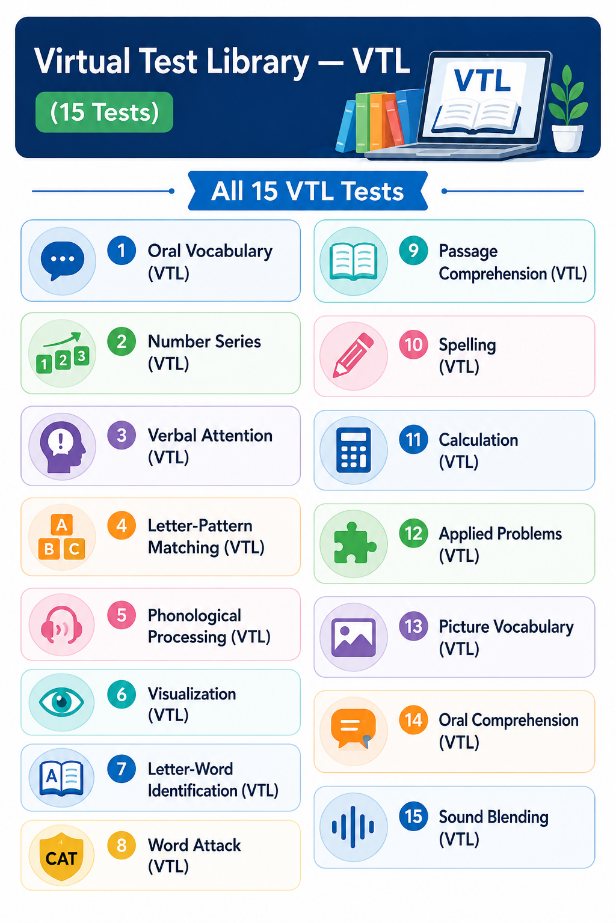
Virtual Test Library (VTL)
15 Digitally Delivered Tests — Tablet or Computer
Psychometrically equivalent to paper-based counterparts, offering a modern and engaging testing experience. Features automated scoring, built-in accessibility accommodations, and consistent standardized delivery.
VIRTUAL TEST LIBRARY
Key Advantages of VTL
15
DIGITAL TESTS
Auto
SCORING
100%
STANDARDIZED
Engaging, child-friendly interface reduces test anxiety and improves compliance
Automated scoring eliminates manual errors
Immediate results generated upon test completion
Built-in accessibility accommodations for physical or sensory differences
Consistent standardized delivery across all examiners
Seamlessly integrates with the paper-based WJ V system
SPECIALIST APPLICATION
WJ V & Dyslexia Assessment
The WJ V is uniquely positioned as a premier diagnostic tool for dyslexia because it directly measures every key cognitive and academic marker associated with the condition, through its co-normed, theoretically grounded battery design.
The assessment battery measures core dyslexia markers across all four achievement domains — Reading, Mathematics, Written Language, and Oral Language — with unparalleled precision and defensibility.

What is Dyslexia?
Dyslexia is a specific learning disability of neurological origin. It is characterized by difficulties with accurate and/or fluent word recognition, poor spelling, and decoding abilities resulting from a deficit in the phonological component of language. These difficulties are unexpected in relation to other cognitive abilities and the provision of effective classroom instruction.