

Shivani Garg
MA Counselling Psychology
26 min read
September 26, 2026
Introduction
Why a smell, a sound, or a date can make the past feel like the present and what helps.
A trigger can arrive without warning a smell, a tone of voice, a date on the calendar and within seconds, the body reacts as though the original danger is happening again. For anyone who has experienced this, it can feel confusing, even embarrassing. It isn't a character flaw or an overreaction. It's a predictable, well documented pattern in how the traumatized brain protects itself.
This post walks through what a trigger actually does inside the brain, why it disrupts memory and emotion regulation the way it does, and most importantly practical ways to identify your own triggers and manage them when they fire.
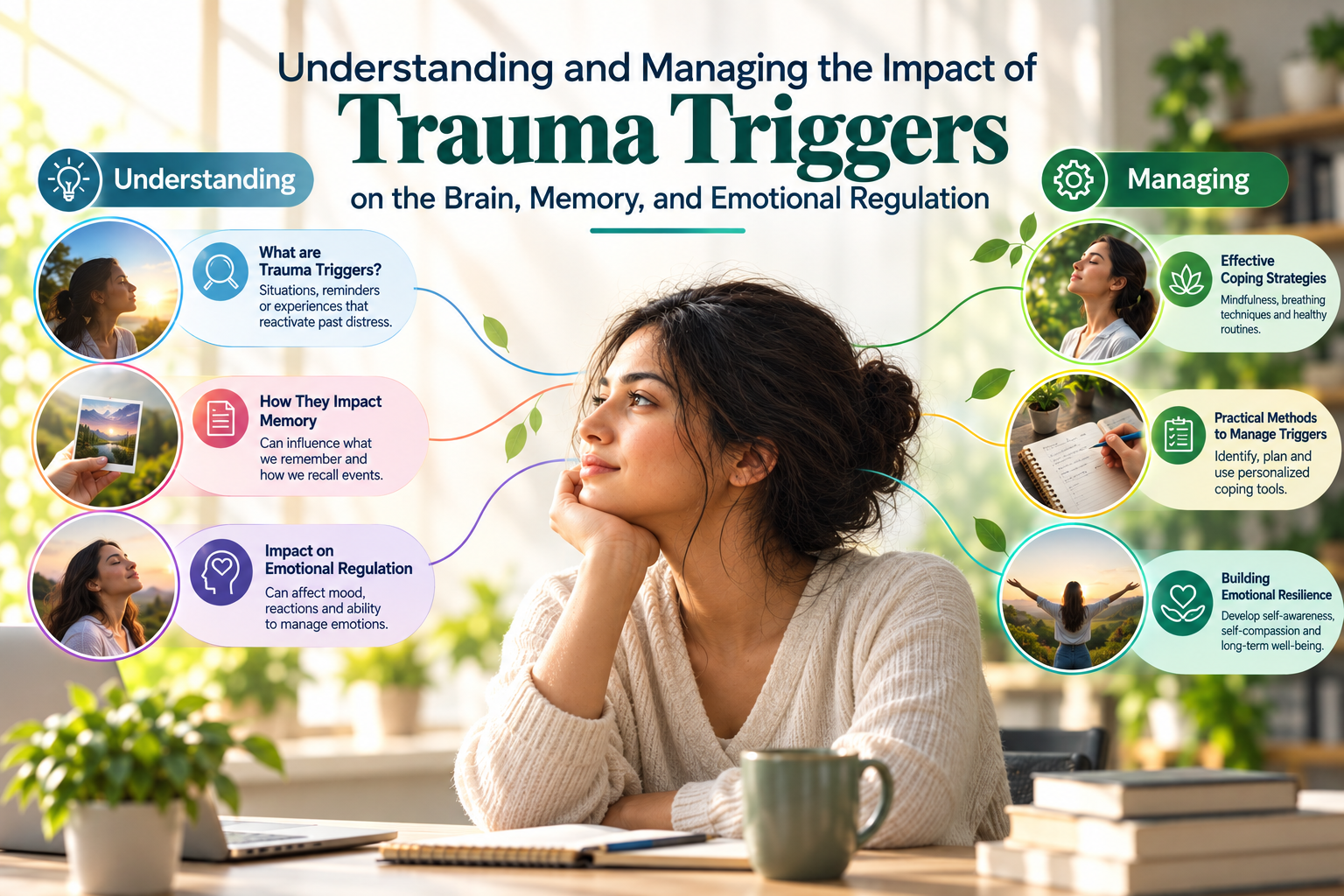
What Is a Trauma Trigger?
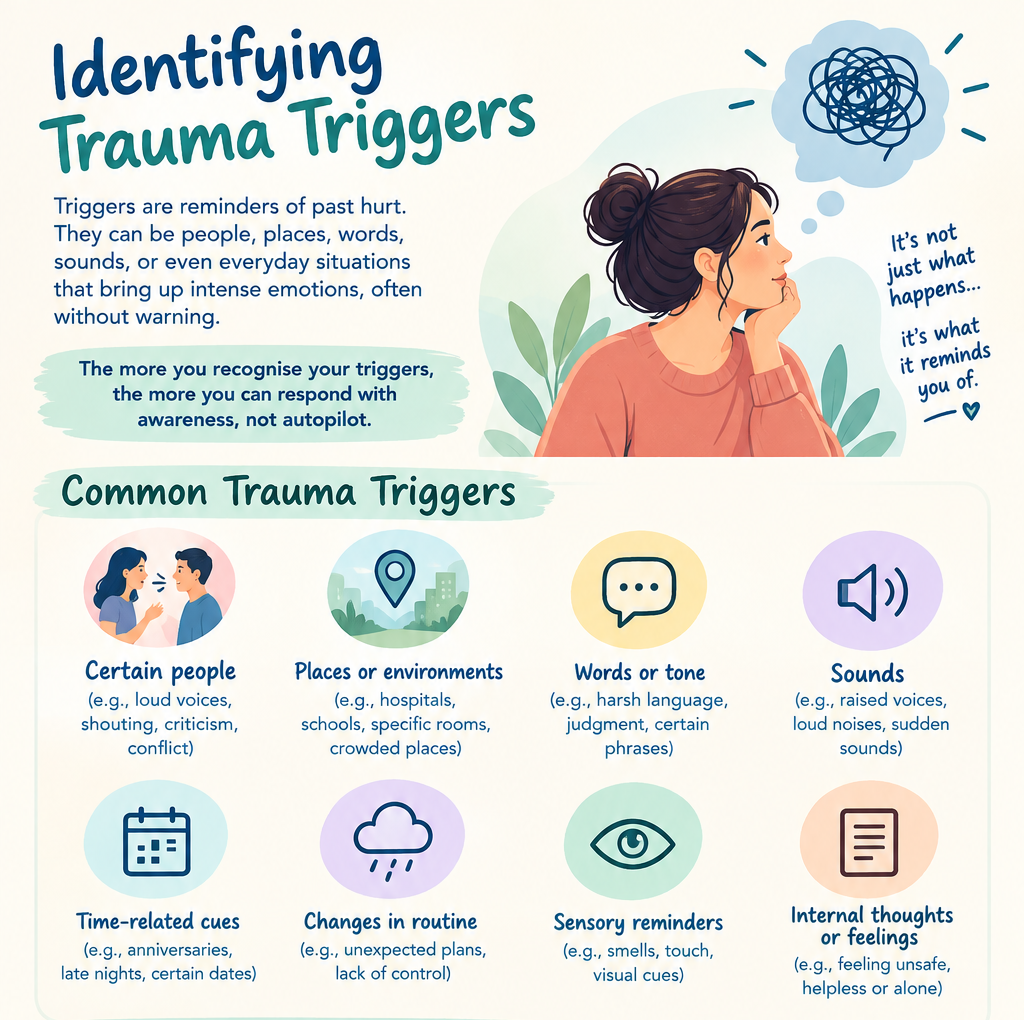
A trigger is any sensory or situational reminder, however small or seemingly unrelated of a past traumatic experience. It doesn't need to resemble the original event closely to set off a reaction; a similar sound, a particular smell, or even a feeling of being trapped or criticized can be enough. When a trigger hits, the brain and body respond as if the danger is happening in the present moment, not the past.
The Trauma Trigger Response Cycle
The chain of events between a trigger and a full reaction happens in a fraction of a second, largely outside conscious control. Here's what's happening at each stage:
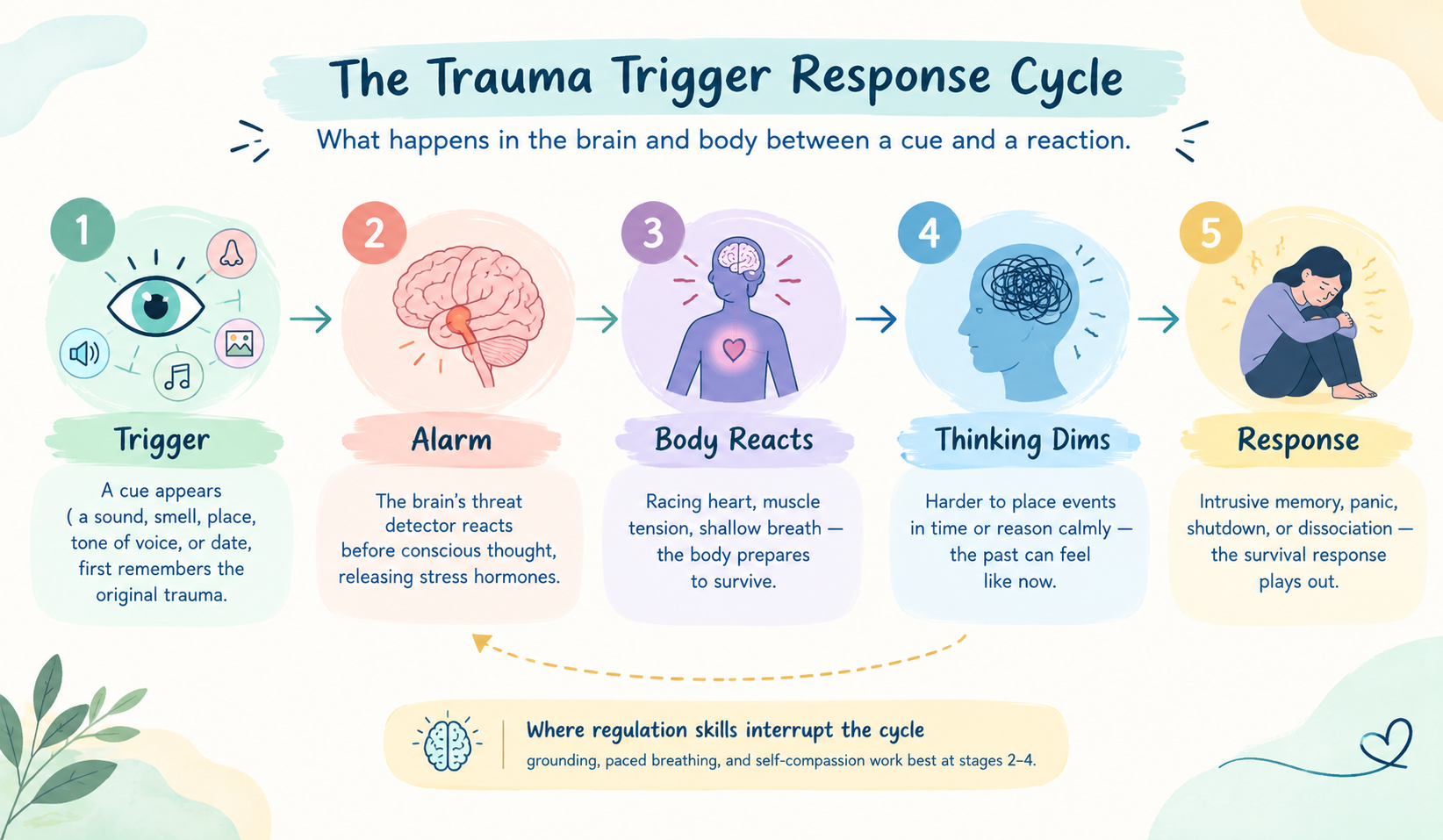
Where regulation skills interrupt the cycle: grounding, paced breathing, and self-compassion work best at stages 2–4.
- 1. A cue appears. A sound, smell, place, tone of voice, or anniversary resembles some element of the original trauma.
- 2. The amygdala sounds the alarm. This almond shaped structure is the brain's threat detector. It fires before conscious thought has a chance to evaluate whether the danger is real, flooding the body with stress hormones.
- 3. The body reacts. Fight, flight, freeze, or fawn a racing heart, tense muscles, and shallow breathing prepare the body to survive a threat that, in the present, may not exist.
- 4. The thinking brain goes offline. The hippocampus (which places memories in time and context) and the prefrontal cortex (responsible for reasoning and emotional regulation) both lose activity under this kind of stress. This is why it becomes hard to think clearly, tell past from present, or talk yourself down in the moment.
- 5. The trauma response plays out. This can look like a flashback, an intrusive memory, panic, anger, or the opposite: numbing, dissociation, or shutting down.
The peer-reviewed research on this is more cautious than the popular version of this story suggests. A 2025 review in Frontiers in Behavioral Neuroscience found that people with PTSD show reduced activity in the prefrontal cortex specifically during effortful emotion regulation (like reframing a distressing thought), but the authors were careful to note that findings across other brain regions are still inconsistent, and general conclusions about the neural basis of emotion dysregulation after trauma cannot yet be drawn from the current evidence. The brain and body sequence above is a reliable clinical model, but it's a working framework, not a fully mapped mechanism.
Why Trauma Warps Memory
Memory is not a video recording rather it is a reconstructive process, and trauma disrupts it in a very particular way: it strengthens implicit (emotional/sensory) memory while disrupting explicit (narrative) memory. That's why a trauma survivor might have an overwhelming physical reaction to a trigger a racing heart, a wave of dread without being able to explain clearly why, or construct a coherent story of what happened. Three brain structures drive this:
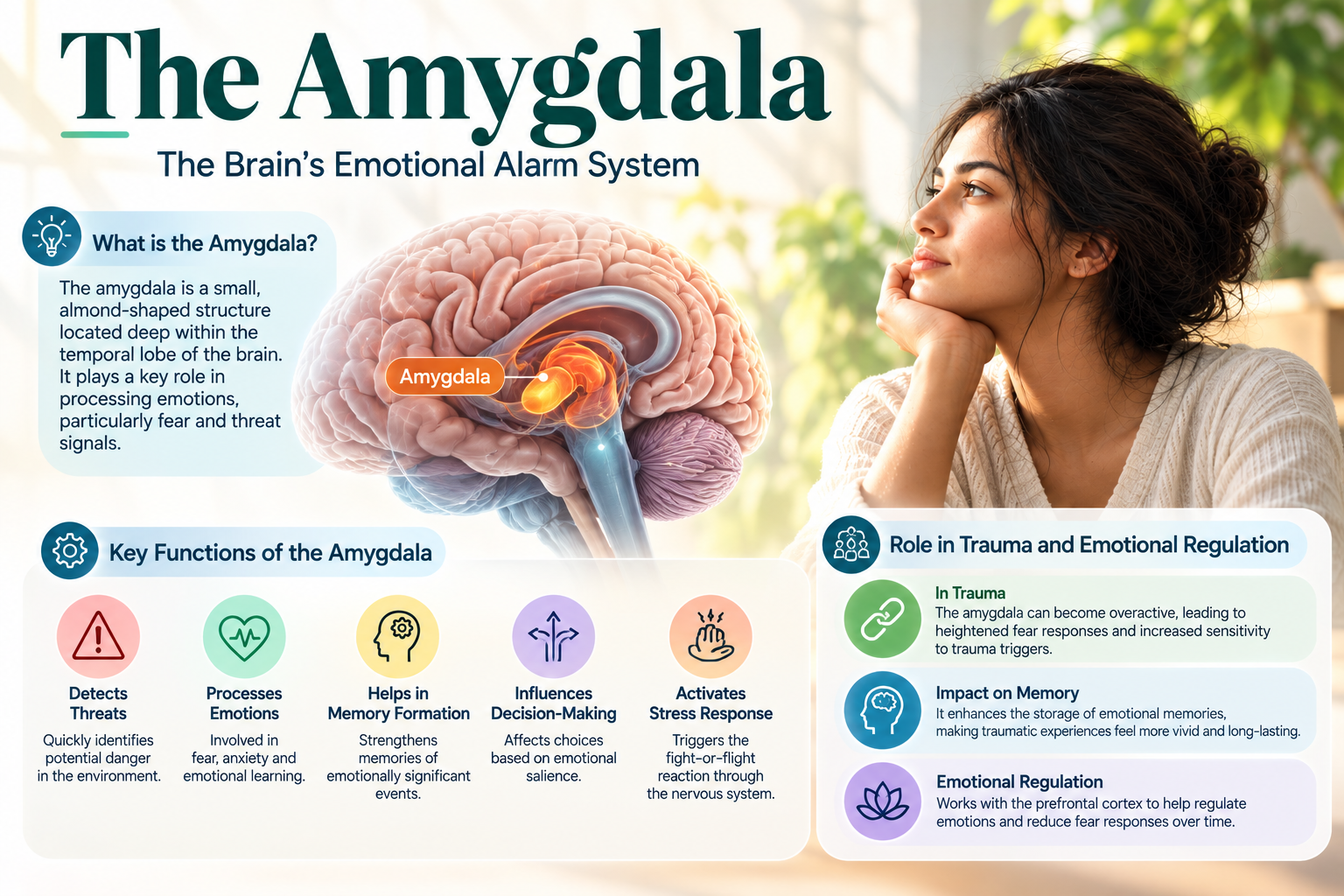
The amygdala encodes the emotional and sensory intensity of the moment (a smell, a sound, a color) with extraordinary vividness. The amygdala acts like an emotional highlighter. When a moment carries strong emotional or sensory significance—such as a distinctive smell, a sudden sound, or a striking color—it rapidly tags that experience with heightened intensity. This can make the moment feel unusually vivid and memorable, as though the brain has captured not only what happened but also the emotional force of experiencing it.

The hippocampus, which organizes experience into a timeline, is impaired by prolonged stress so the memory stays fragmented rather than becoming an integrated story with a beginning, middle, and end. The hippocampus helps place experiences within a specific context and sequence: what happened, where it happened, and when it happened. Prolonged or overwhelming stress can disrupt hippocampal functioning and its communication with the prefrontal cortex. When this organizing system is impaired, a memory may remain as disconnected sensations, images, emotions, or bodily reactions rather than becoming a coherent narrative with a beginning, middle, and end.
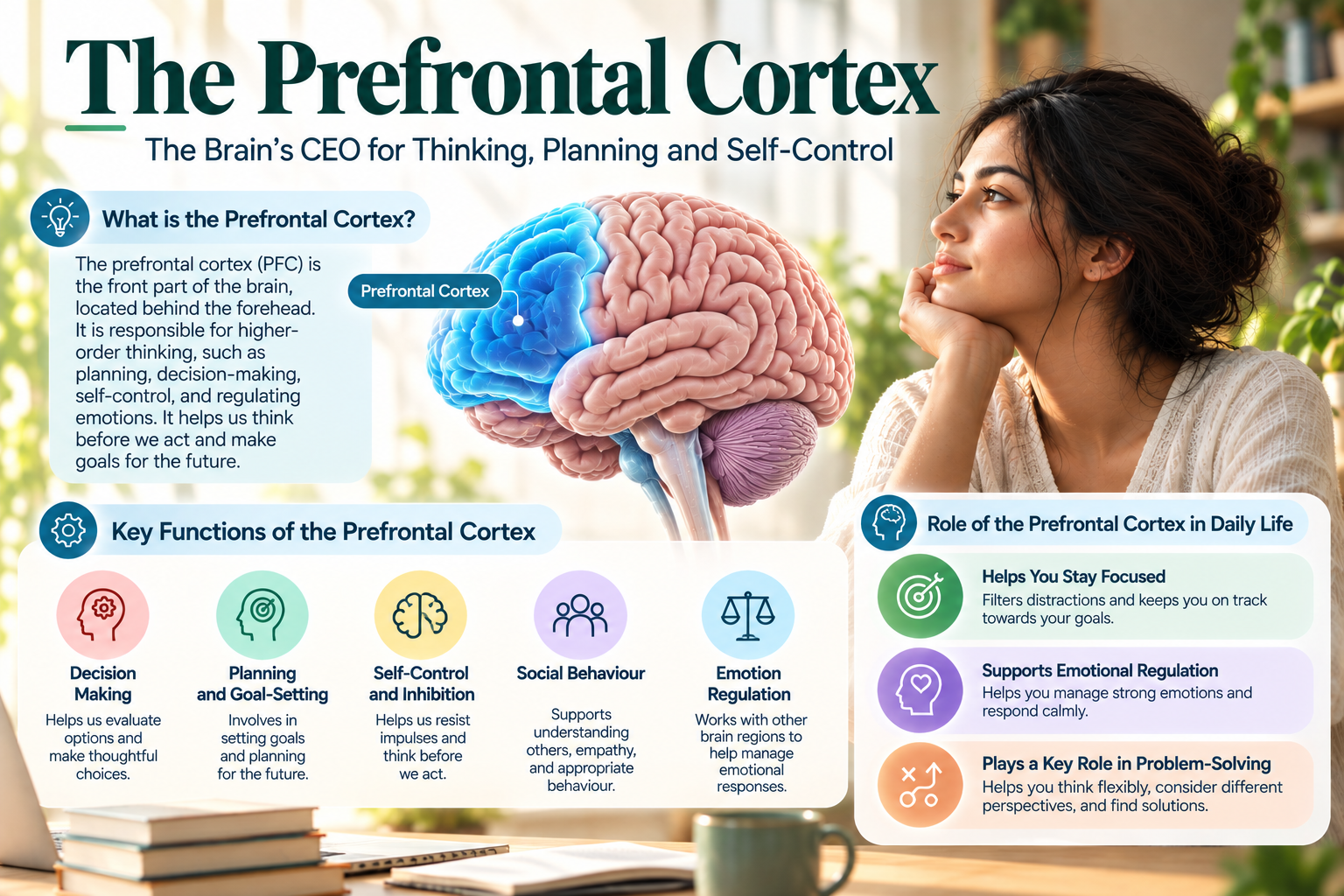
The prefrontal cortexloses some of its capacity to regulate emotion and to distinguish “that happened then” from “this is happening now.” The prefrontal cortex helps regulate emotions, maintain perspective, and evaluate whether a threat belongs to the past or the present. Under prolonged stress, its regulatory control can weaken, making it harder to think, “That happened then; I am safe now.” As a result, past emotional experiences may feel immediate, as though they are happening in the present. Chronic stress is associated with reduced prefrontal control over attention, working memory, flexible thinking, and emotional responses.
This is also why traumatic memories are often state-dependent : they surface most easily when the person is in a similar state of high arousal to the one they were in during the original event, and can feel completely inaccessible during calm, reflective moments until a trigger recreates that emotional state. Many survivors also describe ongoing brain fog : difficulty concentrating, working-memory lapses, and mental fatigue, driven by a nervous system that is spending its resources on threat detection rather than higher-order thinking.
Types of Trauma Triggers
Memory is not a video recording rather it is a reconstructive Triggers rarely announce themselves clearly, and they don't always make logical sense in the moment. They generally fall into four overlapping categories:
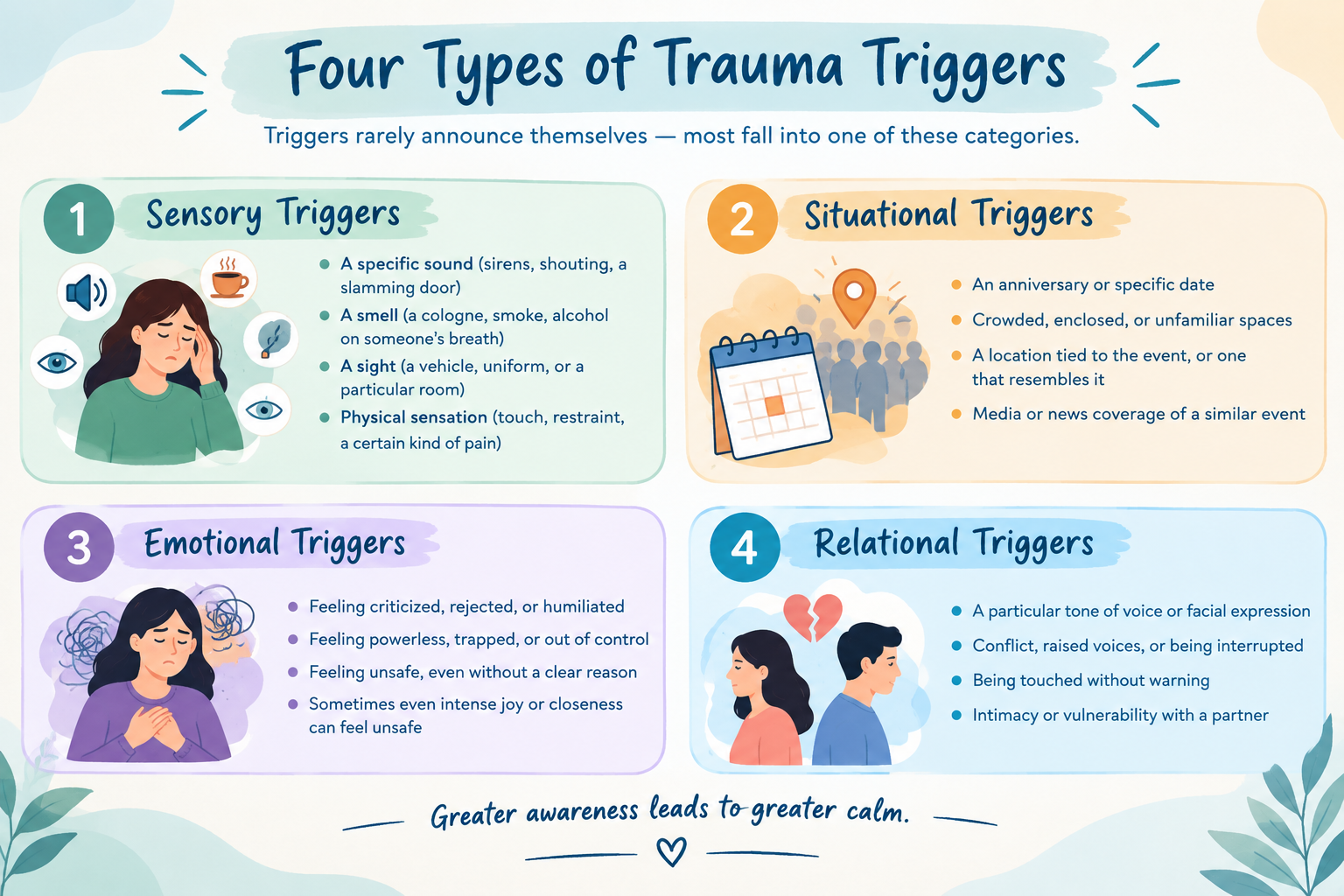
A single event can be triggering for entirely different reasons for two different people, because what matters is not the objective similarity to the original trauma but what the nervous system has learned to associate with danger.
How Trauma Disrupts Emotional Regulation
Emotion regulation research distinguishes between two main strategies people use, consciously or not, to manage distress:
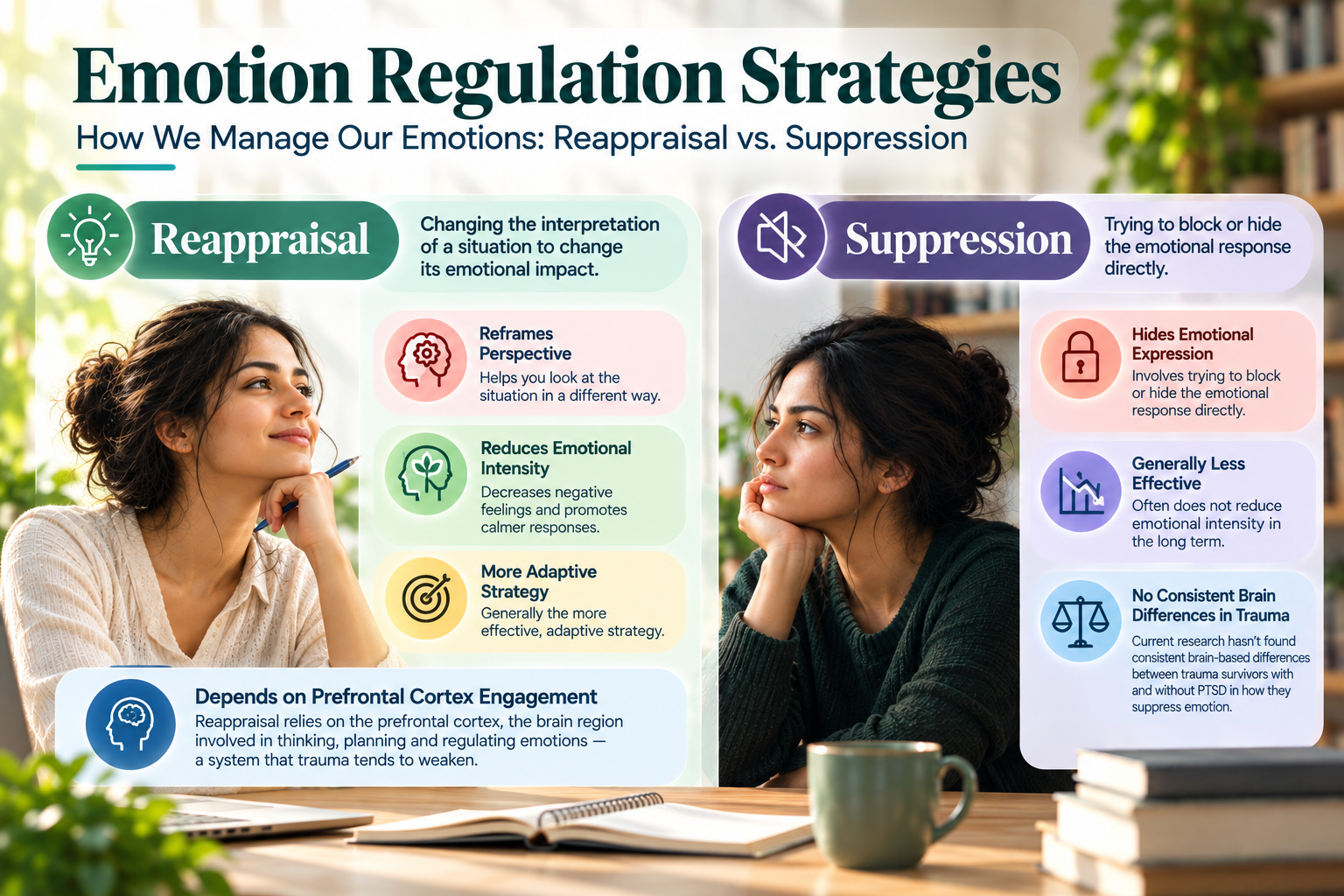
- Reappraisal changing the interpretation of a situation to change its emotional impact. This is generally the more effective, adaptive strategy, but it depends on prefrontal cortex engagement, the very system trauma tends to weaken.
- Suppression trying to block or hide the emotional response directly. It's generally less effective than reappraisal, and interestingly, current research hasn't found consistent brain- based differences between trauma survivors with and without PTSD in how they suppress emotion.
A separate and promising strategy is compassion-based regulation. In the brain, generating compassion activates different regions than reappraisal does, areas tied to positive affect rather than cognitive control which suggests it works by adding something warm rather than by suppressing or reframing the threat. This is part of why compassion-focused and self-compassion practices are increasingly used alongside more traditional trauma therapies.
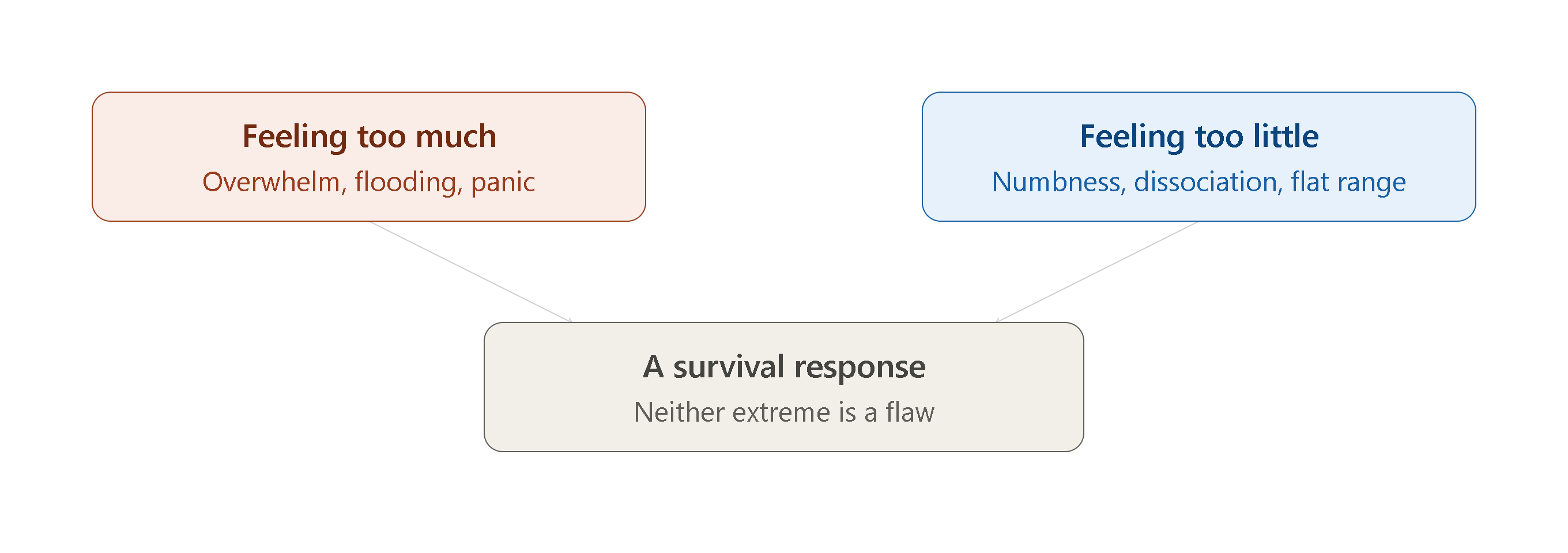
Clinically, trauma tends to push people toward one of two emotional extremes: feeling too much(overwhelm, flooding, panic) or feeling too little (numbness, dissociation, a flattened emotional range). Neither is a flaw as both are the nervous system's attempt to survive an unmanageable level of distress. Importantly, research on trauma responses is also clear that not everyone needs to actively process or talk through a trauma to be psychologically healthy; survivors who choose a quieter coping style are not inherently worse off than those who process more openly. There is no single “correct” way to cope.
How to Identify Your Own Triggers
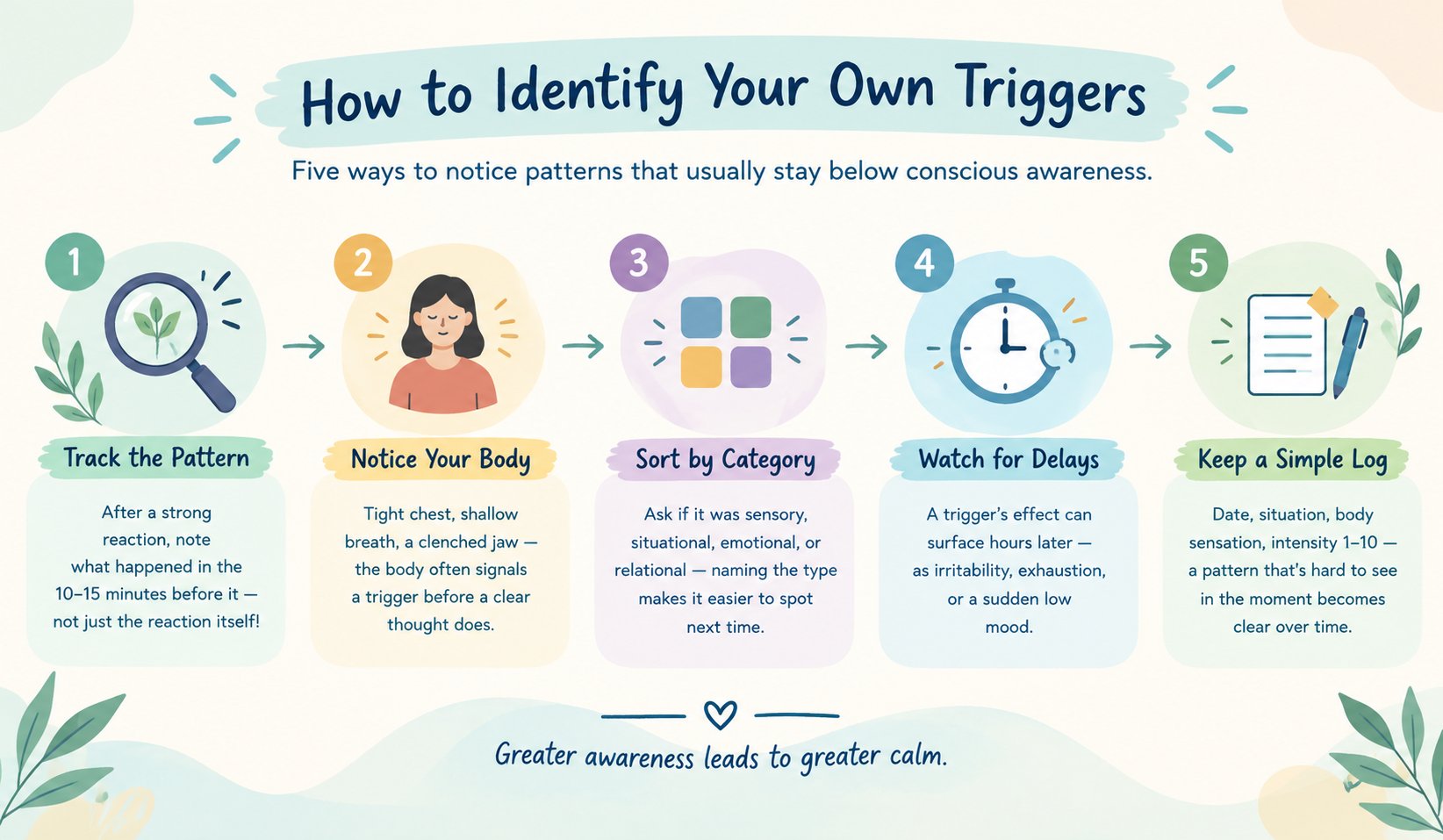
Because triggers often operate below conscious awareness, identifying them takes some deliberate noticing rather than waiting for insight to strike.
- Track the pattern, not just the moment. After a strong reaction, note what happened in the 10–15 minutes before; a place, a sound, a comment, a physical sensation rather than trying to analyze the reaction itself in the moment.
- Notice the body first. Triggers often show up physically before they show up as a clear thought: tight chest, shallow breath, clenched jaw, a sudden urge to leave. These are often the earliest, most reliable warning signs.
- Look for the four categories above. Sorting a reaction into sensory, situational, emotional, or relational can make an otherwise confusing reaction much easier to name.
- Watch for delayed reactions. Trauma responses don't always fire immediately as some people may notice a trigger's effect hours later in form of irritability, exhaustion, or a sudden low mood.
- Keep a simple log. Even a few words like date, situation, body sensation, intensity (1–10) and builds a pattern over time that's hard to see in the moment.
How to Manage Trauma Triggers
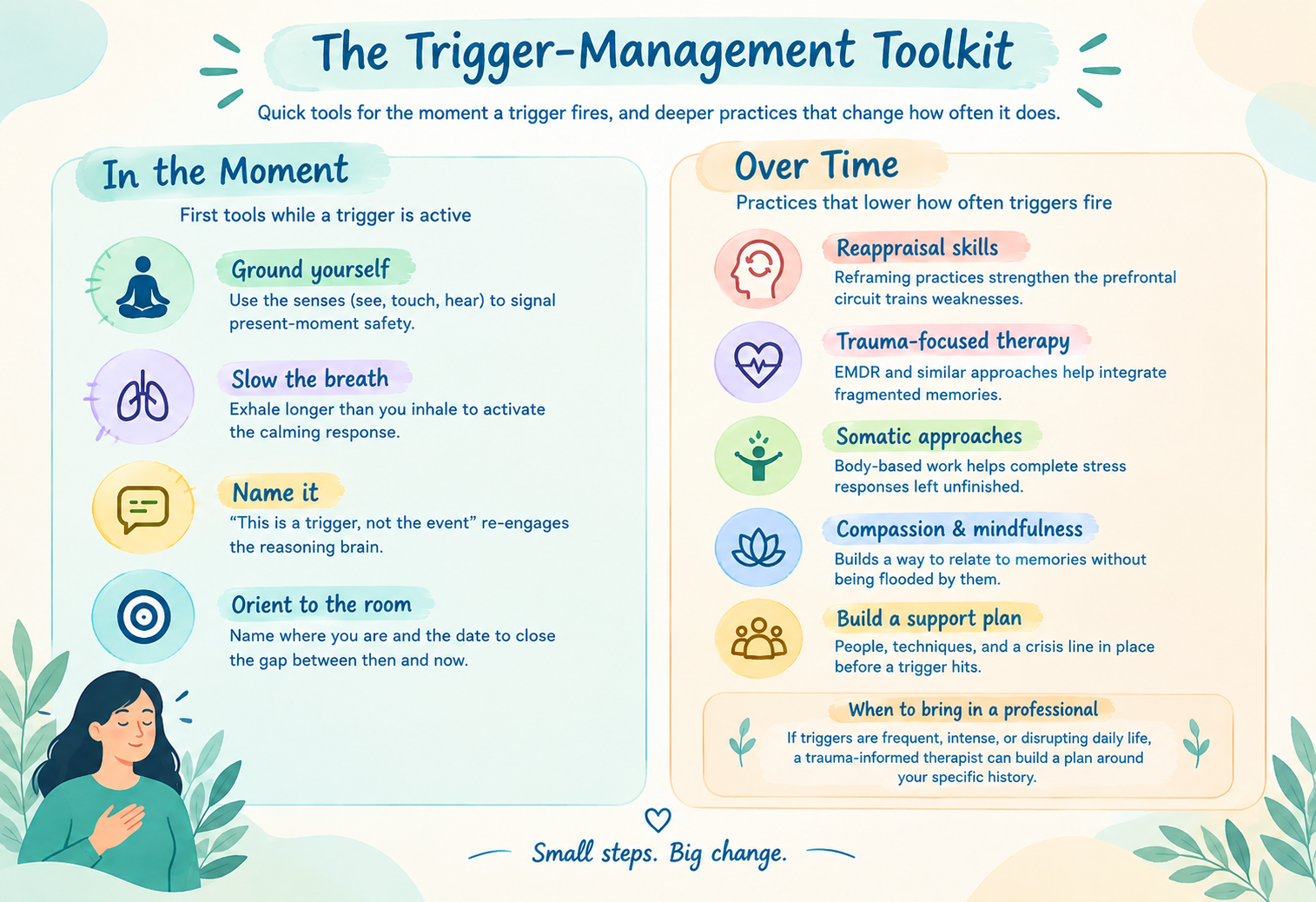
In the moment
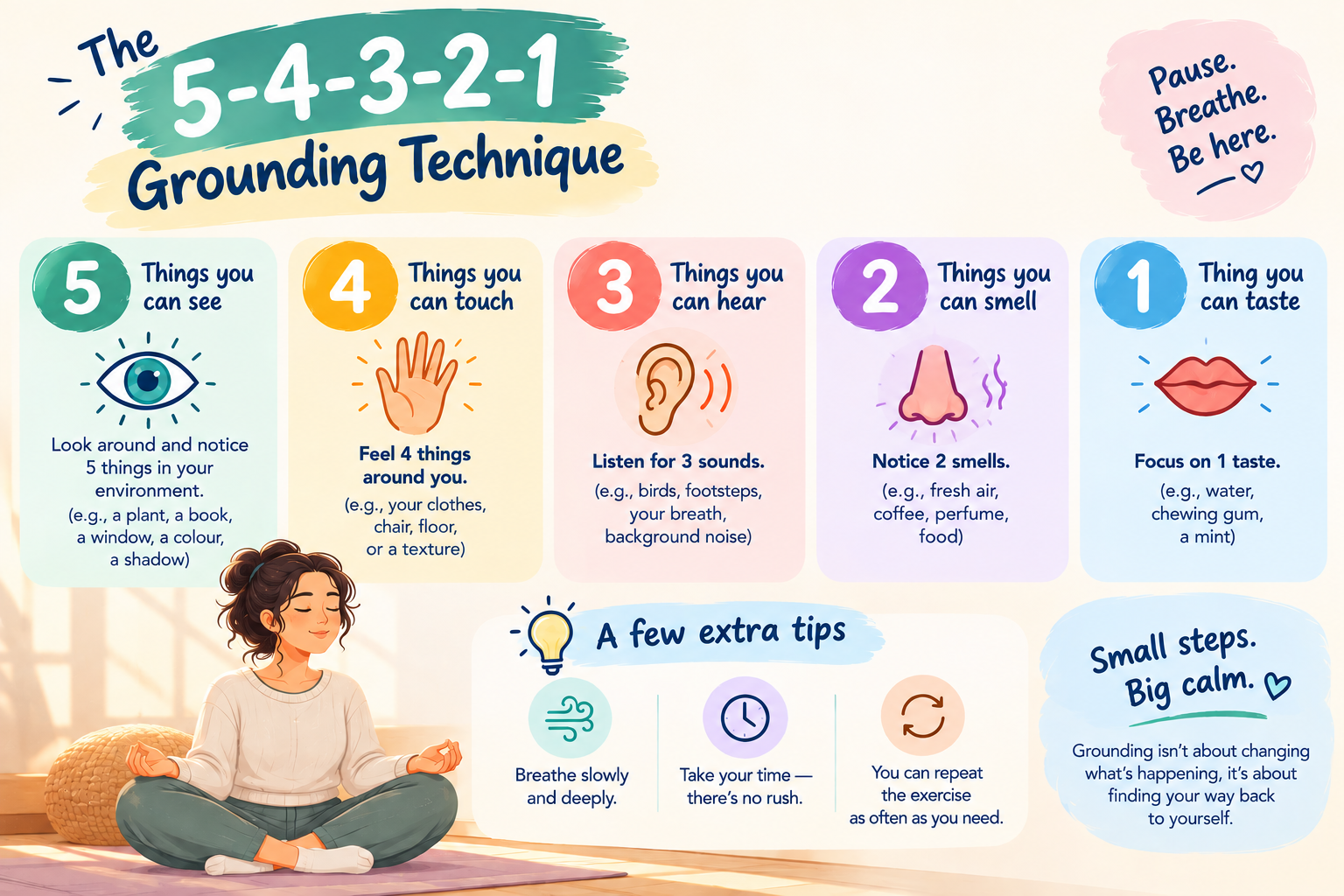
A simple grounding exercise that uses the five senses to re-engage the thinking brain
- Ground yourself in the present. The 5-4-3-2-1 exercise above uses the senses to signal safety to the amygdala and bring the prefrontal cortex back online.
- Slow the breath. A longer exhale than inhale (for example, inhaling for 4 counts, exhaling for 6–8) activates the body's natural calming response.
- Name it. Saying (silently or aloud) “this is a trigger, not the event itself” re-engages the reasoning brain and helps re-establish that the danger is in the past.
- Orient to the room. Physically looking around and naming where you are, the date, and one detail that confirms safety helps close the gap between “then” and “now.”
Over time
- Reappraisal skills. Working with a therapist to practice reframing triggering thoughts strengthens the same prefrontal circuits that trauma weakens, and is one of the more consistently supported approaches in the research.
- Trauma-focused therapies. Approaches like EMDR use structured techniques to help fragmented, unprocessed memories become integrated and contextualized, which can reduce how easily they're triggered.
- Somatic approaches. Because trauma is stored in the body as much as the mind, body-based approaches (somatic experiencing, yoga, gentle movement) can help complete stress responses that were interrupted during the original event.
- Compassion and mindfulness practices. These support the prefrontal cortex over time and give survivors a way to relate to distressing memories without being flooded by them.
- Build a support plan before you need it. Identify a few trusted people, a grounding technique that works for you, and if required, a therapist or crisis line, before a trigger hits rather than during one.
When to seek professional support:
If triggers are frequent, intense, or interfering with daily life, work, sleep, or relationships, that's a sign to bring in a trauma-informed therapist rather than managing it alone. Approaches like EMDR, trauma-focused CBT, and somatic therapies are specifically designed for this, and a professional can help build a plan tailored to your specific triggers and history.
A Final Note
None of these signs like fragmented memory, emotional flooding or numbness, a nervous system that reacts before you can think is a sign of weakness or damage. It's a predictable consequence of how the brain protects itself under extreme stress. The same neuroplasticity that allowed trauma to reshape the brain also allows healing: the hippocampus can regain function, the prefrontal cortex can strengthen, and the amygdala's alarm system can recalibrate.
Sources
[1] Konrad, A. C., Miu, A. C., Trautmann, S., & Kanske, P. (2025). Neural correlates and plasticity of explicit emotion regulation following the experience of trauma. Frontiers in Behavioral Neuroscience.
[2] Smith-Trawick, S. (2025). Memory and Trauma: Understanding How Trauma Impacts Memory and Mental Clarity. Trauma Specialists Training Institute Blog: traumaspecialiststraining.com
[3] Center for Substance Abuse Treatment (US). (2014). Understanding the Impact of Trauma. In Trauma-Informed Care in Behavioral Health Services (Treatment Improvement Protocol Series, No. 57). Substance Abuse and Mental Health Services Administration: ncbi.nlm.nih.gov/books/NBK207191