


Shivani Garg
MA Counselling Psychology
10 min read
May 08, 2026
01. FOUNDATION
What is Mental Health?
Mental health is far more than the absence of mental illness. It is the dynamic state of emotional, psychological, and social well-being that shapes how we think, feel, and function every single day.
According to the World Health Organization (WHO), mental health is a state of well-being in which an individual realises their own abilities, can cope with the normal stresses of life, can work productively and fruitfully, and can contribute to their community.
It encompasses our capacity to manage emotions, build relationships, make decisions, handle adversity, and engage meaningfully with the world around us. Mental health is not a fixed destination — it exists on a continuum and can fluctuate based on biological, psychological, and social factors at any point in a person's life.

THE FOUR PILLARS OF MENTAL HEALTH
Emotional Well-being
Ability to recognise, understand, and manage one's own feelings and emotional responses.
Social Well-being
Capacity to form and sustain healthy relationships and navigate social environments effectively.
Psychological Well-being
Sense of purpose, self-acceptance, personal growth, and autonomy in daily decision-making.
Functional Well-being
Ability to perform daily roles as a student, professional, or family member with engagement and energy.
Mental health is not a luxury reserved for crises. It is the invisible foundation upon which every student's academic journey is built.
02. THE CHALLENGE
Consequences & Risk Factors
When mental health struggles go unaddressed, the consequences ripple far beyond the individual — affecting families, classrooms, institutions, and communities at large.
COMMON CONSEQUENCES IN STUDENTS
Persistent academic underperformance, absenteeism, and disengagement from learning
Increased vulnerability to substance misuse, self-harm, and suicidal ideation
Deterioration of social relationships, peer conflicts, and social isolation
Development of chronic anxiety, clinical depression, and adjustment disorders
Physical complications: sleep disorders, appetite disturbances, and psychosomatic complaints
Long-term impairment in career readiness and adult functioning
Key Statistics
1 in 7
Children aged 10–19 experience a mental disorder globally (WHO)
75%
Of all mental health conditions begin before age 25
80%
Of cases in India go undiagnosed due to stigma & lack of screening
KEY RISK FACTORS
Academic Pressure & Exam Stress
Intense competition, high parental expectations, and fear of failure create chronic psychological strain at all levels.
Family & Socioeconomic Environment
Family conflict, financial hardship, and unstable home environments significantly elevate risk.
Bullying, Discrimination & Peer Rejection
Cyberbullying and social exclusion based on identity, performance, or appearance are major triggers.
Trauma & Adverse Childhood Experiences
Exposure to abuse, neglect, or community violence creates lasting vulnerabilities in development.
Social Isolation & Digital Overexposure
Reduced face-to-face interaction and excessive media use linked to anxiety and identity disturbances.
Biological & Genetic Predisposition
Family history, neurological differences, and hormonal fluctuations during adolescence increase susceptibility.
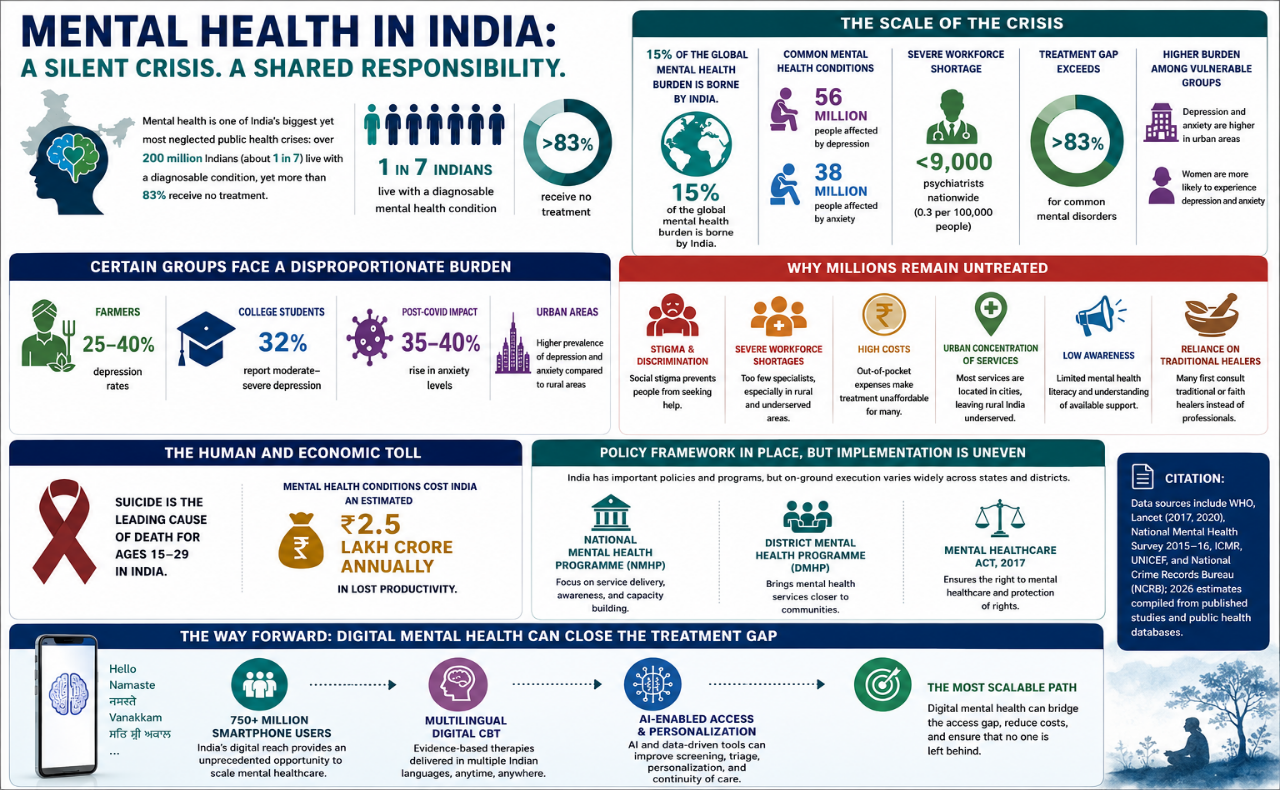
03. THE INSTITUTIONL IMPERATIVE
Why Schools Must Act Now
Schools, colleges, and universities are not just places of academic learning — they are the primary developmental environments where young minds grow, struggle, and find their identity. This makes them uniquely powerful settings for mental health intervention.
The post-pandemic era has fundamentally altered the mental health landscape for students. Prolonged isolation, disrupted routines, digital fatigue, and economic anxiety have combined to create an unprecedented wave of psychological distress among young learners.
Educational institutions are where early mental health problems first become visible — through behavioural changes, declining grades, social withdrawal, and emotional dysregulation. Acting at this stage is far more effective than waiting for a crisis.
Why Mental Health Matters for Students & Institutions
Student Academic Achievement
Mental health is the single most powerful predictor of academic performance that is consistently overlooked. Stress hormones impair memory consolidation, attention, and executive functioning. Institutions that invest in mental health see measurable improvements in retention, grade outcomes, exam performance, and graduation rates.
Early Detection Saves Lives
Most serious conditions — including schizophrenia, bipolar disorder, and clinical depression — have early warning signs that appear years before a crisis. Without systematic screening tools, educators rely on chance observation. Early detection through validated assessments can prevent hospitalization and, in critical cases, suicidal crises.
Meeting Students' Mental Health Needs
Students have a right to psychologically safe learning environments. Institutions that meet this need build cultures of trust, belonging, and resilience — through counselling services, peer support programmes, inclusive practices, and emotionally sensitive faculty.
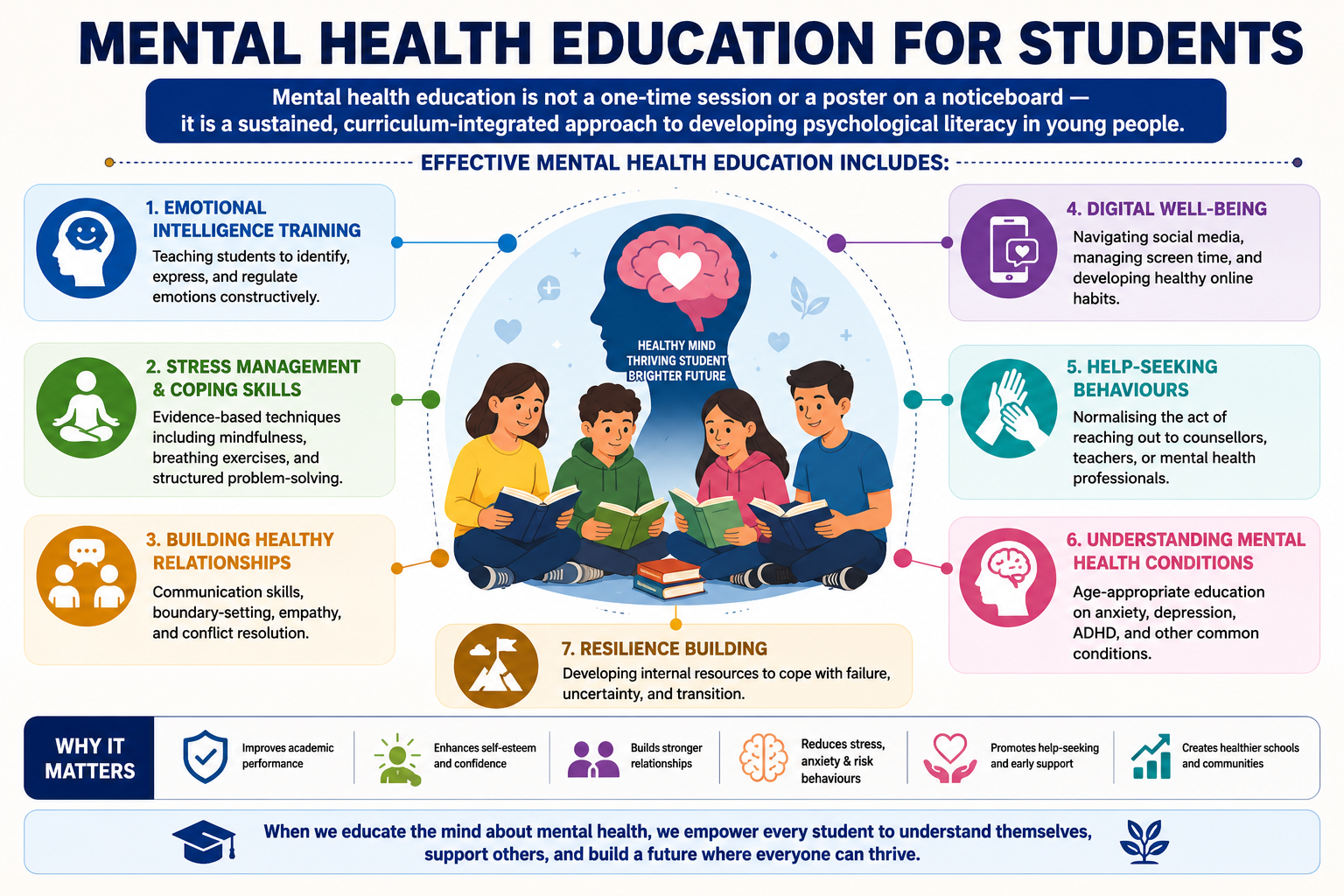
Mental Health Awareness & Education
Stigma is the greatest barrier to mental health care. Institutions that promote awareness through workshops, campaigns, and open dialogue dismantle this stigma — creating environments where help-seeking is normalised and mental wellness becomes part of everyday education.
Research consistently shows that schools with structured mental health education programmes see a 20–30% reduction in bullying incidents, improved classroom behaviour, higher academic engagement, and significantly lower dropout rates.
04. THE SOLUTION
Student's Emotional Health Assessment Tool (SEHAT) 2.0
SEHAT
Introducing
SEHAT 2.0: A Breakthrough in Early
Mental Health Detection
Children aged 10–18 undergo major physical, cognitive, emotional, and social changes that make early detection crucial. SEHAT 2.0 is an inclusive Student's Emotional Health Assessment designed to screen academic stress, interpersonal trauma, suicide/self-harm risk, and protective factors — guiding timely, tailored interventions and monitoring progress.
SEHAT 2.0 is a standardised psychological assessment tool developed by expert psychologists at Prasad Psycho Pvt. Ltd. Delivered digitally via the DigiConnect Platform, it is accessible, scalable, and easily administrable across classrooms, departments, and entire campuses. Results are generated instantly with detailed interpretive reports guiding both counsellors and institutional decision-makers.
Assessment Dimensions
| Dimension | What It Measures | Why It Matters |
|---|---|---|
| Academic Stress | School-related pressure, workload, exam anxiety, performance concerns, and coping capacity. | High stress impairs learning, increases absenteeism, and can trigger anxiety or depression. |
| Bullying | Peer victimization (physical, verbal, social, cyber), frequency, severity, and impact. | Harms self-esteem and can escalate to self-harm; supports safer school climates. |
| Disability | Functional limitations of physical, sensory, intellectual, or learning disabilities. | Guides accommodations and inclusive support. |
| Eating Habits | Food intake patterns, restrictive or binge behaviours, body image concerns. | Enables early intervention for emotional wellbeing. |
| Inattention | Difficulty sustaining attention, distractibility, and executive functioning challenges. | May indicate ADHD and affect academic performance. |
| Internalizing Behaviour | Anxiety, depression, social withdrawal, excessive worrying, and somatic complaints. | Promotes timely mental health support. |
| Interpersonal Trauma | Exposure to abuse, neglect, domestic or community violence and emotional consequences. | Supports trauma-informed care and recovery. |
| Suicide / Self-Harm | Suicidal thoughts, self-harm behaviours, intent, plans, and risk factors. | Enables crisis intervention and safety planning. |
| Protective Factors | Family connectedness, peer support, emotional regulation, and self-efficacy. | Builds resilience and informs strengths-based interventions. |
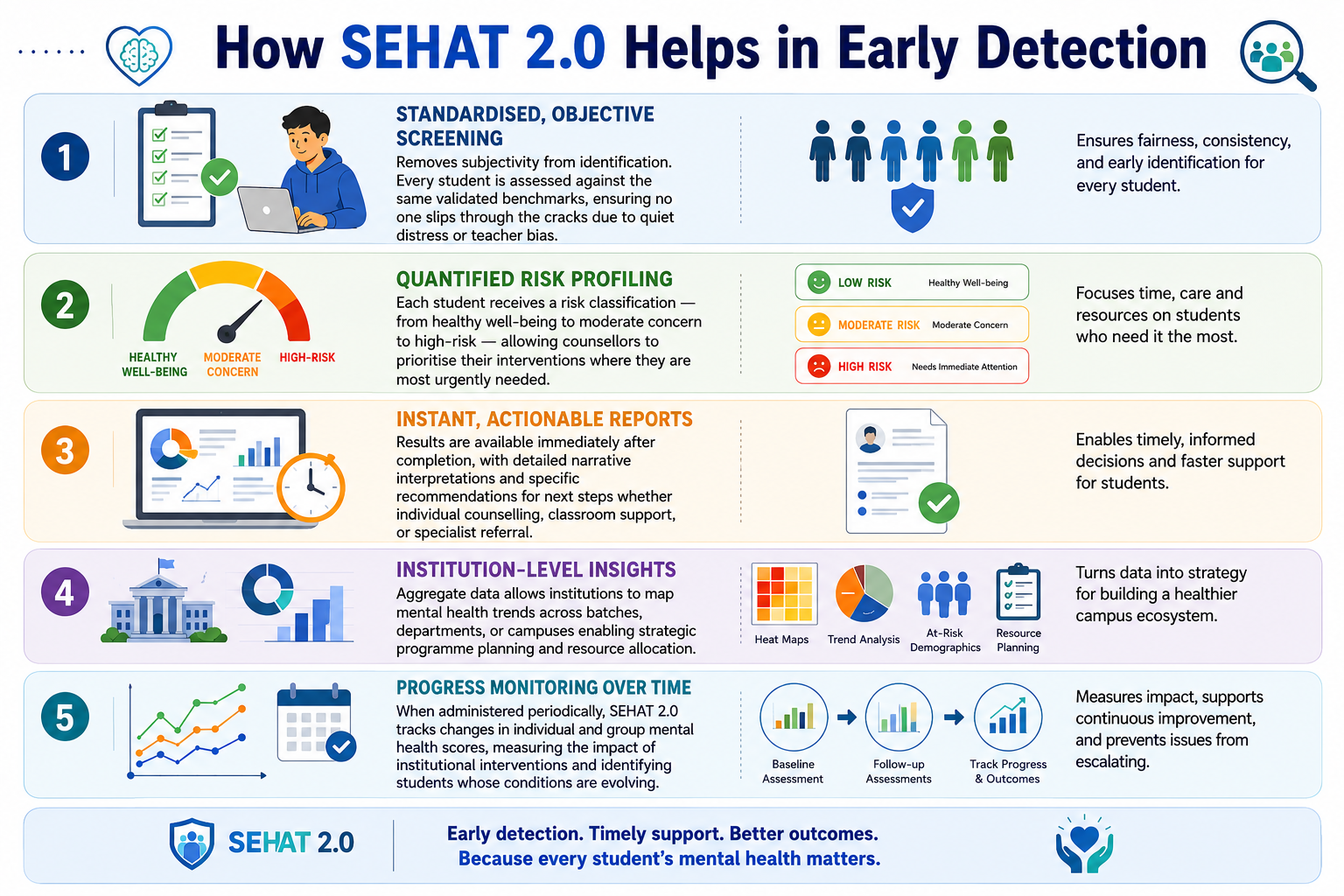
How SEHAT 2.0 Builds a Mental Health Culture
Normalising Mental Health Conversations
Administering a structured assessment signals institutional commitment, reducing stigma and encouraging students to engage openly with their psychological well-being.
Equipping Counsellors with Evidence
Counsellors gain structured, data-backed profiles to guide support sessions — replacing guesswork with evidence-driven therapeutic direction.
Guiding Policy & Curriculum Decisions
Institution-wide data informs decisions on counselling staffing, programme design, exam scheduling, and student support infrastructure.
Empowering Students with Self-Awareness
Students who understand their mental health profile are better positioned to advocate for themselves and develop targeted coping strategies.
Demonstrating Institutional Accountability
Validated mental health screening demonstrates commitment to holistic student development — building trust with students, parents, and regulatory bodies.
Creating a Feedback Loop for Continuous Improvement
Repeated assessments provide a longitudinal view of institutional mental health, enabling evidence-based evaluation and adaptive programme refinement.