

Upasna Srivastava
PhD Scholar
20 min read
September 12, 2026
The Science of Standardization
A psychological test is more than a list of questions or a digital questionnaire. A scientifically developed assessment follows a systematic psychological test standardization process to ensure consistent administration, scoring, and interpretation.
Standardization helps determine whether differences in psychological test scores reflect genuine differences in the construct being measured or variations caused by testing conditions. It is therefore a fundamental component of reliable, valid, and fair psychological assessment.
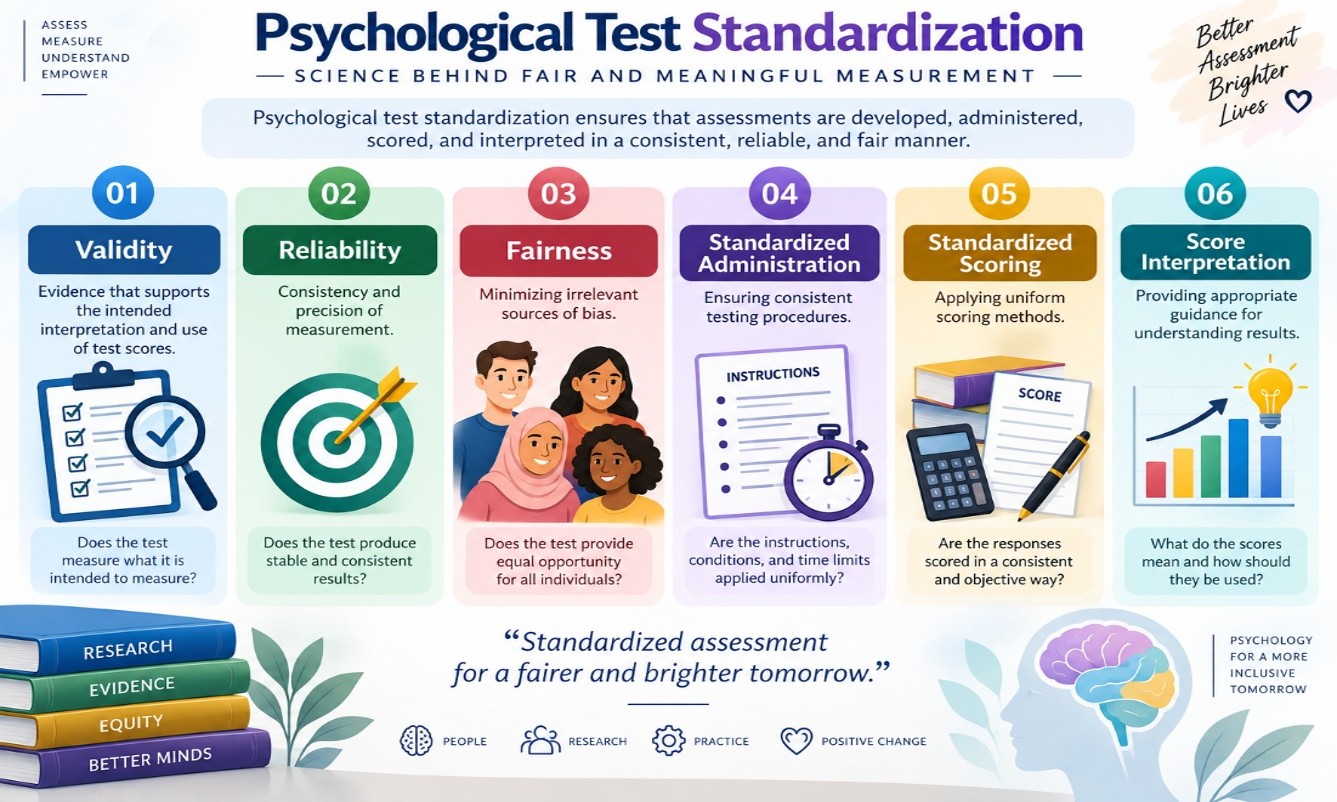
The Standards for Educational and Psychological Testing identify validity, reliability, fairness, administration, scoring, and interpretation as important considerations in the development and use of psychological tests.
What Is Psychological Test Standardization?
Psychological test standardization is the process of establishing uniform rules for:
- Administering a test
- Giving instructions
- Recording responses
- Scoring answers
- Interpreting results
- Comparing scores with an appropriate reference group
For example, imagine that one person completes a stress questionnaire in a quiet room with clear instructions, while another completes it in a noisy environment and receives additional explanations from the examiner. Their scores may differ because of the testing conditions rather than their actual stress levels.
A standardized test attempts to reduce these unnecessary differences. It ensures that people are assessed as consistently as possible, regardless of who administers the test or where it is conducted.
Why Is Standardization Important?
Psychological characteristics such as intelligence, anxiety, personality, motivation, and emotional regulation cannot be observed directly. They are measured through responses, behaviour, or performance.
This creates several possible sources of error:
- Different examiners may provide different instructions
- Test-takers may misunderstand questions
- Scorers may evaluate responses differently
- The testing environment may affect performance
- Language and cultural differences may influence answers
- Scores may be compared with inappropriate norms
Standardization helps manage these challenges. It supports consistency, improves fairness, and provides a stronger basis for interpreting psychological test scores.
IMPORTANT NUANCE
Standardization does not mean that one test automatically works equally well for every person. The test must also be appropriate for the population, language, culture, and purpose for which it is being used.
Relationship Between Test Development & Standardization
The relationship can be presented clearly as a sequential process, where test development forms the foundation and standardization establishes the psychometric quality and interpretability of the final test.
Components of the Standardization Process :
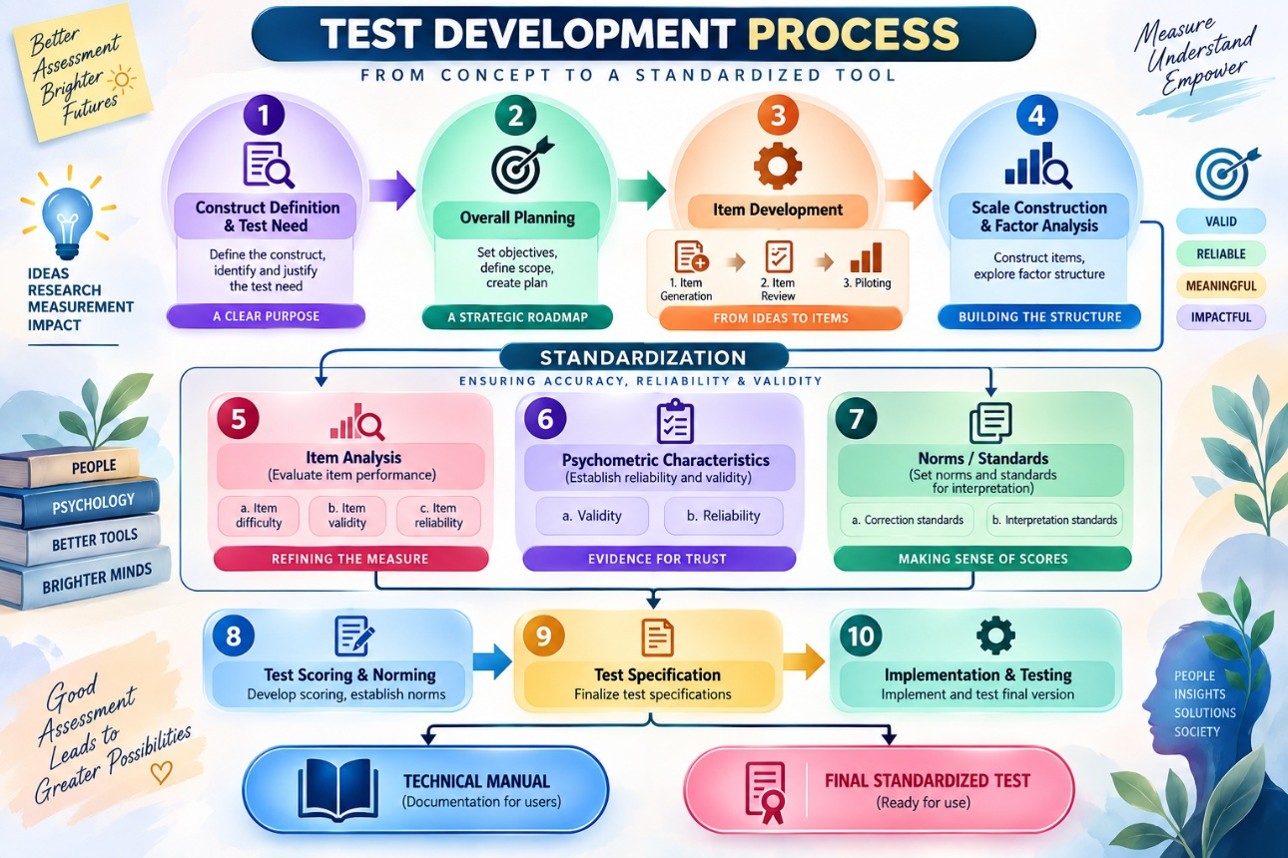
The development of tests involves the process of creating the test itself. First, it involves the definition and formulation of the construct, coming up with questions, reviewing them, performing pilot tests, and determining the structure of the assessment. As the next step, standardization comes into play, which is an important part of the construction process. Standardization examines the quality of the test and the items as a whole and manages to check it through the methods of item analysis, reliability, validity, scoring procedures, and norm creation. At the end of the process, a standardized psychological test appears with all required documentation.
Main Components of Test Standardization
Psychological test standardization is a systematic process used to establish consistent procedures for the administration, scoring, interpretation, and evaluation of a psychological assessment. Standardization helps ensure that test scores are obtained and interpreted under comparable conditions and that the assessment demonstrates adequate reliability, validity, and normative evidence.
A scientifically developed psychological test generally requires clearly defined constructs, standardized administration procedures, objective scoring methods, and appropriate norms. The following are the major components of psychological test standardization.
1. DEFINING THE PSYCHOLOGICAL CONSTRUCT
The first step in developing and standardizing a psychological assessment is to clearly define the psychological construct that the test is intended to measure. A psychological construct refers to a theoretical characteristic, ability, behaviour, or psychological experience that cannot always be directly observed but can be measured through appropriate indicators. Examples include:
- Self-Esteem
- Working Memory
- Social Anxiety
- Emotional Regulation
- Academic Motivation
- Occupational Stress
- Psychological Resilience
Importance of Construct Definition
Many psychological concepts have multiple dimensions and may be interpreted differently across theoretical perspectives. For example, stress may refer to perceived stress, physiological arousal, emotional exhaustion, stressful life events, or coping responses.
Therefore, test developers should specify precisely:
- What the construct means within the assessment
- Which dimensions are included
- Which aspects are excluded
- What observable behaviors or responses represent the construct
- Which population the construct is being assessed in
- How scores will be interpreted
A well-defined construct provides the conceptual foundation for item development, scale construction, validation, scoring, and interpretation.
Academic principle :
Construct clarity is fundamental to establishing meaningful validity evidence for a psychological assessment.
2. STANDARDIZED TEST ADMINISTRATION
Standardized administration refers to conducting a psychological test according to predetermined and consistent procedures. The objective is to minimize variation caused by differences in examiners, instructions, testing environments, or administration procedures.
A test manual should clearly describe:
- Standard instructions for participants
- Time limits
- Permitted and prohibited materials
- Order of test sections
- Response procedures
- Break requirements
- Examiner responsibilities
- Procedures for handling participant questions
- Conditions for discontinuing the assessment
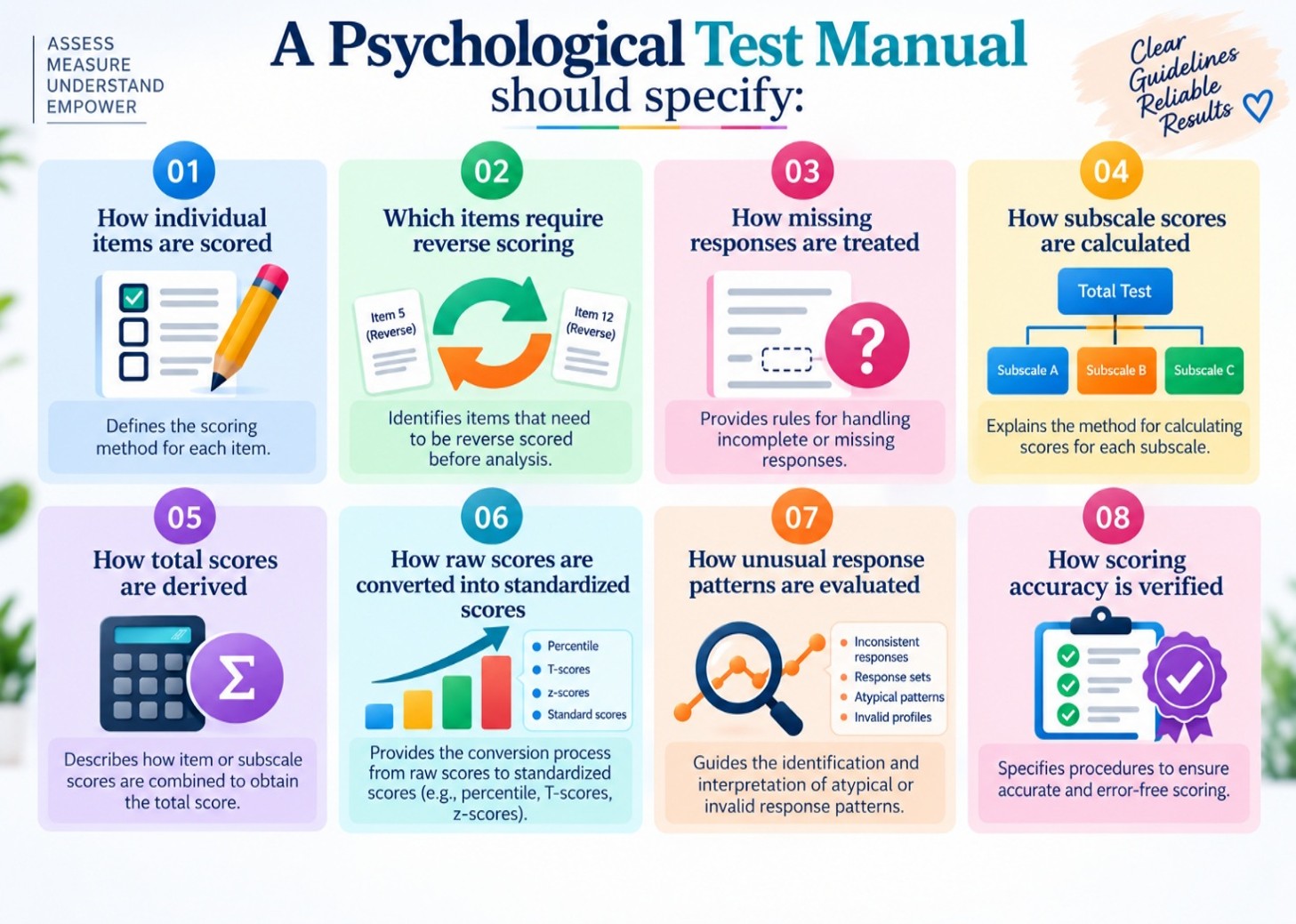
3. STANDARDIZED SCORING
Standardized scoring establishes a systematic procedure for converting participant responses into meaningful scores. Clear scoring procedures reduce the possibility of examiner and data-processing errors.
Inter-Rater Reliability
Some psychological assessments require professional judgment, particularly behavioural, observational, performance-based, and projective assessments. In such assessments, scoring criteria should be clearly defined, and evaluators should receive appropriate training. The consistency between different evaluators is known as inter-rater reliability. Strong inter-rater reliability indicates that trained evaluators produce similar ratings or conclusions when assessing the same behaviour or response.
4. NORMS AND REFERENCE GROUPS
A raw test score has limited interpretive meaning on its own. Norm-referenced interpretation involves comparing an individual's score with scores obtained from an appropriate reference or normative group. A normative sample should be relevant to the target population for which the psychological test is intended.
Example:
A child's reading performance should generally be interpreted using norms based on children of a comparable age and educational background. Using adult norms for a child could result in an inappropriate interpretation.
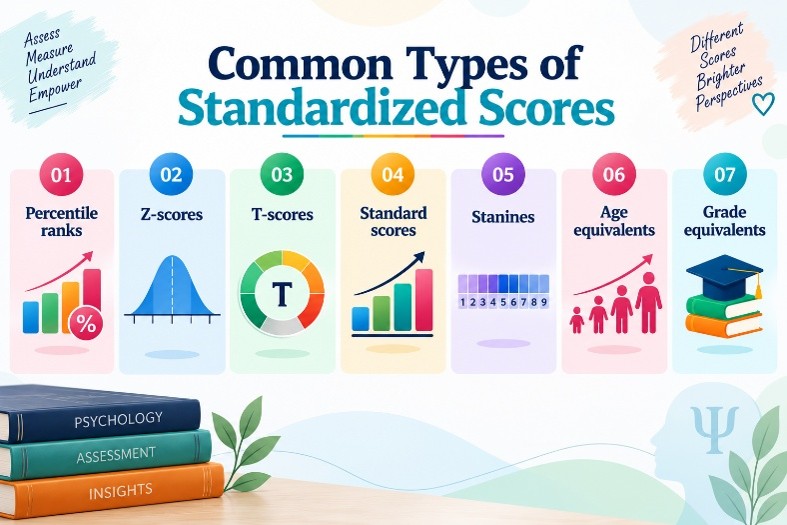
Common Types of Standardized Scores
Psychological assessments may report scores in several forms; the appropriate scoring system depends on the assessment's purpose, design, and psychometric characteristics.
Reliability in Psychological Testing
Reliability refers to the consistency and precision of test scores. A reliable test should produce reasonably similar results when the psychological characteristic and testing conditions remain stable. Reliability is not a permanent or universal property of a test. A test may be highly reliable for one group or purpose but less reliable for another. For example, a measure of a stable personality trait may be expected to show good test retest reliability, while a measure of current mood may naturally show more variation because mood can change over time.
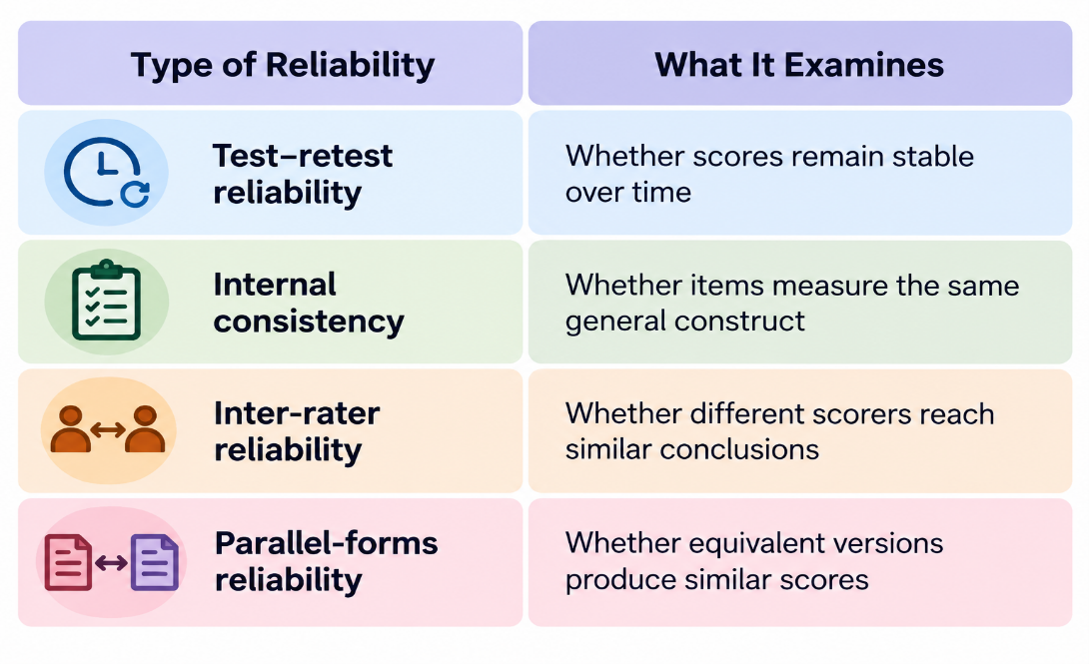
Reliability alone does not prove that a test measures the correct construct. A test can provide consistent scores and still measure something different from what it claims to measure.
Validity: Does the Test Measure What It Claims?
The term ‘validity’ refers to the extent to which theory and evidence support the interpretation and the intended use of test results. Validity is contextual and is defined by the purpose, the audience, and the situation.
A case in point is that a screening tool may be adequate to identify a person who should be subjected to an additional evaluation, but may be inadequate for the purposes of substantiating a diagnosis.
Why Is Psychological Test Standardization Important?
The primary purpose of standardization is to improve the consistency, comparability, and interpretability of psychological measurement. A properly standardized assessment should provide evidence that: These components work together to support the scientific quality and practical usefulness of a psychological assessment.
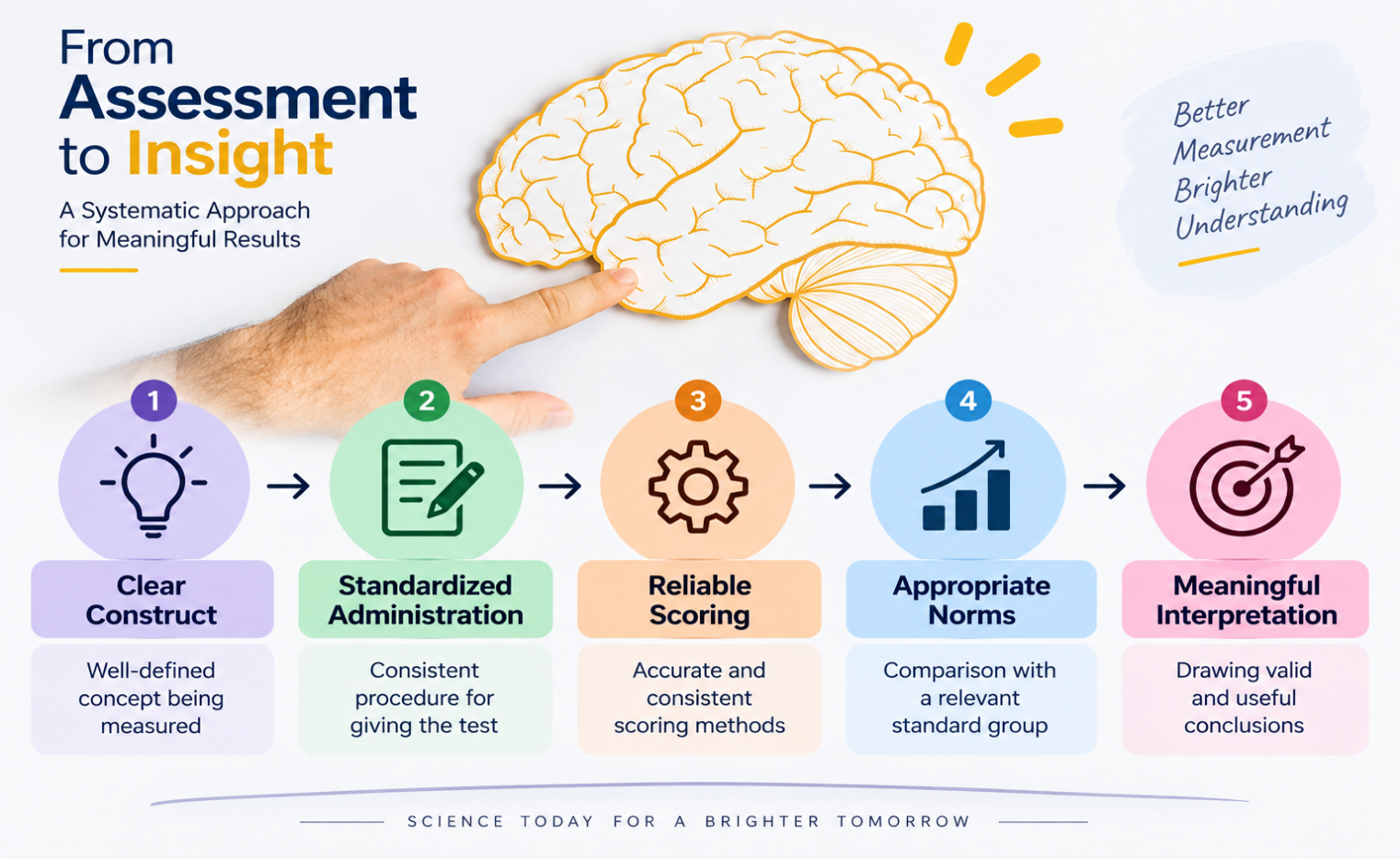
Key Takeaway
Psychological test standardization is more than simply creating a set of questions. It is a systematic psychometric process that establishes how an assessment should be administered, scored, and interpreted and provides evidence supporting the reliability, validity, and appropriate use of its scores. A well-standardized psychological assessment ultimately helps researchers and professionals make consistent, evidence-informed, and contextually appropriate interpretations of psychological characteristics.
Measurement Error and Score Interpretation
No psychological test produces a perfectly precise score. Measurement error refers to variations in observed scores caused by factors such as mood, fatigue, distractions, guessing, unclear items, examiner effects, or scoring procedures. Therefore, interpret psychological test scores with consideration of test reliability and measurement precision. The Standard Error of Measurement (SEM) helps estimate the expected range of error around an observed score.
Key Principle: A psychological test score is an estimate of an individual's true score and should be interpreted within the limits of measurement error.
Observed Score = True Score + Measurement Error
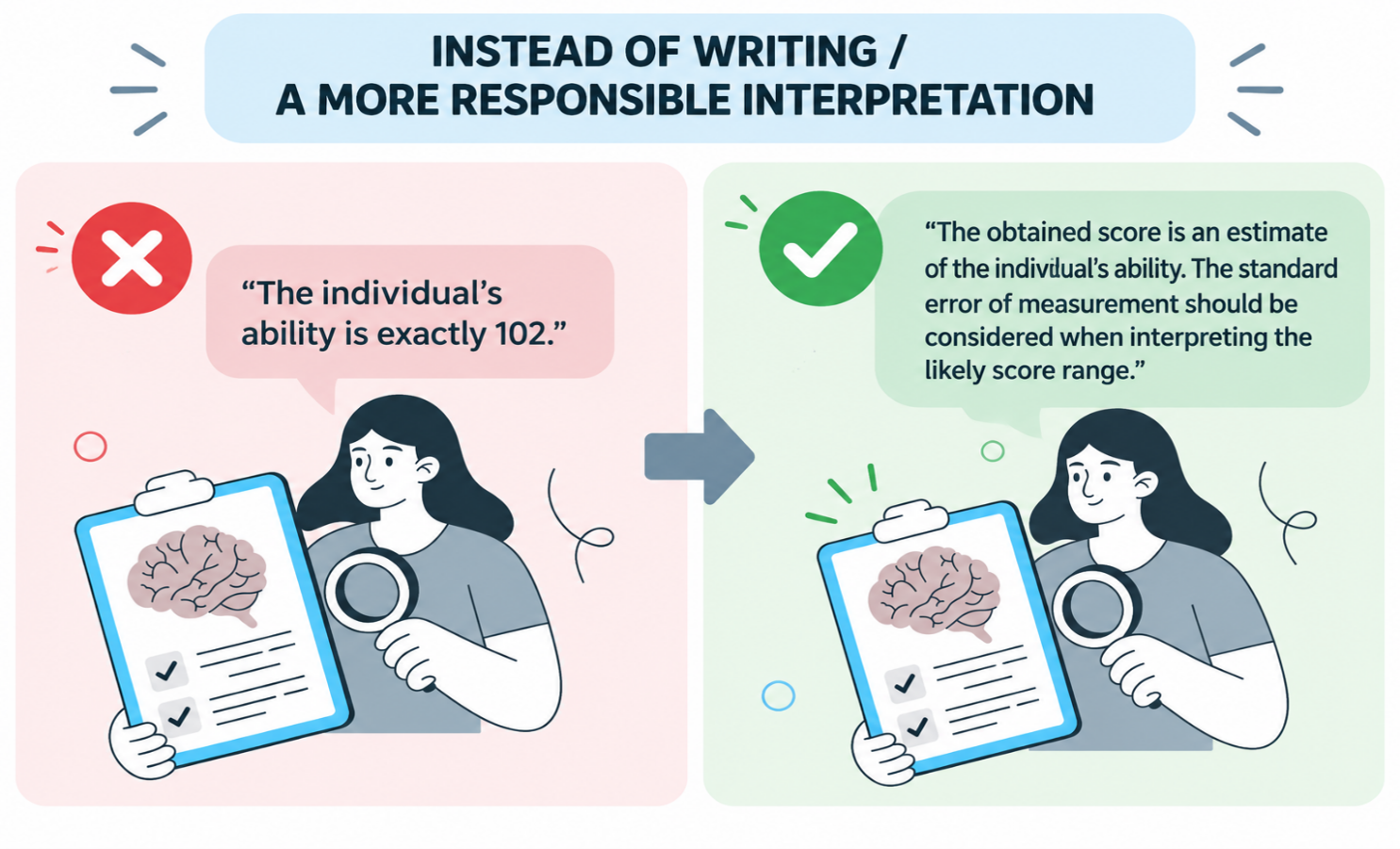
Fairness and Cultural Relevance in Psychometric Testing
A standardized psychological test should provide fair and equitable opportunities for individuals to demonstrate the construct being measured. Factors such as unfamiliar language, cultural differences, educational background, accessibility barriers, technology access, and inappropriate norms can affect test performance. Fairness does not mean identical testing conditions; it means minimizing irrelevant factors that may influence scores.
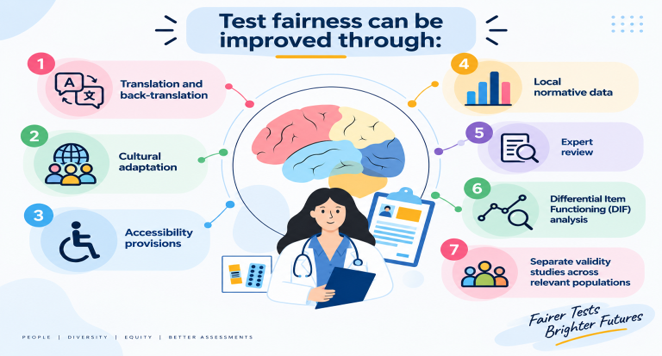
A translated psychological test should not automatically be considered culturally equivalent to the original version. Evidence of cultural relevance, reliability, and validity is necessary for appropriate use.
Standardization in Online Psychological Testing
Digital assessment tools handle instructions, scoring, storage, remote delivery, reporting, adaptive testing, and response tracking but moving a paper test online isn’t just a format swap. Developers must check device/internet compatibility, security, privacy, identity verification, distractions, accessibility, administration differences, and automated scoring accuracy. Tests standardized on paper should be re-evaluated digitally to ensure response and score patterns stay equivalent. Good digital platforms improve standardization, accessibility, and efficiency for psychological assessment.

Prasad Psycho has its own digital assessment platform, DigiConnect, designed to make psychological assessment more accessible, efficient, and convenient for professionals and their clients. The platform brings digital assessments, online administration, automated scoring and reporting, and secure data handling together in one system.
Key Features
- Standardized Administration – Consistent instructions and testing procedures.
- Automated Scoring – Faster and uniform scoring with reduced manual effort.
- Secure Digital Access – Assessments can be conducted remotely through online platforms
- Individual & Group Assessment – Suitable for both individual testing and large-scale administration.
- Automated Reports – Results can be processed into structured assessment reports.
- Flexible Assessment Delivery – Enables professionals and participants to access assessments across different settings.
The Importance of a Test Manual
A test manual is a technical document that explains how an assessment was developed, evaluated, and intended to be used.
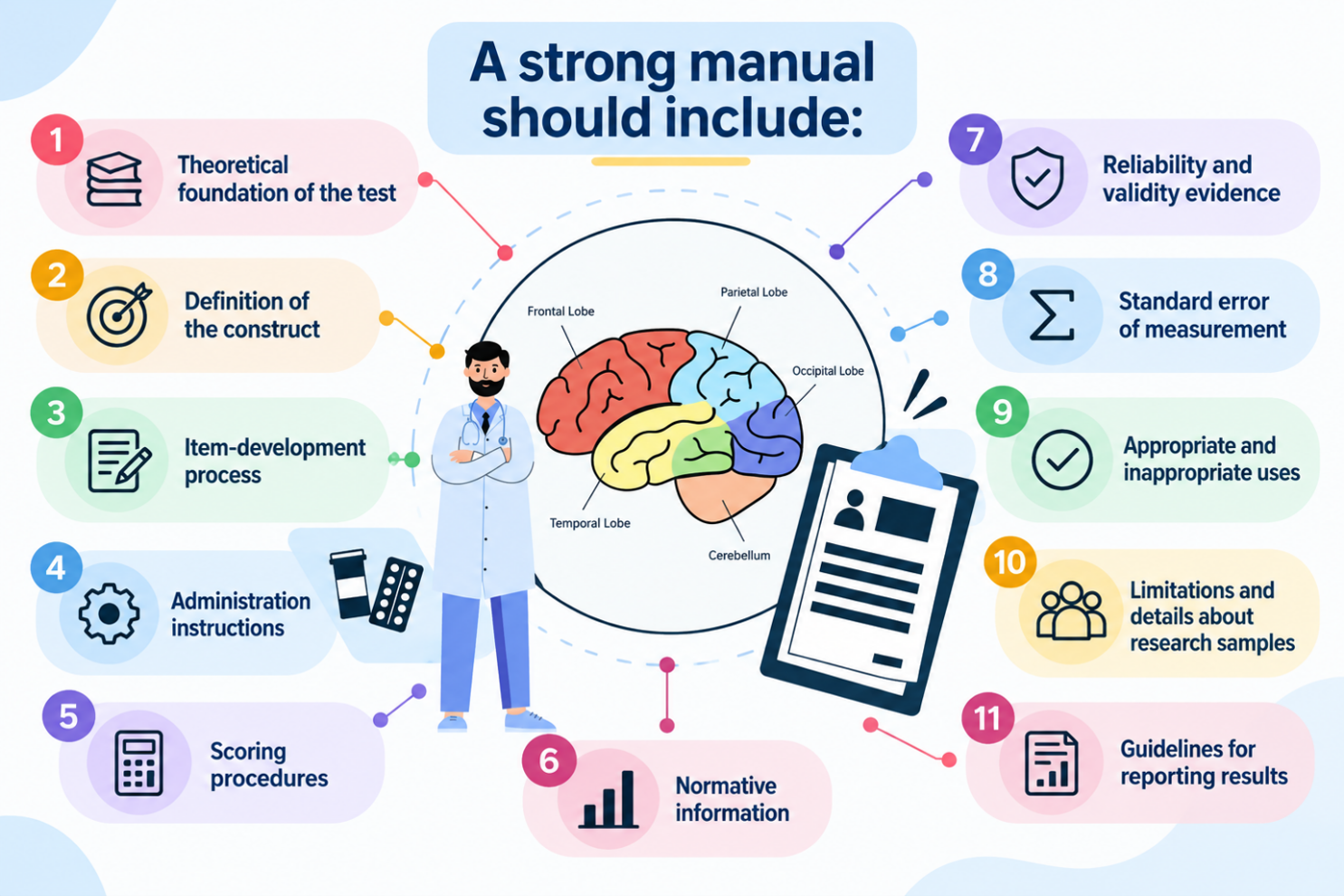
Before using a psychological test, professionals should determine whether the available evidence supports the specific decision they intend to make. A test may be suitable for research screening, educational guidance, preliminary assessment, clinical monitoring, or workplace development. It may not be suitable for formal diagnosis, legal decisions, employee selection, or high-stakes classification. The appropriate use depends on the evidence available for that particular purpose.
Example: Developing a Social Anxiety Scale
Suppose researchers want to develop a social anxiety scale for university students. The standardization process may include the following steps:
- Define social anxiety using psychological theory and previous research
- Create items covering fear of negative evaluation, discomfort in social situations, avoidance, and physiological symptoms
- Ask experts to review the items for relevance, clarity, and cultural appropriateness
- Conduct a pilot study with students from the intended population
- Examine item difficulty, item discrimination, missing responses, and response patterns
- Use statistical analysis to investigate the factor structure
- Examine internal consistency and test–retest reliability
- Compare scores with established measures of anxiety, social functioning, and related constructs
- Develop norms using an adequately described sample of university students
- Document administration, scoring, and interpretation procedures
- State the limitations and appropriate uses of the scale
Only after this process can the scale be responsibly used for purposes such as research screening or identifying students who may benefit from further evaluation. Even then, the scale should not be used as a substitute for a comprehensive clinical assessment.
Conclusion
A good psychological test is defined not by its length, design, or automated output, but by the strength of its scientific evidence and the care taken in its administration and interpretation.
Why Standardization Matters
Psychological test standardization forms the backbone of trustworthy assessment by ensuring that scores are consistent (reliability), meaningful (validity), and comparable (norms). Fairness further ensures that no individual is disadvantaged due to irrelevant cultural, linguistic, technological, or personal factors.
Beyond the Score
A well-standardized psychological test does more than generate a number it offers a rigorously evaluated foundation for understanding human behaviour in context. When reliability, validity, norms, and fairness are all upheld, the test becomes a tool for insight rather than just measurement.
Continue Your Learning
To deepen your understanding of evidence-based assessment, explore these related resources:
- What Is Psychological Assessment?
- Reliability and Validity in Psychological Testing
- How Psychological Tests Are Developed
- Understanding Percentile Ranks and Standard Scores
- Ethical Principles in Psychological Assessment
- Online Psychological Testing: Benefits and Limitations
- Difference Between Screening and Diagnosis
This conclusion integrates core keywords such as psychological test, standardization, reliability, validity, norms, and fairness to support search visibility while maintaining clarity and reader engagement.
Common Misconceptions
“A high reliability coefficient proves that the test is good.”
Not necessarily. Reliability indicates consistency, but a consistent test may still measure the wrong construct. Evidence of validity is also required.
“A standardized test works equally well for everyone.”
Not automatically. Standardization improves consistency, but norms, language, culture, accessibility, and context must also be considered.
“Computerized testing is always more objective.”
Digital testing may improve scoring consistency, but it can also create concerns related to technology access, privacy, technical errors, and the testing environment.
“One score describes the whole person.”
A test score reflects performance on a particular measure under particular conditions. It should be interpreted alongside interviews, observations, background information, and other relevant evidence.
“A test remains valid forever.”
Validity evidence may need to be reviewed when the population, language, technology, context, or intended use changes.
Psychological Test Evaluation Checklist
Before using a psychological test, ask:
- What construct does the test measure?
- Is the construct clearly defined?
- Who participated in the standardization sample?
- Are the norms appropriate for the person being assessed?
- Were administration conditions clearly described?
- What evidence supports reliability?
- What evidence supports validity?
- What is the standard error of measurement?
- Is the test appropriate for the intended use?
- Has it been adapted for the relevant language and culture?
- Are there digital or accessibility concerns?
- Are the limitations clearly reported?
- Does the person using the test have appropriate training?
If these questions cannot be answered, the test should be used cautiously.
Frequently Asked Questions
Q. What is standardization in psychological testing?
Standardization is the process of creating consistent procedures for test administration, scoring, interpretation, and comparison with appropriate norms.
Q. Why is standardization important?
It reduces unnecessary differences caused by examiners, environments, instructions, and scoring procedures. This makes test results more consistent and interpretable.
Q. What is the difference between reliability and validity?
Reliability refers to the consistency of test scores. Validity concerns whether the evidence supports the interpretation and intended use of those scores.
Q. What are psychological test norms?
Norms are reference scores obtained from a specific population. They help professionals understand how an individual's score compares with similar people.
Q. Can a translated psychological test be used immediately?
No. Translation does not automatically establish cultural equivalence. The adapted version may require linguistic review, local research, new norms, and validity evidence.
Q. Are online psychological tests reliable?
Some online tests can be reliable, but reliability depends on the quality of the test, the administration platform, the population, and the evidence supporting digital use.
Q. Can a psychological test provide a diagnosis?
Not every psychological test is designed for diagnosis. Diagnostic decisions generally require appropriate tools, professional training, clinical judgment, and multiple sources of information.