

Upasna Srivastava
PhD Scholar
10 min read
July 04, 2026
01. INTRODUCTION
The Room That Flinches Together
When you go to a dark theatre to see a horror film, pay attention to what happens just before the jump scare. Two hundred strangers, who have never met and who will never speak, stiffen their shoulders in the same half second. A woman gasps three rows back. The man beside you grabs his armrest. This wasn’t anybody’s plan. Nobody practiced it. And yet the room moves as one organism, synchronized by nothing more than the shared light of a screen.
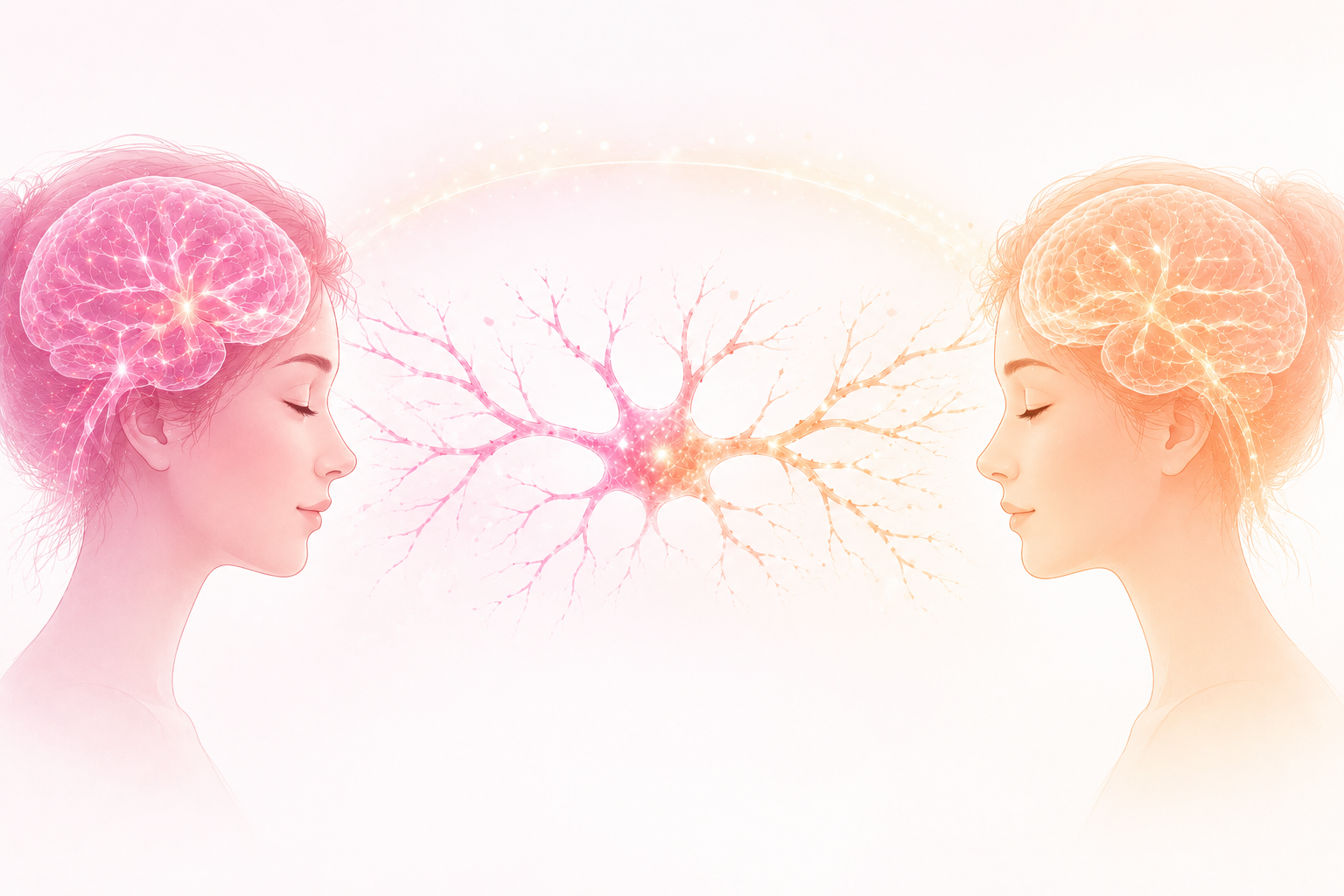
We talk about this as "getting caught up" in a story, as if empathy were some kind of weather that blows through a crowd. But behind that vague description lurks a startlingly literal biological event. Your brain isn't just interpreting what you see in that moment. It's rehearsing in silence, activating bits and pieces of the same neural machinery you would use if the danger were happening to you. You are not quite experiencing, when you watch, a metaphorical echo of someone else's fear. It's more like a partial, muted replay of it, made inside your own skull.

This is the strange, still-unfolding story of how the human brain solves the oldest problem in social life: how does one mind ever come to know what another mind is feeling?
02. MIRROR NEURONS
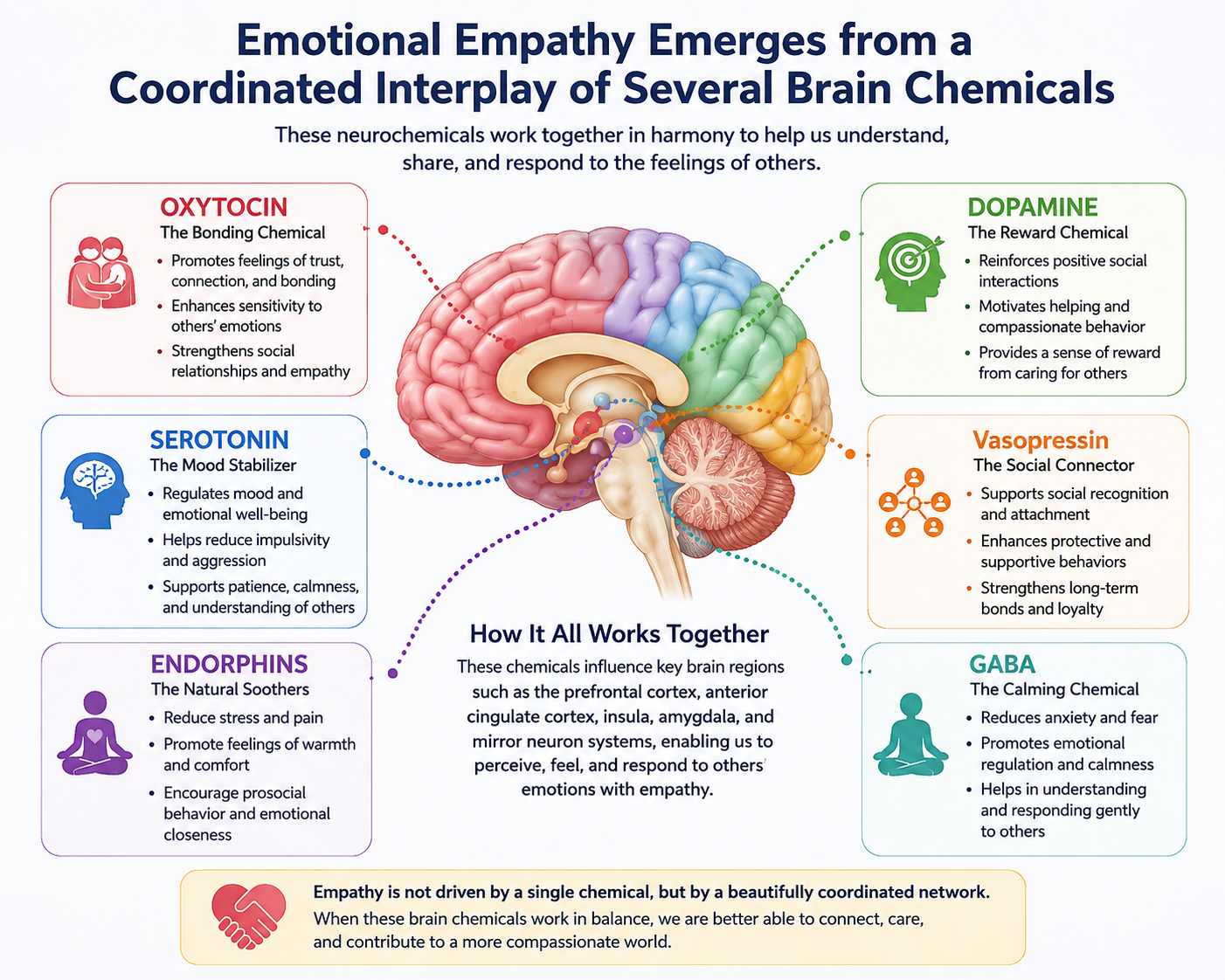
Which Neurotransmitters Drive Emotional Empathy?
Emotional empathy is a coordinated mix of multiple brain chemicals. Oxytocin is central, but other neurotransmitters and neuropeptides (such as dopamine, endogenous opioids, serotonin, noradrenaline, and vasopressin) are also important, each with distinct functions that, together, enable us to feel and respond to the feelings of others.
03. BRAIN CHEMISTRY
A Second Self, Running Quietly in the Background
For most of the twentieth century, the leading answer was almost entirely intellectual. We infer other people’s emotions like a detective infers a motive. We read facial cues, body language, context, and use reason to come to a conclusion. This view made empathy into a kind of arithmetic carried on by a cool and disengaged observer.
Modern neuroscience has made that picture far more complicated. When you see someone stub a toe, wince in pain, or recoil from a bad smell, brain imaging shows that your own sensory and emotional circuits light up in patterns that sometimes overlap strikingly with what would happen if you were the one experiencing it.
Watching someone in pain activates the pain-processing part of your brain, the part that makes it feel uncomfortable, even though the part of your brain that tells you exactly where it hurts stays quiet. Watching someone's face turn with disgust is kind of like feeling disgusted yourself.
Watching or experiencing? It's a subtle distinction, but one that's profoundly unsettling in a quiet, beautiful way. You build a rough simulation of the other person's state using tools designed for you. You don't just observe someone's distress from a safe intellectual distance. A little real piece happens to you too.
04. SELF VS OTHERS
The Brain's Translation Problem
If life were only a simulation, empathy would be a nightmare. If your brain couldn't tell the difference between your own feelings and a copy of someone else's, you'd be paralyzed by every stranger's mood. You couldn't tell your hunger from their sadness, your fear from their pain. Something has to keep the borrowed feeling correctly labelled as “theirs.”
I think it's mostly the temporal parietal junction and the right supramarginal gyrus that do that labelling thing. Scientists have found something almost comical about how fragile this distinction is: when people are asked to judge another person's emotions when they themselves have a different emotion, they usually start with their own emotion, and then correct it by a fraction of a second, which can be interrupted by a little jolt to that brain region and make people attribute their own emotions to others. In other words, empathy requires the separation of “what I feel” from “what you feel,” and that separation is a real thing, not something we’re born with.
This is why some people seem to have no filter between them and other people's physical sensations at all. Less than one percent of people has mirror-touch synaesthesia. This is a condition where, when you watch someone else get touched, you actually feel it on your skin. Researchers studying this condition think it might be a particularly strong, uncontrolled version of the same simulation-and-labelling system everyone else has, but missing some of the self-other boundary that keeps borrowed sensation from crossing over.
The Bridge Has Tolls
If empathy relies on a common neural mechanism, then it must act like all other constrained biological resources, which are inherently variable, costly, and unequally allocated based on the situation. And indeed, it does, though the findings are not pretty.
Empathy, in brain scanning studies of individuals observing others in pain, is found to decrease when the person in distress is considered an out-group member, someone who has brought their troubles upon themselves, or even just a statistic rather than an individual person. The latter is a phenomenon that has a name in the real world, compassion fatigue, defined as the observed phenomenon where people experience greater emotions and generosity toward the plight of one named, pictured individual compared to many others in the same condition.

In other words, what we have called an empathic bridge has been constructed by nature primarily for kin and community. The extension of that bridge to people who aren't kin or friends, or even to ideas, is another undertaking altogether.
There is even a physiological marker for real connection. Studies of couples' heart rates and skin conductance, therapists and clients, instructors and pupils, and even strangers talking briefly together show that there is sometimes a synchronization of the two autonomic nervous systems. The physiological rhythms go up and down in concert with the degree of rapport between the individuals. Being "in sync" with someone may be more than just a metaphorical expression.
05. EMPATHY TRAINING
Building Better Bridges
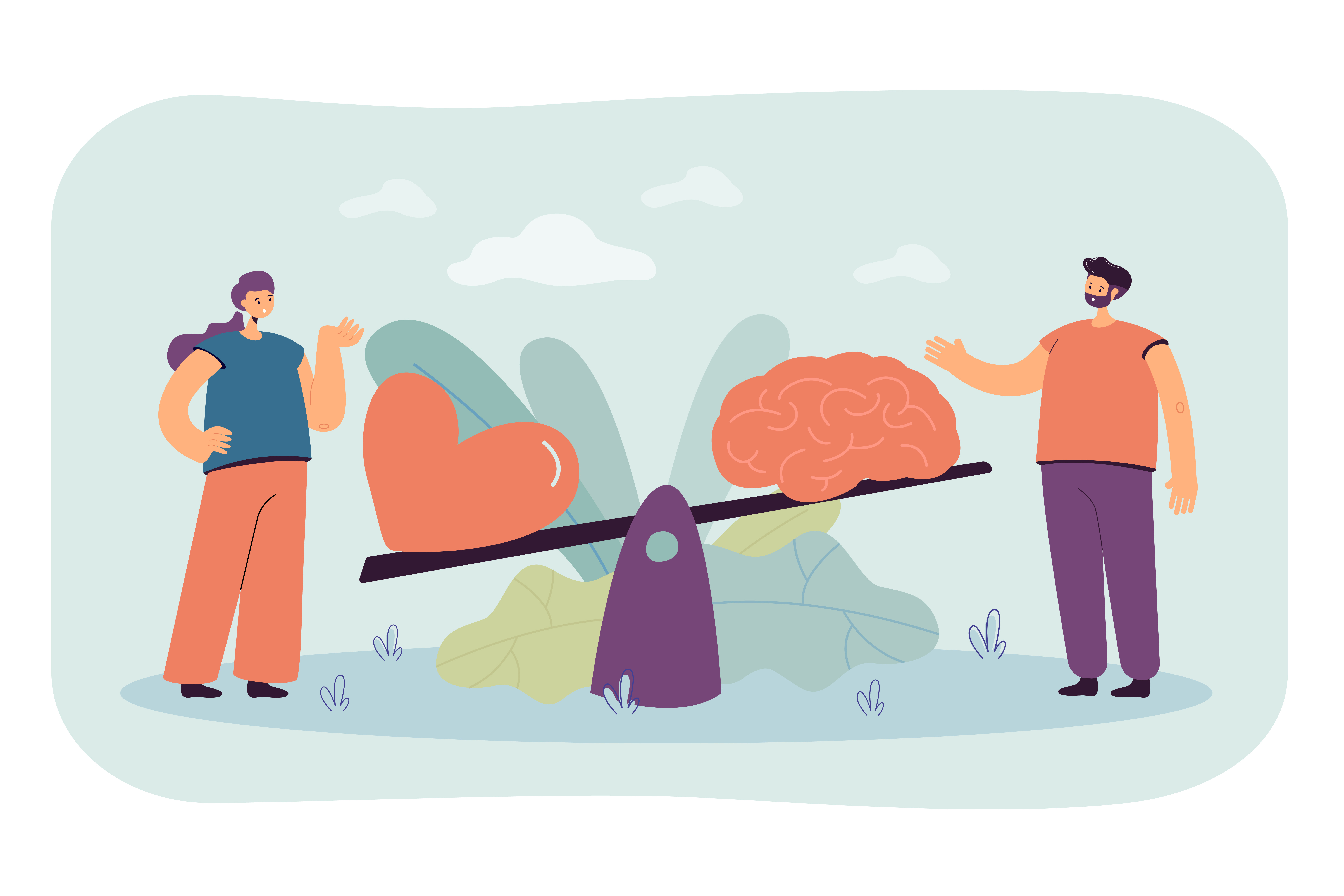
None of the above implies that empathy is unchangeable. In fact, the biological facts suggest the reverse, since, as has been seen, the empathic process requires not just an instinctive response but also a simulation and labelling exercise, which implies that empathy can be trained, as can any difficult skill.
Individuals who regularly read literary fiction, focusing more on internal life than on the external behavior of characters, do better at understanding people’s emotions and thoughts when tested for empathy.
Meditative techniques designed to increase feelings of empathy not only towards our loved ones but also towards strangers and even those who cause us difficulties have been found to lead to observable changes in the functioning as well as the very structure of parts of our brains responsible for empathy through practice. Even such an apparently trivial process of picturing the person behind the statistic seems to reduce compassion somewhat in laboratory experiments.
All of this does not come easy, nor does it come automatically the same way that being startled by something in a dark movie theatre comes naturally. But that is ultimately the more optimistic picture of how things work. Because if empathy were simply a reaction we had without choice, we would be limited by whatever level of empathy was innate to our biology. Because empathy is actually constructed by our brains one moment at a time, it is also something we can learn to simulate in a little wider circle of people than usual.
06. CONCLUSION
The Brain That Connects Us
While empathy is commonly viewed as a virtue, neuroscience teaches us that it is a biological phenomenon as well. Each time we observe a human being expressing happiness, fear, or suffering, the brain creates a simulation for us, which helps us feel a bit of his or her emotional state without losing awareness of its belonging to somebody else.
But empathy does have limits. Its influence is impacted by our experiences, our prejudices, and the natural limitations that our brains create for us. Unchecked, empathy will always take the path of familiarity. However, unlike a pre-existing instinct, empathy can be enhanced through meaningful conversation, storytelling, mindfulness, and deliberate practice of putting ourselves in the shoes of others.
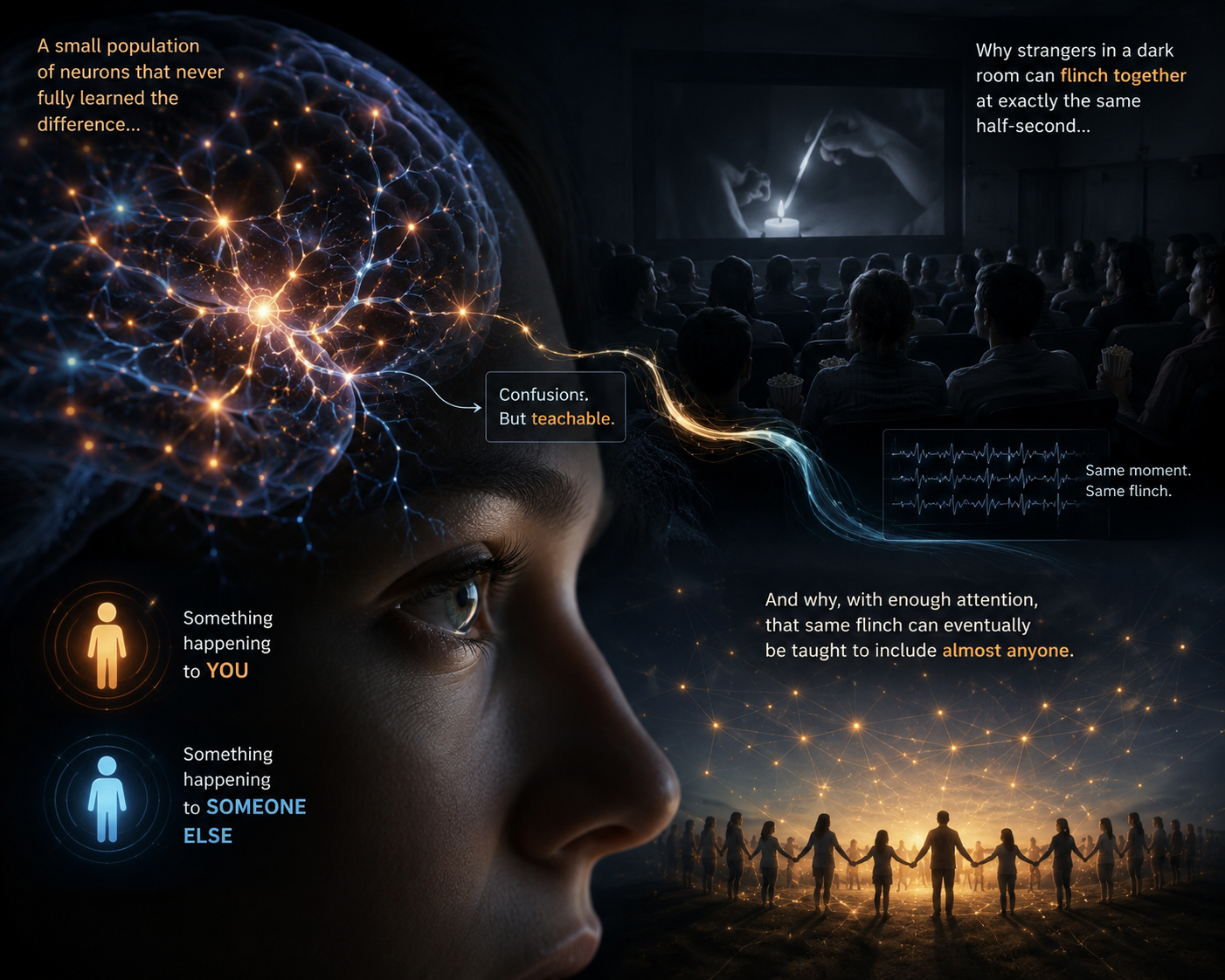
What gives the greatest cause for hope is the realization that empathy is not an on-off state. It is not an attribute that some people have and some do not. It is an ability that we continuously cultivate each time we make an effort to look at something from another person's point of view.
Ultimately, the science of empathy serves as a reminder that although there will always be an unbridgeable gap between the two minds, the human brain is specially made in such a way that it can continuously construct bridges to close this gap. These bridges are constructed with each passing interaction and are what make us human.