

Dr. Kranti K. Srivastava
Director, Prasad Pscycho Pvt Ltd
20 min read
October 07, 2026
Everyday Courage
When we think of courage, we picture firefighters, whistleblowers, and people who run toward danger. But most of the bravery in our lives looks far quieter: sending the email you have been avoiding, saying “I disagree” in a meeting, asking for help, or getting out of bed on a day when everything feels heavy.
These small acts rarely make headlines. Yet they may be the most reliable way to build resilience, cope with stress, recover from setbacks, and keep moving forward. In this post, we look at what everyday courage really is, why it works, and how you can practise it, one small step at a time.
Courage in Action: Captain Smit Machchhar and the Prime Minister’s Appreciation
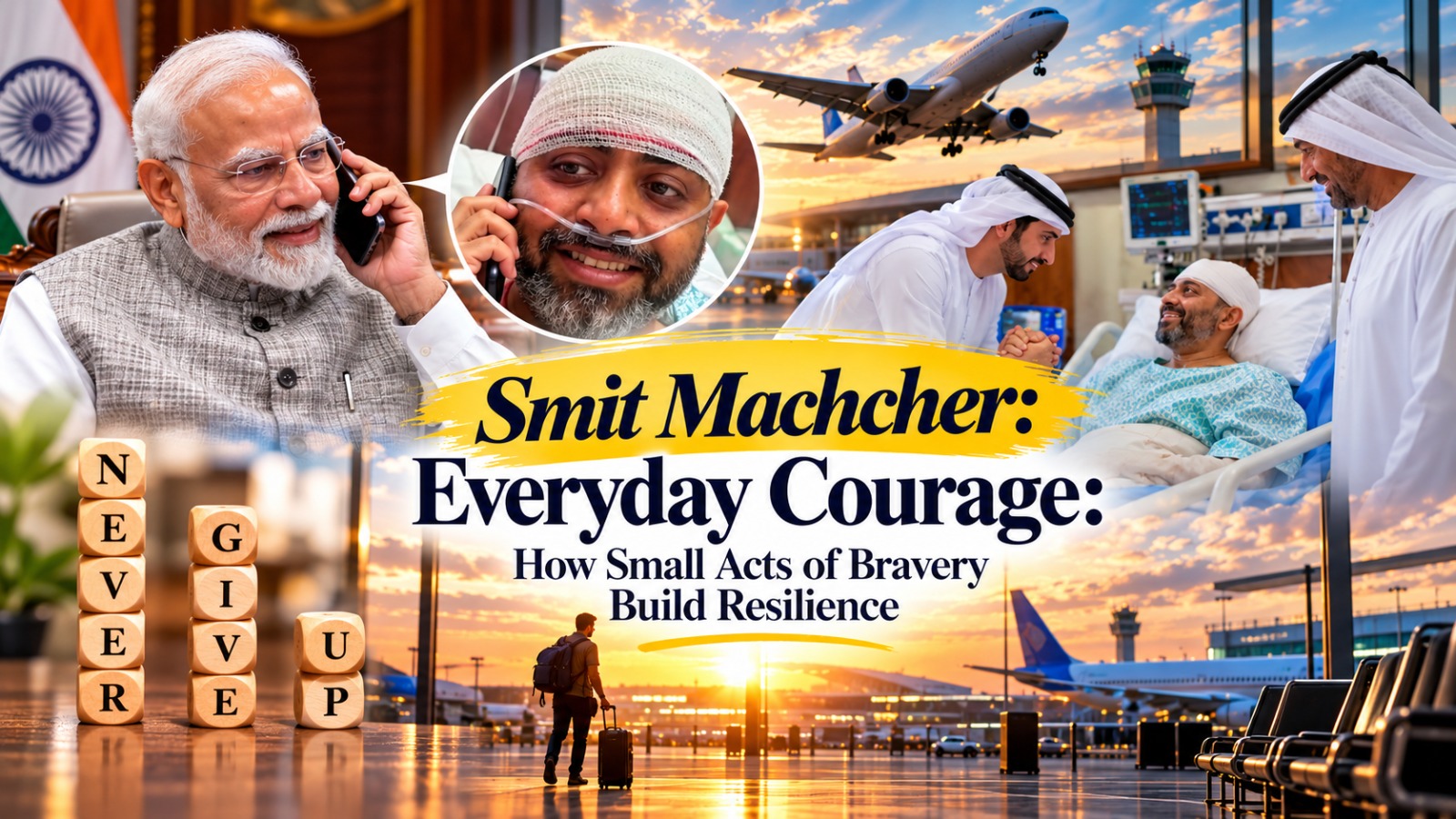
In early October 2026, India watched a real-life example of courage under extreme pressure. Captain Smit Machchhar, an Indian pilot with flydubai, was reportedly attacked in the cockpit by his co-pilot during a flight from Dubai to Tel Aviv. The attack is alleged, and the investigation is ongoing. Despite being seriously injured, he is credited with acting to protect the passengers and crew and helping avert a major tragedy. News reports say that, though badly wounded, he managed to open the cockpit door, which allowed passengers and crew to overpower the attacker. The flight was then diverted and landed safely in Saudi Arabia by two standby pilots who happened to be travelling as passengers. Israel’s Prime Minister Benjamin Netanyahu also called him “a true hero.”

Prime Minister Narendra Modi publicly praised his bravery. In a post on X on 1 October 2026, the Prime Minister lauded the captain’s immense courage and unwavering resolve to protect the lives of others while seriously injured; said his valour helped save hundreds of lives and avert a great tragedy; said India is proud of him; and prayed for his speedy recovery, renewed strength and good health.

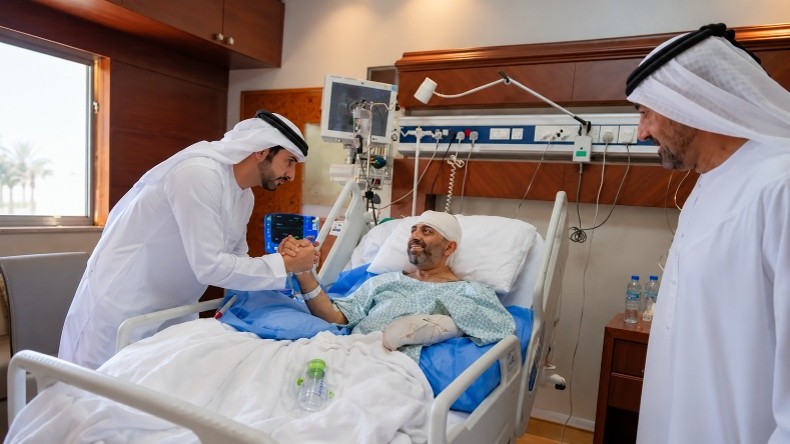
On 2 October 2026, the Prime Minister spoke to Captain Machchhar by video call while he recovered in hospital. Official and news reports say the Prime Minister, Mr. Narendra Modi, praised his courage, composure and presence of mind, and said a split-second decision had saved many lives. He reminded the country that Indians are, in his words, “people who save lives.” The Prime Minister also said the captain drew strength from reciting the Hanuman Chalisa during the ordeal, asked about his young children, and assured the family that Indian missions were providing all possible help. He had earlier spoken to the captain’s family and thanked them for the values they instilled.
Captain Machchhar, for his part, said the call made him emotional and proud. Reports say he explained that his years of flying experience helped him recognise quickly that the aircraft was in danger, and that he was determined to keep others safe even while fighting for his own life.
What Captain Machchhar’s Courage Teaches Us About Resilience
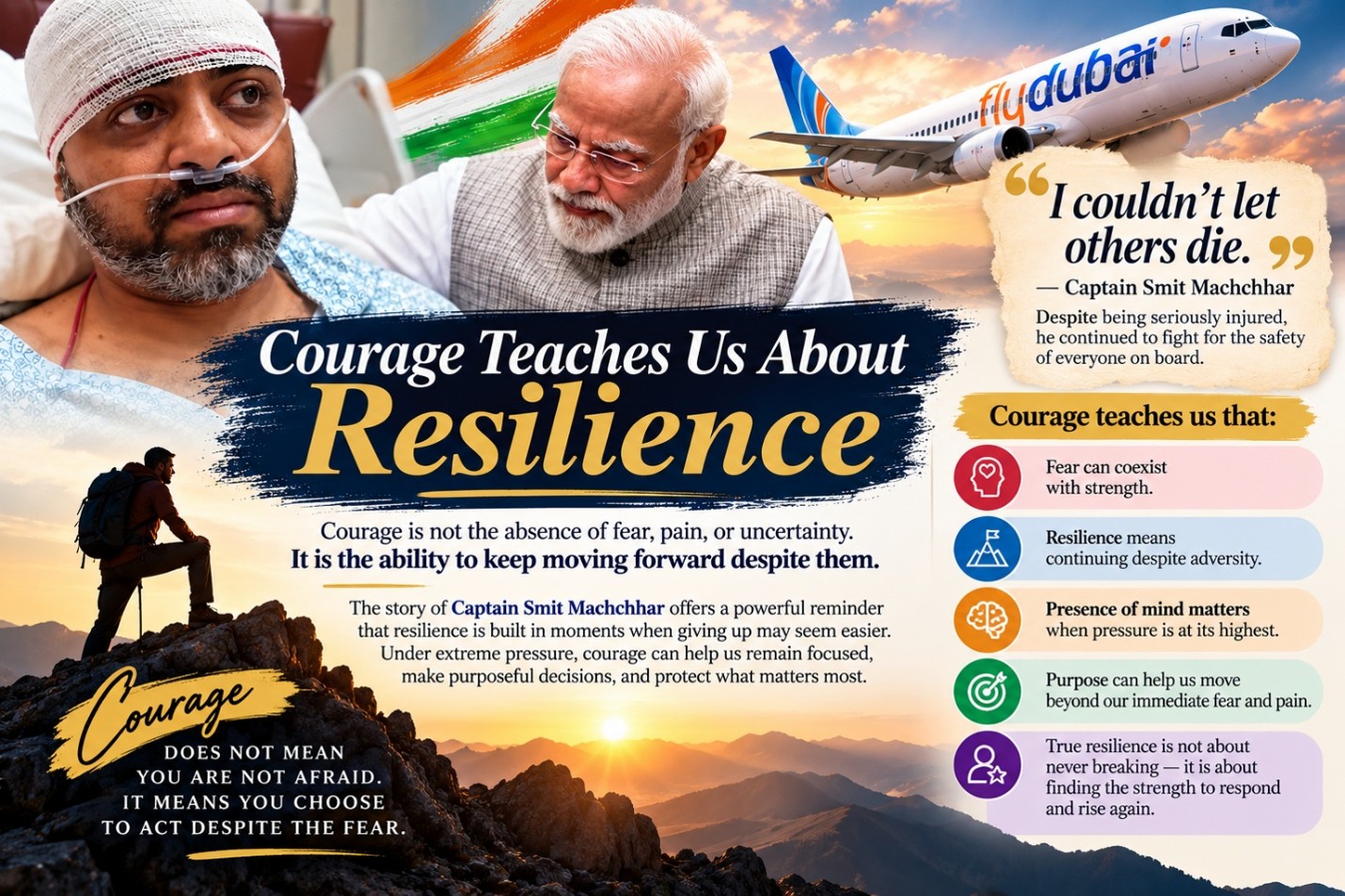
Moments like this are rare, and most of us will never face anything close. But the qualities people noticed in his response are the same ones that everyday courage builds:
- Composure under pressure. Staying calm enough to think clearly is a skill that grows through practice with smaller stressors.
- Acting despite fear. He did not wait to feel unafraid. Courage is action in the presence of fear.
- Preparation and experience Years of training gave him the instincts to act fast. Small brave acts over time build your own reserves.
- Purpose bigger than yourself. Thinking of others gave him a reason to keep going. A clear “why” is a powerful source of resilience.
- Inner strength and faith. He reportedly leaned on prayer. Whatever your own source of grounding, such as faith, values, family or reflection, it helps in hard moments.
- Support from others. The country’s prayers and the Prime Minister’s call remind us that strong support helps people recover.
You may never face a crisis like this. But every time you speak up, ask for help or try something that scares you, you strengthen the same inner muscle.
Other Pilots Whose Courage Inspired the World
Captain Machchhar is not the first pilot to be remembered for calm courage in an emergency. These stories show a common thread: training, composure and care for others.

Captain Chesley “Sully” Sullenberger safely landed US Airways Flight 1549 on the Hudson River after a bird strike disabled both engines, and all 155 people survived. Captain Tammie Jo Shults safely landed Southwest Airlines Flight 1380 after an engine failure caused a window to break, although one passenger tragically died. Captain Deepak Sathe, an experienced Air India Express pilot, was at the controls during the 2020 Kozhikode crash in heavy rain; reports credit his decisions, including circling to burn fuel, with helping prevent a larger fire and saving many lives, though he lost his own life in the accident.
Travelling as passengers, they stepped up when the crew was incapacitated and landed the aircraft safely. Their story quietly reminds us that being ready to help can matter as much as being on duty.
You do not need to be a pilot to learn from them. Everyday courage is the same skill at a smaller scale: prepare, stay present, think of others and act.

Why Small Acts of Bravery Build Resilience
- 1. Courage grows with practice. Fear shrinks when we face it in manageable doses. Psychologists often describe this as gradual exposure: you step toward something uncomfortable, discover you can handle it, and your confidence rises. Each small win becomes evidence that you can cope.
- 2. You learn that discomfort is survivable. Avoidance feels safe in the moment but teaches the mind that the feared thing is too dangerous to face. Small brave acts teach the opposite: “That was hard, and I got through it.”
- 3. You build a stronger sense of self-trust. Resilience is not only about toughness. It is about knowing you will show up for yourself. Every time you keep a promise to yourself, even a tiny one, that trust deepens.
- 4. Purpose bigger than yourself. Thinking of others gave him a reason to keep going. A clear “why” is a powerful source of resilience.
- 5. It changes how you see setbacks. Resilience is not only about toughness. It is about knowing you will show up for yourself. Every time you keep a promise to yourself, even a tiny one, that trust deepens.
- 6. It encourages connection. Asking for help or sharing a struggle invites support. Strong relationships are one of the most important protective factors for mental wellbeing.

Small Acts of Bravery You Can Try This Week
You do not need a big life change. Pick one from each area and see how it feels.
At work or study
- Share one idea in a meeting, even if it is not fully polished
- Ask a question you have been afraid might sound silly
- Ask for feedback instead of waiting for it
In relationships
- Tell someone you appreciate them
- Say “no” to something you do not have the energy for
- Have the honest conversation you have been postponing
For yourself
- Try a class, hobby or activity as a beginner
- Go for a walk or do a short workout on a low-motivation day
- Rest without guilt when you truly need it, because that takes courage too
For your wellbeing
- Tell a friend how you really feel
- Book the doctor or counselling appointment you have been putting off
- Write down one fear and one small step toward it

Building a Daily Courage Habit
- Keep a courage journal. At the end of each day, write one thing you did that felt a little scary. Over weeks, you will see a pattern of growth.
- Use a courage ladder. List fears from easiest to hardest and work your way up gradually.
- Find a courage buddy. Share your goals with a friend who will cheer you on.
- Be kind to yourself. Courage is not about never struggling. If you take a step back, that is part of the process, not the end of it.
- Respect your limits. Courage does not mean ignoring pain or pushing through everything alone. If you are dealing with trauma, severe anxiety or depression, working with a counsellor or therapist is an act of courage and a smart way to build resilience safely.
Final Thoughts
The story of Captain Smit Machchhar, another captain, shows courage at its most extraordinary, and the Prime Minister’s appreciation reflects how much the country values it. For the rest of us, the lesson is simple: courage is not a trait you either have or lack. It is a skill, built through ordinary moments of choosing to step forward. Every small act of bravery adds to your resilience, until challenges that once felt overwhelming feel more manageable.
So what is one small brave thing you can do today?
Sources
- PM lauds Captain Smit Machchhar for immense courage and valour in saving lives (PMINDIA, 1 Oct 2026)
- Prime Minister Modi Interacts with Captain Smit Machchhar (FM Bharat)
- PM Modi speaks to Captain Smit Machchhar (DD News)
- flydubai mid-air incident: PM Modi speaks to Captain Smit Machchhar (Business Today)
- Captain Smit Machchhar: The ‘jovial’ pilot and father (CNN)
- What we know about the Indian pilot hailed as a hero (NBC News)
- Netanyahu calls stabbed Indian pilot a hero (Al Jazeera)
- Southwest pilot Tammie Jo Shults recounts landing (Yahoo News)
- “Sully” in cockpit for surprise flight (CBS News)
- Proud that he saved lives, say Capt Deepak Sathe’s parents (Deccan Herald)
- FlyDubai captain recounts cockpit attack (ABC News)
Details are based on news reports as of 5 October 2026 and may change as the investigation continues.