
Shivani Garg
MA Counselling Psychology
15 min read
August 29, 2026
What is Child Sexual Abuse?
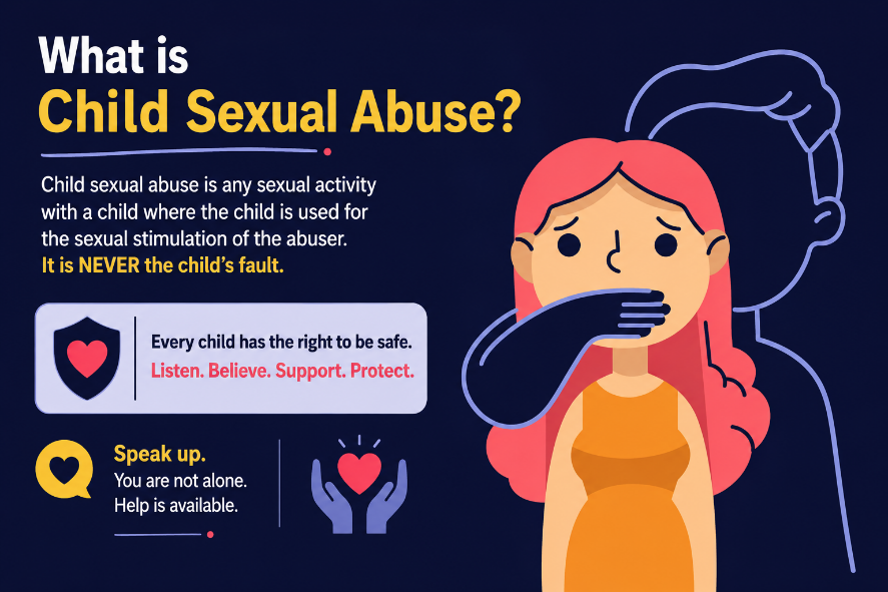
The World Health Organization (WHO) defines child sexual abuse as the involvement of a child in sexual activity that they do not fully understand, cannot give informed consent to, are not developmentally prepared for, or that violates the laws of society. Children can be sexually abused by adults or by other children who, by virtue of their age or stage of development, hold a position of responsibility, trust, or power over the victim.
WHO frames child sexual abuse as one part of the broader problem of child maltreatment alongside physical abuse, emotional abuse, neglect, and exploitation, all of which occur within relationships of responsibility, trust, or power, and jeopardise a child's health, development, and dignity. WHO's global data indicates that roughly 1 in 5 women and 1 in 7 men report having been sexually abused as a child.
1 in 5
Women worldwide report having been sexually abused as a child
1 in 7
Men worldwide report having been sexually abused as a child
What Counts as Child Sexual Abuse
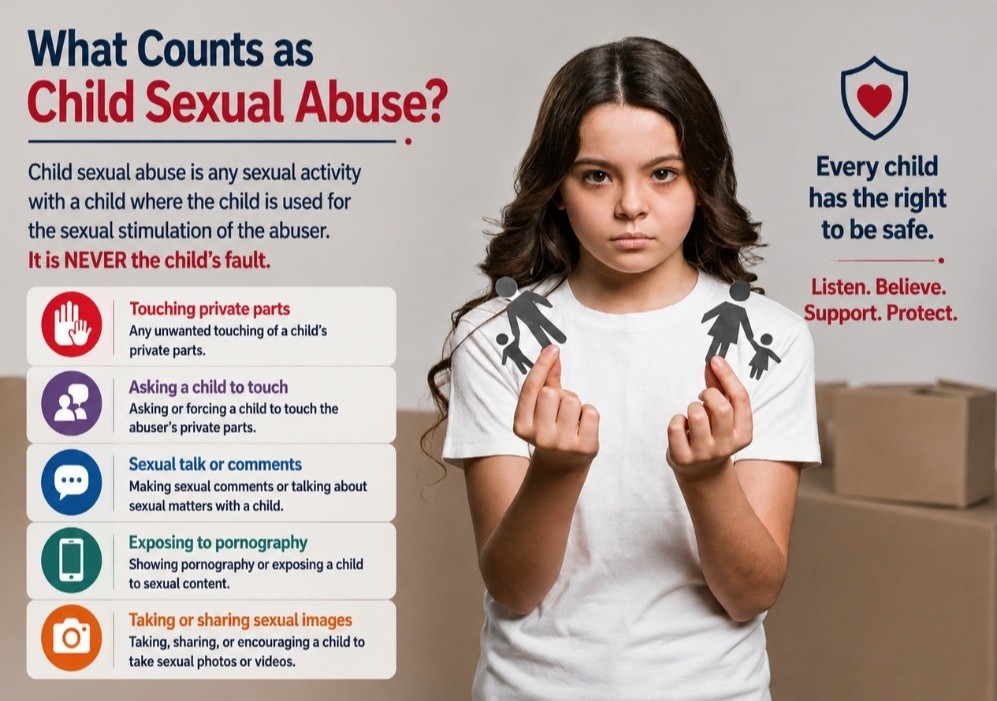
Child sexual abuse is broader than physical assault alone. Globally recognised safeguarding frameworks (including guidance used by child protection agencies in the UK and echoed in Indian POCSO case law) describe two broad categories:
● Contact abuse — any physical sexual act with a child, ranging from touching over or under clothing to penetrative acts. It does not require the use of force or the child's awareness that the act is abusive.
● Non-contact abuse — exposing a child to sexual material or activity, involving a child in the production of sexual images, voyeurism, indecent exposure, or grooming a child (in person or online) in preparation for abuse.
Importantly, sexual abuse is not defined by the presence of violence enticement, manipulation, and breach of trust are just as central to the definition as physical force. It can occur within families, schools, religious or care institutions, neighbourhoods, and increasingly, online spaces. Under Indian law (POCSO Act, 2012), a "child" is any person below 18 years, and the Act is gender-neutral both boys and girls are recognised as potential victims.
Why Children Don't Report or Talk Openly About CSA (Child Sexual Abuse)
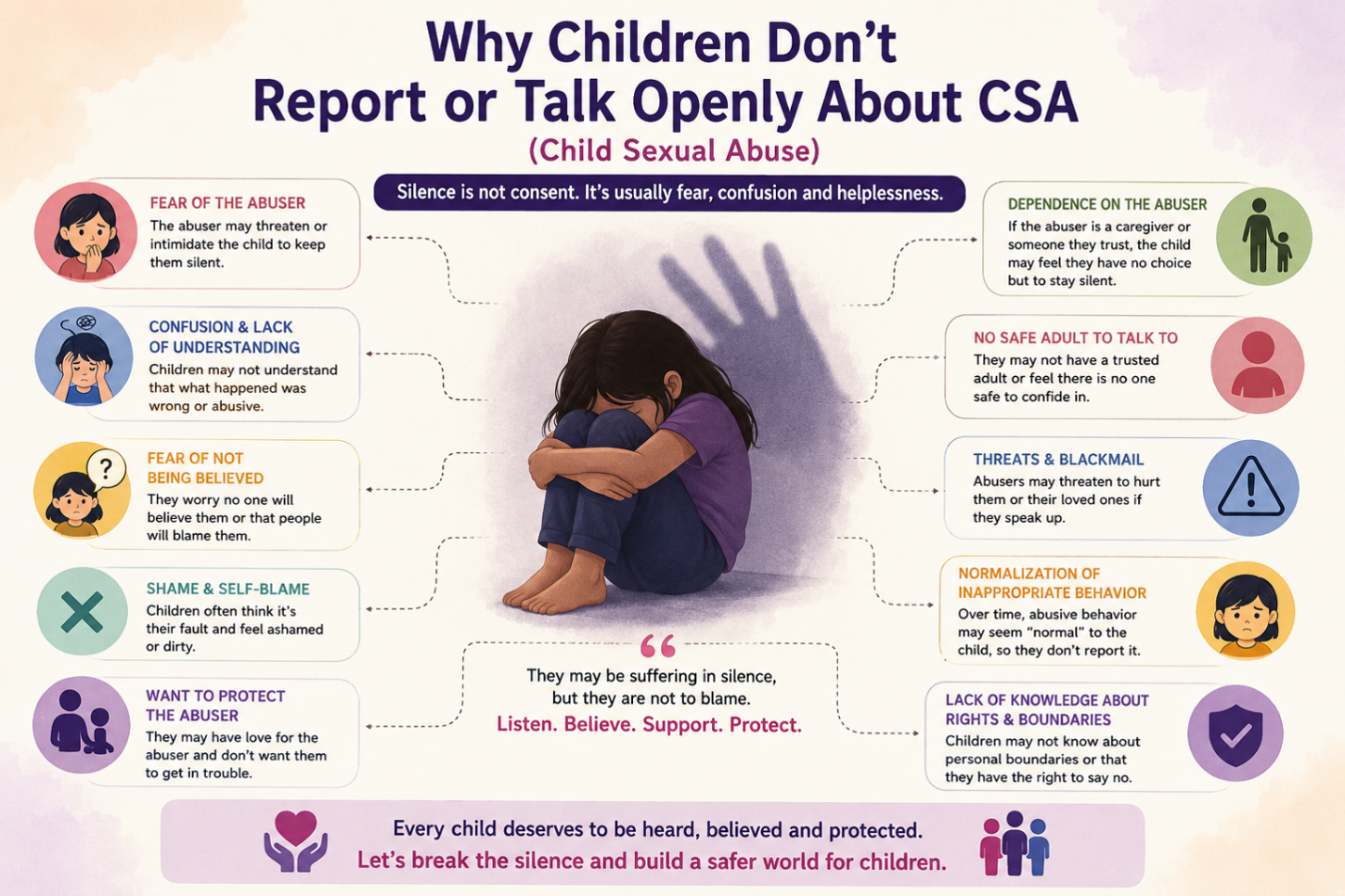
Silence after abuse is common and does not mean nothing happened; it usually reflects the very real barriers a child is navigating internally and socially.
Impact of Child Sexual Abuse on Children
Child sexual abuse is recognised as an Adverse Childhood Experience (ACE) with long-term consequences for health, opportunity, and wellbeing. Its impact rarely stays contained to a single area of a child's life it tends to show up simultaneously as things happening inside the child that are hard to see, and things happening in their behaviour that are easier to notice but often misread as "naughtiness," moodiness, or a phase.
These effects can influence a child's emotional wellbeing, relationships, learning, and sense of safety. Some children may become withdrawn, anxious, or unusually quiet, while others may appear angry, defiant, impulsive, or distressed. Changes in sleep, concentration, confidence, and everyday behaviour can also emerge.
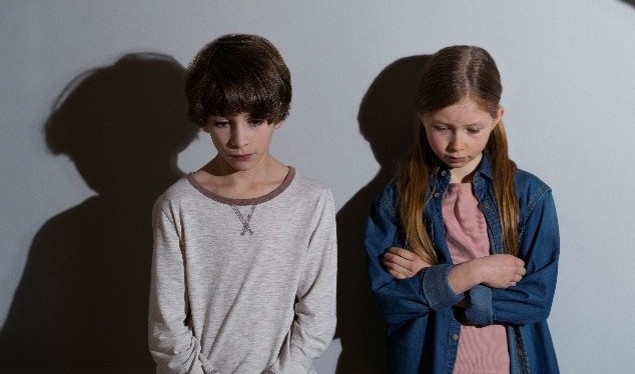
Internal Manifestations (felt by the child)
- Anxiety, depressive symptoms, and PTSD-like responses (intrusive memories, hypervigilance, avoidance)
- Persistent guilt, shame, and self-blame
- Lowered self-esteem and a sense of being "different"
- Somatic complaints — unexplained stomachaches, headaches, or pain with no medical cause
- Sleep disturbances, nightmares, and fatigue
- Emotional numbing or dissociation in more severe cases
External Behaviour (observable to others)
- Anger outbursts, irritability, and defiance
- Withdrawal from family, friends, or previously enjoyed activities
- Age-inappropriate sexualised behaviour
- Self-harming behaviour or other difficult conduct
- Regression in younger children (bedwetting, clinging, thumb-sucking)
- Risk-taking behaviour, more common in adolescents
Because internal and external signs surface together, the effects of CSA are best understood across four connected aspects of a child's everyday life:
Daily Functioning
Disrupted routines around eating, sleeping, and hygiene; loss of interest in play or hobbies; regressive behaviour in younger children; changes in appetite and energy levels.
Academic Behaviour
Declining concentration and grades, school avoidance or refusal, disciplinary issues, strained peer relationships at school, and reduced confidence in academic ability.
Emotional Expression
Difficulty naming or expressing feelings, flat or blunted affect, sudden mood swings, excessive fear or clinginess, and guilt or shame often expressed as self-blame.
Psychosocial Aspects
Withdrawal from friends and family, difficulty trusting others, social isolation, secrecy driven by stigma, and altered or strained peer relationships.
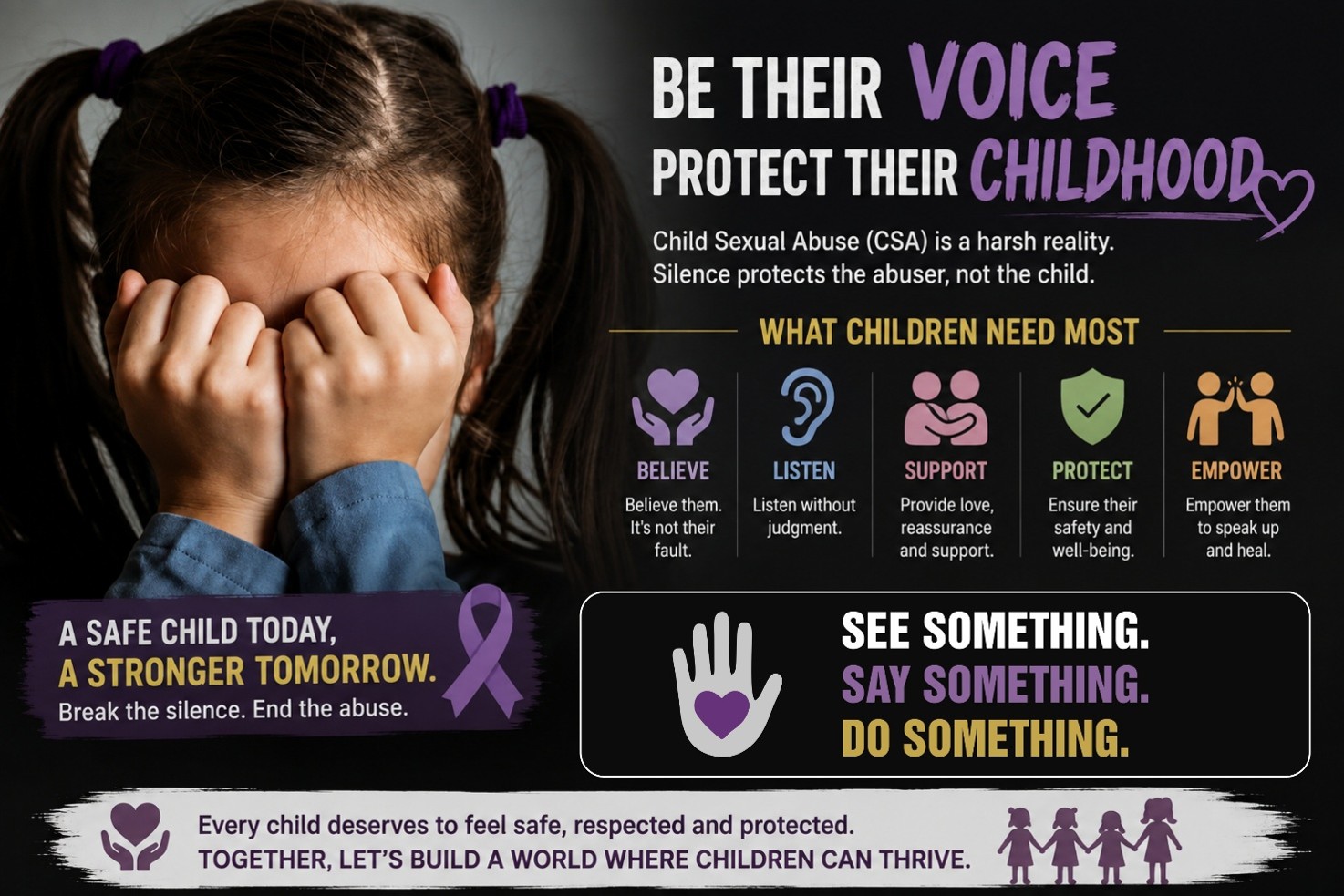
Outcomes
Left unaddressed, these internal and external signs do not simply fade; research consistently links untreated childhood sexual trauma to poorer outcomes across the lifespan, including chronic anxiety and depressive disorders, difficulty forming and sustaining relationships, substance use, and in a subset of cases, increased vulnerability to future victimisation. With timely, structured assessment and intervention, however, many of these trajectories can be interrupted, which is precisely why early, standardised screening matters so much.
Immediate
Fear, confusion, sleep & appetite changes
Short-to-Medium Term
Anxiety, withdrawal, academic decline, behavioural changes
Long-Term (if unaddressed)
Chronic mental health difficulties, relationship & trust issues, risk of revictimisation
Early, structured assessment can interrupt this trajectory at any stage.
Why Assessing the Impact of CSA on Children Matters
Because CSA affects children across several domains at once psychological, behavioural, social, physical, and academic a single conversation or observation rarely captures its full impact. Structured, validated assessment tools matter because they:
- Help clinicians identify trauma symptoms that a child may not verbalise directly
- Provide a consistent, replicable way to track a child's progress through therapy or intervention
- Support decisions about the intensity and type of intervention a child needs
- Generate evidence for courts, child welfare committees, and researchers
A recurring challenge noted by Indian researchers, however, is that most available trauma scales were developed in Western contexts and may not translate well linguistically or culturally to Indian children. A 2017 review by AIIMS researchers found 52 existing scales internationally, but very few that were both psychometrically robust and culturally appropriate for Indian children.
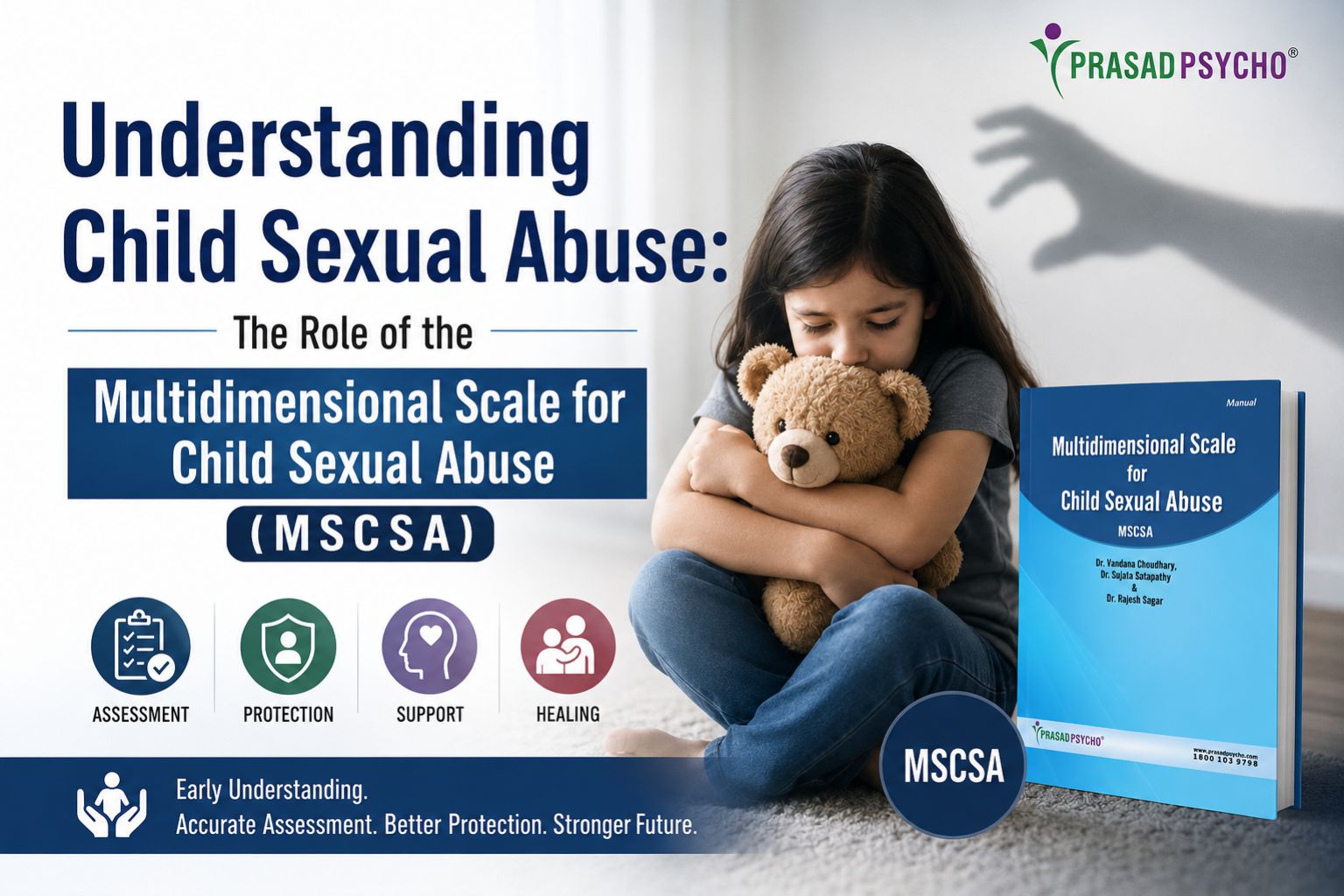
The Multidimensional Scale for Child Sexual Abuse (MSCSA)
To close this gap, a team from the Department of Psychiatry, All India Institute of Medical Sciences (AIIMS), New Delhi Vandana Choudhary, Sujata Satapathy, and Dr. Rajesh Sagar developed the Multidimensional Scale for Child Sexual Abuse (MSCSA), first published in 2021, building on earlier pilot work published in 2018. It is described by its developers as the first psychometrically robust, self-rated scale of its kind for young children with a history of sexual abuse developed specifically for the Indian population.
What the Scale Actually Measures
The MSCSA is specifically designed to assess the trauma experienced by children as a result of sexual abuse, not general childhood stress or unrelated behavioural concerns. Every item is anchored to the psychological, behavioural, social, academic, and physical fallout of CSA specifically.
62
ITEMS
3-pt
SCALE
7–13
AGE RANGE
Languages
ENGLISH & HINDI
15–20
MINUTES TO ADMINISTER
Five Domains & Their Sub-Domains
Because it captures a 360-degree view of a child's mental, behavioural, and social functioning in a single, brief, bilingual instrument, the MSCSA is designed for use by trained mental health professionals across government hospitals, Child Care Institutions (CCIs), schools, NGOs, and tertiary care settings. Beyond diagnosis, its scoring system is intended to help clinicians gauge the severity of a child's trauma response and plan appropriately tailored intervention and follow-up care.
| Domain | Sub-Domains |
|---|---|
| Psychopathology | PTSD Symptoms · Depression · Anxiety · Somatization |
| Socio-Emotional Difficulties | Guilt & Shame · Emotional Reactions due to Critical Comments · Emotional Reactions due to Stigma & Discrimination |
| Externalized Behaviour | Anger · Self-harm · Other Difficult Behaviour |
| Sexualized Behaviour & Pain | Sexual Self-Stimulation · Sexual-Stimulation of Others · Pain in Private Parts |
| Academic Difficulty | Declined Interest in Studies · Deteriorating Academic Performance · Poor Academic Self-Efficacy · Reduced Attention & Concentration |
Reliability & Validity
0.94
Overall internal consistency (excellent)
0.89
Split-half reliability, odd-even method (good)
- Content Validity: All retained items had a Content Validity Ratio (CVR) above 0.80.
- Convergent Validity: Significantly high correlation with the Child PTSD Symptom Scale (r = 0.62), Children's Impact of Event Scale-13 (r = 0.53), and Developmental Psychopathology Checklist (emotionality and other domains) (r = 0.46), all p < 0.01.
- Discriminatory Validity: MSCSA scores differed significantly between children with a history of CSA and 150 age- and socio-economic-status-matched children without such a history.
Administration
The MSCSA uses a simple pen-and-paper format, making it easy to administer across low-resource and field settings without any special equipment. A few points are essential to keep in mind while administering it:
- Build Rapport First: Spend time putting the child at ease before beginning the assessment, so responses reflect genuine comfort rather than compliance.
- Use SURAKSHA if the Child Gets Distressed: If distress surfaces during administration, follow the SURAKSHA framework and consider spreading the assessment across two sessions.
- Ensure Clinical Support Throughout: A trained clinician should remain available through the session to step in whenever the child needs support.
Benefits of Using the MSCSA Across Different Settings
Because the MSCSA is brief, bilingual, and easy to administer, it adapts well to the range of settings where children affected by CSA are actually encountered in India:
| Setting | Benefit |
|---|---|
| Hospitals & Tertiary Care | Supports standardised intake during psychiatric or medico-legal evaluation, helping clinicians quickly gauge severity and prioritise care. |
| Schools | Gives school counsellors a structured way to assess a child flagged by teachers, without repeated, distressing retellings of the incident. |
| Child Care Institutions & Shelters | Helps staff identify residents who need urgent psychological support and maintain consistent case documentation over time. |
| NGOs & Child Protection Organisations | Standardises assessment across field workers and locations, making it easier to track outcomes across intervention programmes. |
| Child Welfare & Legal Proceedings | Offers objective, standardised documentation of psychological impact that can support case files reviewed by Child Welfare Committees. |
| Private Clinical Practice | Allows individual psychologists and psychiatrists to plan therapy and track a child's progress through repeat administration over time. |
Built-In Crisis Intervention Framework: SURAKSHA
Alongside the assessment itself, the MSCSA equips clinicians with SURAKSHA, a structured, trauma-informed crisis intervention framework designed to guide a first supportive response with a child disclosing sexual abuse. It is specifically meant to be used to ease distress the child experiences during the assessment session, helping the administrator respond sensitively in the moment rather than pushing through the assessment regardless of the child's state.
| Letter | Stands For | What It Means |
|---|---|---|
| S | Support | Offer steady, non-judgmental presence to the child |
| U | Unconditional Positive Regard | Accept the child without conditions or judgment |
| R | Reattribute the Blame | Help the child understand the abuse was not their fault |
| A | Acceptance | Receive the child's disclosure as valid, without disbelief |
| K | Keeping Courage | Reinforce the child's courage in speaking up |
| S | Show Genuineness | Respond with authenticity, not scripted reassurance |
| H | Hope Building | Help the child see a path toward healing and safety |
| A | Acknowledge & Validate the Distress | Name and validate what the child is feeling |