
Ruchi Parihar
MA Clinical Psychology
20 min read
June 12, 2026
Understanding ADHD in Children
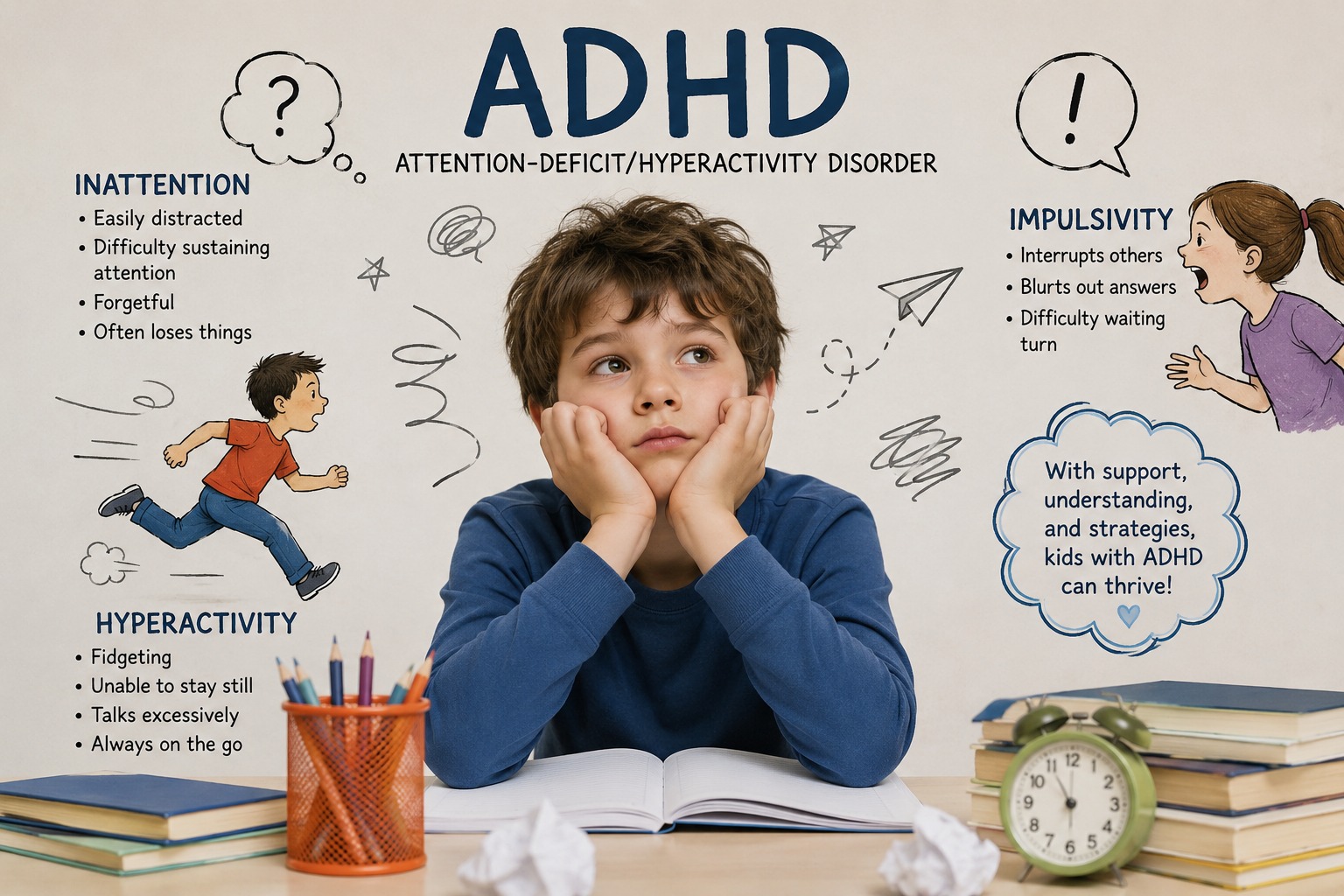
Attention Deficit Hyperactivity Disorder (ADHD) is a chronic neurological, behavioural, and cognitive disorder characterised by developmentally inappropriate hyperactivity, impulsivity, and inattention. Classified under DSM-5 as a neurodevelopmental disorder, it affects core cognitive processes including working memory, processing speed, verbal learning, motor coordination, and visual-spatial reasoning.
🔑 Key Insight: Children with ADHD benefit most from structured, progressive, and engaging cognitive exercises — not just medication or behavioural therapy alone.
ADHD by the Numbers
Global Prevalence in Children
Impact on Academic Performance
Co-morbid with Learning Disability
Motor Skill Difficulties
Benefit from Non-Pharmacological Training
Sources: CHADD (2025); ADHD Evidence (2024); Medical News Today (2022); IJCPP (2024); PubMed (2020, 2013, 2015, 2023, 2025); Psychological Medicine (2020)
What is Cognitive Training?
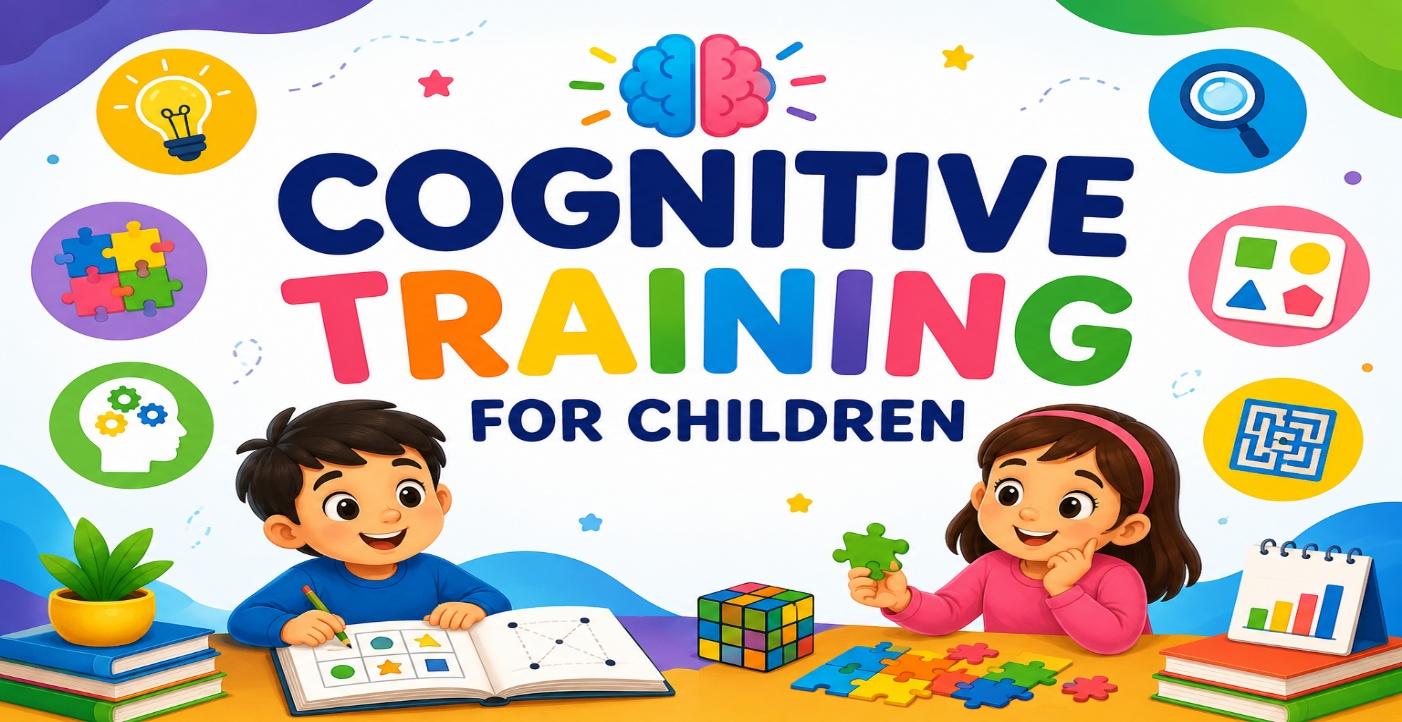
Cognition encompasses the set of mental abilities required for initiation and completion of both simple and complex tasks — including perception, attention, memory, motor function, language, visual-spatial processing, and executive functions. Cognitive training is grounded in neuroplasticity: the brain's capacity to reorganise and form new neural pathways through structured exercise.
PASS Theory — The Scientific Foundation
MCTT is grounded in the Planning-Attention-Simultaneous-Successive (PASS) theory of intelligence, operationalized through the Cognitive Assessment System (CAS-II) by Naglieri & Das (1997), rooted in Luria's neuropsychological framework.
Planning
Prefrontal Cortex
Strategy selection, problem-solving, self-monitoring, decision-making. Controls all other cognitive processes.
Attention
Brainstem · Diencephalon
Selective, sustained, and directed focus; arousal regulation for academic and daily tasks.
Simultaneous Processing
Occipital / Parietal Lobes
Gestalt perception: integrating stimuli into a unified whole. Essential for reading and mathematics.
Successive Processing
Frontal-Temporal Lobes
Serial ordering; remembering sequences, syntax, and multi-step instructions.
9 Targeted Cognitive Domains
MCTT precisely targets nine key domains of cognitive functioning known to be impaired in children with ADHD — building strength where it matters most.
Planning
Decision-making, strategy selection, problem-solving, and self-monitoring. Controls all other cognitive processes.
Sustained Attention
Differentiating relevant from irrelevant stimuli. Enables directed, selective, persistent focus for academic tasks.
Simultaneous Processing
Integrating perceptual and conceptual elements into a unified whole. Essential for reading and math.
Successive Processing
Integrating stimuli in strictly defined order. Critical for serial memory, syntax, and multi-step instructions.
Working Memory
Limited-capacity storage and retrieval of immediate information. Key for mathematics and reading comprehension.
Language Skills
Processing sounds, translating to words, generating meaningful output. Supports verbal and non-verbal communication.
Mind-Motor Coordination
Mobilising muscles and manipulating objects in response to stimuli. Part of executive functioning.
Body Balance
Psychomotor balance and control across physical tasks. Supported by attention and mind-motor coordination.
Visuo-Spatial Processing
Processing visual stimuli, understanding spatial relationships, and visualising images and scenarios.
How MCTT Works — Program Structure
A structured 4-step flow ensures every child progresses at the right pace, with full monitoring at every stage.
Assessment & Setup
Identify the child's age group (6–7, 8–9, or 10–11 years). Administrator completes mandatory training. Response booklet and scoring sheets prepared.
Daily Sessions Begin
4–6 activities per day from different domains. Each difficulty level spans 2 sessions (S1 & S2). Face-to-face, individual format with stopwatch timing.
Progressive Competency
Three competency levels: Basic → Complete → Advanced. A child advances only when competency is fully achieved. Homework worksheets assigned when extra practice is needed.
Progress Monitoring
Scores recorded per session (1 = correct/on time, 0 = incorrect). Activity monitoring sheets and progress reports track improvement across all 9 domains.
Age Group Difficulty Structure
6–7
Years
8 Difficulty Levels
16 Sessions
8–9
Years
6 Difficulty Levels
12 Sessions
10–11
Years
4 Difficulty Levels
8 Sessions
All 36 Cognitive Activities
Every activity is child-safe, culturally appropriate, and designed to build specific cognitive skills — spanning worksheet tasks, physical manipulatives, body-movement exercises, and language tasks.
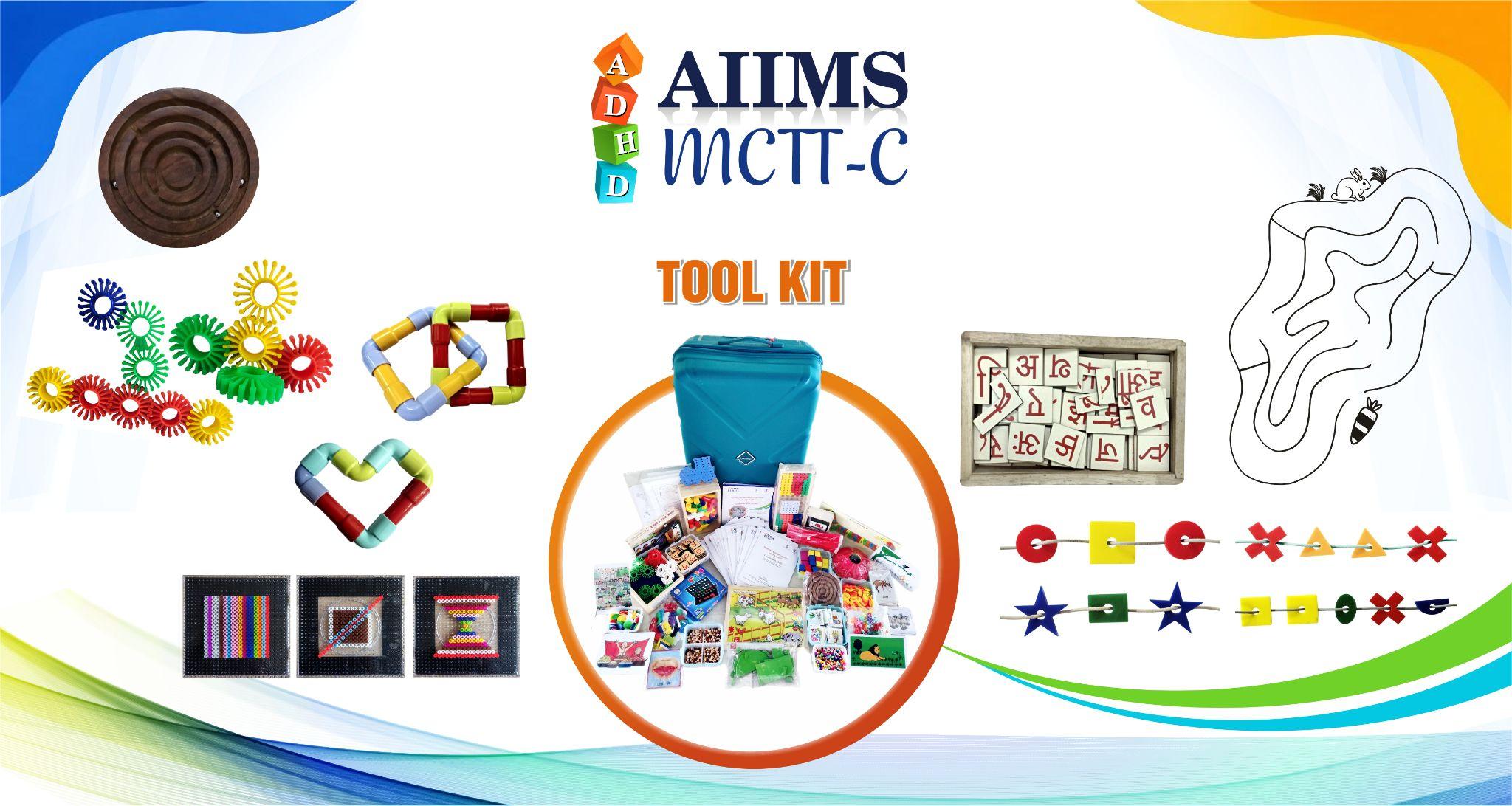
Activities by Domain
36 evidence-based cognitive activities distributed across key developmental domains.
36
Total Activities
7
Domains
4
Activity Types
100%
Child Safe
All 36 Cognitive Activities
Every activity is child-safe, culturally appropriate, and designed to build specific cognitive skills.
Spot the Difference
Match the Shadow
Count Hidden Animals
Find the Pair
Find the Maze/Route
Join the Dots
Card Sorting
Spot Odd One Out
Visual Search
Fix the Magnetic Tray
Place it Right
Bead Pattern Making
Shape Roller Sticks
Dominos Effect
Peg Board
Find & Create Words
I Can Pair
Shape Trail
I Can Make a Story
Ball in the Maze
Cross Me Out
Design with Flower
Make Bingo Patterns
Word Friends
Building Animal Chain
Connect 4
Stitching Objects
Building Blocks
Descending Shapes
Coin Sorting
Balancing Act
Backward Counting
Tap / Squeeze / Clap
I Can Find Emotions
Button Tower
Grain Sorting
Who Can Administer MCTT?
MCTT is designed for use by trained professionals in clinical, educational, and community settings.
Clinical Psychologists
Core target users. MCTT integrates into ADHD treatment programs as a structured non-pharmacological intervention alongside standard care.
Neuropsychologists & Psychiatrists
Bridge assessment findings with targeted cognitive rehabilitation using the PASS-based framework for ADHD diagnosis and treatment.
Speech & Occupational Therapists
Language, motor coordination, and sensory processing activities align directly with speech-language and occupational therapy goals.
Special Educators & Schools
Can be used in school resource rooms. Culturally fair, child-safe materials work across diverse Indian classroom and community contexts.
Training
½ day mandatory training before administering MCTT
Room Setup
Quiet room, non-reclining chairs, face-to-face seating, minimal distractions
Languages
Materials in Hindi & English. Culturally aligned with Indian children
Scoring & Progress Monitoring
A simple, consistent scoring system across all 36 activities — designed for clinical precision.
Correct Response
Child gives correct response OR completes the task within the given time limit.
Incorrect / Timeout
Child unable to give required response or cannot complete within time limit. Session is repeated.
Advanced Level
Used only for Advanced Competency level. Child gives correct response in the advanced difficulty tier.
Tools Included for Progress Monitoring
MCTT Matrix
Colour-coded matrix showing all 3 age groups × 36 activities × 8 difficulty levels at a glance.
Scoring Table
Per-activity scoring sheet with correct responses, time limits, and attempt counts.
Activity Monitoring Sheet
Session-by-session progress tracking for each of the 36 activities.
Progress Monitoring Report
Holistic view of improvement across all 9 cognitive domains over time.
Feedback Forms
Child and parent versions to collect qualitative feedback after intervention completion.
MCTT & Beyond — Key Strengths
All materials are cost-effective, child-safe, and non-toxic.
Largely culturally fair — suitable for national and international use.
Scalable — higher difficulty levels can be added to any activity as the evidence base grows.
Can be combined with computerized training tools (e.g. CogMed) — for comprehensive intervention.
A multi-centre clinical research trial employing MCTT as an intervention is currently underway across India.
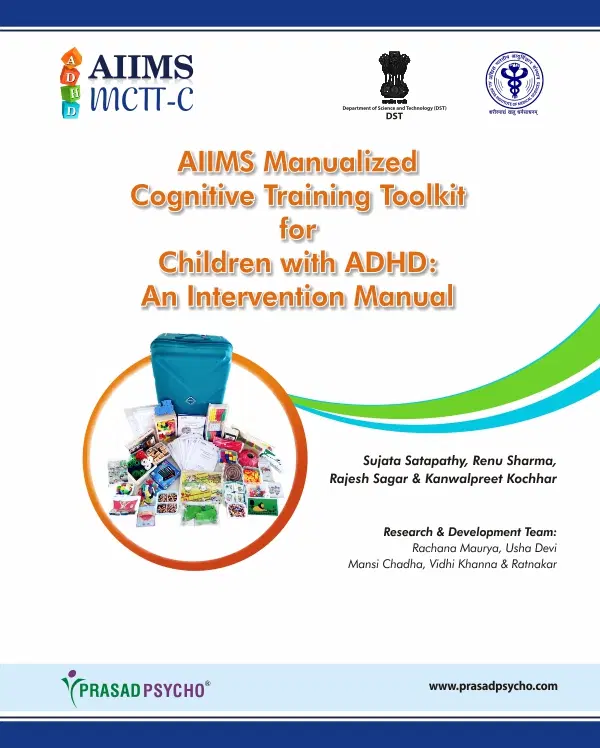
About the Test Authors
Sujata Satapathy
Renu Sharma
Rajesh Sagar
Kanwalpreet Kochhar
This evidence-based cognitive training toolkit is designed to support children with Attention-Deficit/Hyperactivity Disorder (ADHD) by enhancing attention, memory, executive functioning, self-regulation, and problem-solving skills. This ADHD Cognitive Training Toolkit was developed by the Department of Psychiatry, AIIMS, New Delhi, and is made available through Prasad Psycho Pvt. Ltd. for educational, clinical, and professional use.